OpenAI Will Submit Models to Federal Review Under Trump Order
The AI company says it will participate in voluntary government assessments 30 days before releasing new models.
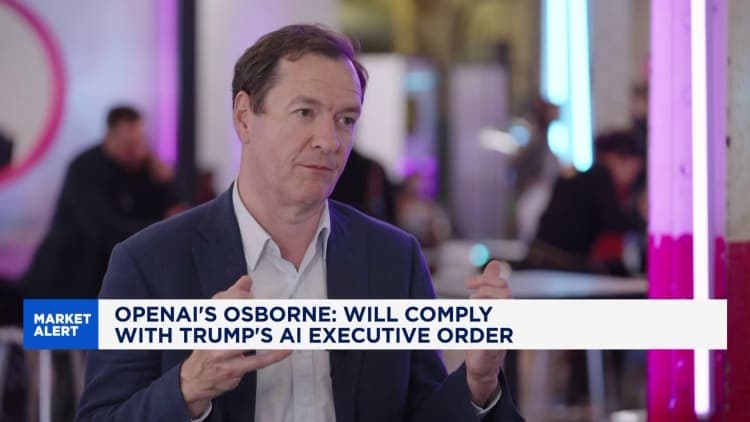
OpenAI has committed to participating in a new federal review process that would give the U.S. government access to its AI models before public release, following an executive order signed this week by President Donald Trump.
George Osborne, OpenAI's head of countries, confirmed the company would comply with the voluntary order in remarks to CNBC. The directive requires AI companies to provide model access 30 days prior to release and participate in benchmarking to evaluate advanced cyber capabilities.
Democratic oversight of frontier AI
Osborne, speaking at SXSW in London, framed the review process as appropriate government involvement in emerging technology. "It's quite right that democratic governments have a big role to play in how this technology is used and deployed," he told CNBC.
The former U.K. foreign minister emphasized that OpenAI takes a proactive stance on safety protocols rather than waiting for regulatory mandates. "We don't wait to be asked," Osborne said. "We proactively suggested ways that governments can keep a track on safety and security issues, not just in the U.S., but more broadly."
How the review process works
The executive order establishes a benchmarking framework to assess AI models and determine which systems qualify as "covered frontier models" based on their advanced capabilities. The 30-day advance access window aims to give federal agencies time to evaluate potential security risks before models reach the public.
While the order is structured as voluntary, OpenAI's quick commitment signals the company's willingness to work within government frameworks as it develops increasingly powerful systems.
Why it matters
This marks a significant shift in how the U.S. government approaches AI oversight, moving from post-release monitoring to pre-deployment review. For enterprise leaders, the precedent could influence how corporate AI deployments are scrutinized and may signal coming requirements for internal model assessments before production use. The voluntary nature also suggests industry cooperation could shape regulatory approaches before mandatory frameworks emerge.
Flexible regulation ahead
Osborne indicated that effective AI governance will require adaptive regulatory structures. "Governments are going to have to be smart" about regulation, he said, recommending that authorities "create powerful regulatory bodies, but with a lot of flexibility into how they will operate in the future."
The details were first reported by CNBC.
This is an original analysis by the Omega editorial team. Source reporting: AI Watch.
Want systems like this working for your business?
Book a Call
