OpenAI Proposes Giving Trump Administration 5% Equity Stake
The ChatGPT maker is in early talks about a public wealth fund model that would extend to other leading U.S. AI companies.
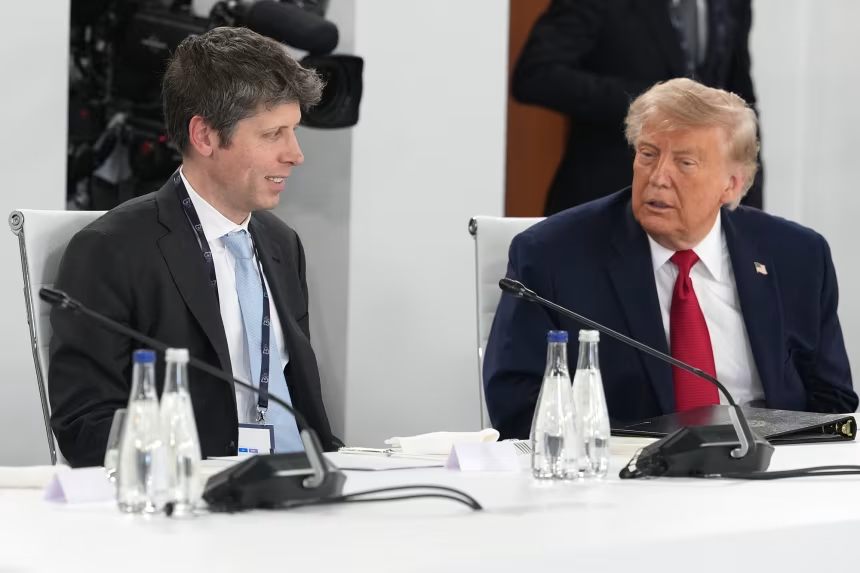
OpenAI is in preliminary discussions with the Trump administration about transferring a 5% equity stake in the company to the government, part of a broader proposal that would see other major U.S. artificial intelligence firms do the same.
The arrangement would be worth approximately $42.6 billion based on OpenAI's March funding round valuation of $852 billion, according to details first reported by the Financial Times. OpenAI CEO Sam Altman has framed the proposal as a way for the public to benefit financially from AI development, though the company declined to comment on the discussions.
A sovereign wealth model for AI
The proposal envisions America's leading AI companies allocating 5% of their equity to a vehicle similar to Alaska's Permanent Fund, which invests oil revenues and distributes dividends to state residents. Under this structure, citizens would gain exposure to AI-driven economic growth regardless of their participation in financial markets.
Implementing such an arrangement would likely require congressional action, the Financial Times reported. It remains unclear whether other AI companies support the framework or whether the Trump administration has committed to pursuing it. The White House did not respond to requests for comment.
President Trump told reporters last month that he planned to meet with top AI executives to explore options for government partnerships that would allow public participation in the industry's financial upside.
Why it matters
This proposal arrives as AI companies face mounting government scrutiny over national security concerns and as automation threatens employment across multiple sectors. A public equity stake could help legitimize an industry facing regulatory pressure while creating a political constituency with a vested interest in AI development. The model also positions the government as both regulator and beneficiary—a dual role that could reshape how Washington approaches AI policy. With both OpenAI and competitor Anthropic preparing for public listings, the timing suggests companies may be seeking regulatory goodwill ahead of increased transparency requirements.
Growing government oversight
The discussions unfold against a backdrop of intensifying federal involvement in AI development. The White House recently requested that OpenAI restrict the release of its upcoming GPT 5.6 model to a limited number of government-approved partners due to the system's advanced capabilities, according to a source familiar with the matter.
Anthropic, creator of the Claude AI assistant, said this week that the U.S. government lifted export controls on its most advanced models following negotiations with officials. Both companies have experienced delays in releasing new systems due to government review processes.
The Trump administration has prioritized American leadership in AI and emerging technologies. In August, the federal government took a 10% stake in chipmaker Intel valued at $8.9 billion, establishing a precedent for direct equity investments in strategic technology companies.
OpenAI advocated for a public wealth fund in April, arguing it would provide citizens who don't participate in financial markets with a stake in AI-driven economic expansion.
The Financial Times first reported these details, citing two people familiar with the early-stage conversations.
This is an original analysis by the Omega editorial team. Source reporting: AI Watch.
Want systems like this working for your business?
Book a Call
