Nvidia Launches $10B Infrastructure Venture, Expands Partnerships
The chipmaker is embedding its technology deeper into data centers, healthcare AI, and semiconductor supply chains through three new strategic deals.
Nvidia has announced three strategic partnerships designed to expand its presence across AI infrastructure, semiconductor manufacturing, and specialized applications, according to a report from AI Watch.
The centerpiece is Helix Digital Infrastructure, a $10 billion joint venture with private equity firm KKR and other partners. Helix will focus on building AI data center and power infrastructure globally, addressing two critical bottlenecks in AI deployment: computing capacity and energy supply. The venture gives Nvidia both an equity stake and influence over design decisions in facilities purpose-built for AI workloads.
Semiconductor supply and supercomputing
Nvidia is also deepening its relationship with South Korea's SK Group. The expanded alliance will focus on AI supercomputing, CPU development, and robotics, with particular attention to semiconductor and memory supply constraints. High-bandwidth memory has emerged as a potential limiting factor for AI system deployment, and the SK partnership positions Nvidia closer to long-term memory supply chains. The collaboration includes work on what the companies are calling "AI factory" research.
In a third move, Nvidia has entered an exclusive partnership with Abridge to develop healthcare-focused AI models for clinical use. This represents a shift from general-purpose cloud computing into regulated, sector-specific applications where AI models must meet different standards for accuracy, privacy, and auditability.
Why it matters
These partnerships signal Nvidia's strategy to move beyond selling chips into owning pieces of the infrastructure stack and application layer. The $10 billion Helix venture ties Nvidia's fortunes to capital-intensive data center buildouts that depend on partner execution and favorable regulatory environments. The SK Group alliance addresses a genuine supply chain vulnerability—memory bandwidth—that could constrain AI system performance regardless of GPU capability. And the Abridge deal tests whether Nvidia can translate its dominance in training models into success in specialized, regulated verticals like healthcare.
Together, the moves diversify Nvidia's revenue exposure but also increase its operational complexity. The company is no longer just a component supplier; it's now a joint venture partner in infrastructure projects, a collaborator in semiconductor R&D, and a provider of domain-specific AI software. Each role brings different margin profiles, capital requirements, and execution risks.
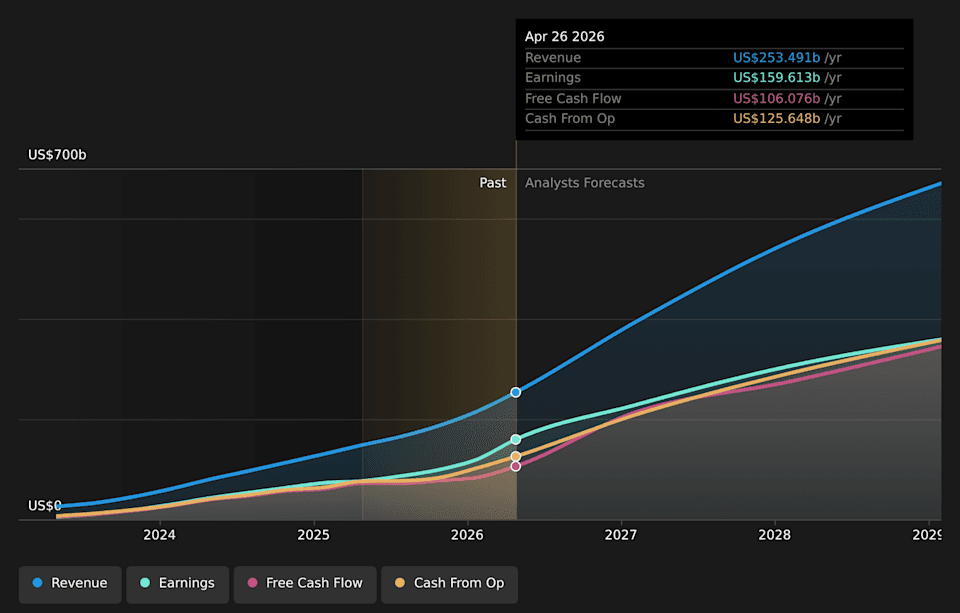
Nvidia shares trade around $200.42, up 40.5% over the past year. The stock's performance reflects investor confidence that the company can maintain its position as AI infrastructure scales. Whether these new partnerships accelerate that growth or introduce new dependencies will become clearer as the ventures move from announcement to operation.
These details were first reported by AI Watch.
This is an original analysis by the Omega editorial team. Source reporting: AI Watch.
Want systems like this working for your business?
Book a Call