AI
Nvidia Bets on Silicon Photonics to Solve AI's Data Bottleneck
The chip giant is integrating optical transceivers directly into server switches to keep thousands of processors communicating at AI speeds.
Key takeaways
- Nvidia is embedding optical transceivers directly into network switches to eliminate pluggable modules that cause five percent of data center downtime.
- Co-packaged optics reduces power consumption by placing photonic chips next to switch chips, shortening the distance electrical signals must travel.
- The technology delivers a projected tenfold improvement in mean time between interruptions while cutting energy use in facilities already consuming over 100 terawatt-hours annually.
- Nvidia has invested in photonics foundries and laser manufacturers to secure supply chains, following its 2020 Mellanox acquisition that expanded its networking capabilities.
- Competitors including Broadcom, AMD, and Intel are developing similar silicon photonics integration as the race to scale AI infrastructure intensifies.
Photons replace plugs in Nvidia's latest infrastructure
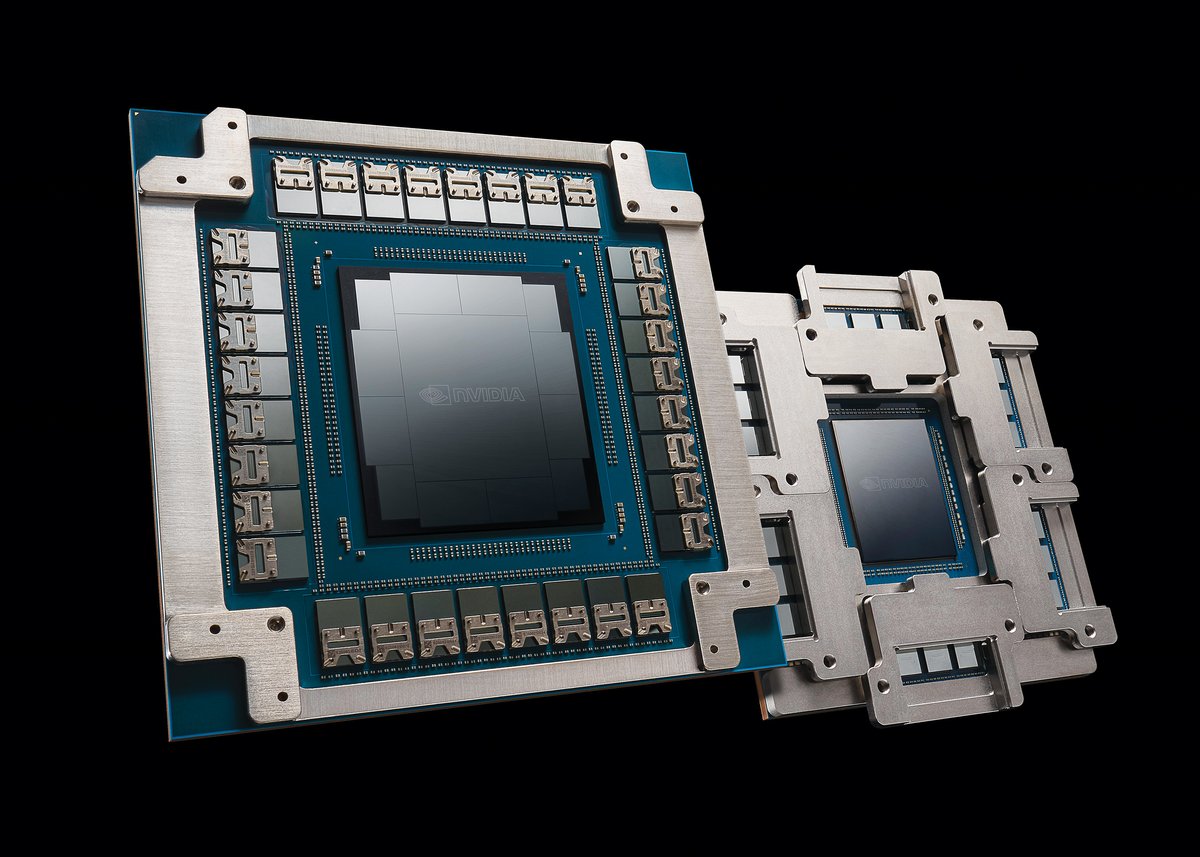
Nvidia controls roughly 85 percent of the graphics chips powering artificial intelligence workloads worldwide, but the company's newest competitive edge isn't about faster math—it's about faster communication. At a confidential engineering facility in California, the company is demonstrating co-packaged optics technology that embeds photonic circuits directly into network switches, eliminating a longstanding reliability problem in AI data centers.
The shift addresses a fundamental constraint: modern AI models require thousands of processors working in concert, and moving data between them has become as critical as the computation itself. Traditional rack switches rely on pluggable optical transceivers—roughly candy-bar-sized modules that connect fiber-optic cables to electronic circuits. Every time a technician inserts or removes one, adjacent transceivers can fail. According to Nvidia executives, human interaction with equipment accounts for five percent of data center downtime.
Why copper hits its limits at scale
Copper wiring works well for short distances and moderate bandwidth, but large AI data centers span warehouse-sized facilities with tens of thousands of interconnected servers. Electrons flowing through copper resist movement, repel each other, and generate noise that degrades signals over distance. Photons traveling through fiber-optic glass face none of these constraints—they carry no charge, barely interact, and can transmit data for kilometers with negligible loss.
The challenge has been bridging the electron-photon divide efficiently. Traditional optical transceivers consume roughly 25 watts each, and a single switch can house dozens of them. Across an entire data center, these devices can consume 10 percent of total power. Nvidia's co-packaged approach places photonic chips directly atop electronic chips within the switch itself, drastically shortening the distance electrical signals must travel before conversion to light.
The result: Nvidia projects a tenfold improvement in mean time between interruptions, alongside significant reductions in power consumption and heat generation. Fiber-optic cables now plug directly into the front of the switch, with optical fiber braided internally to connect components.
Why it matters
U.S. data centers consumed more than 100 terawatt-hours of electricity in 2025, and global AI computing capacity is doubling every seven months. One analysis suggests the AI infrastructure buildout rivals the economic scale of mid-20th-century interstate highway construction. Companies that can deliver more computing per watt—and keep that computing online longer—hold a structural advantage as the industry scales. Nvidia's move into integrated networking hardware, following its 2020 acquisition of networking specialist Mellanox, positions the company to control not just the processors but the critical links between them.
Competitors including Broadcom, AMD, and Intel are pursuing similar photonics integration. Broadcom is already shipping its third generation of co-packaged switches. But Nvidia's market position has allowed it to invest heavily in building the supply chain it needs—funding chip foundries to develop photonics manufacturing processes and backing laser manufacturers like Coherent and Lumentum to expand production capacity.
Researchers see potential for photonics to move even closer to processors themselves. As chipmakers stitch multiple dies together to exceed physical size limits, optical interconnects could replace copper traces within a single package, eliminating cross-talk interference that plagues tightly packed electronic circuits.
These details were first reported by Scientific American in a feature examining Nvidia's engineering laboratories and networking strategy.