New York Mandates Disclosure Labels for AI-Generated Actors in Ads
State law now requires advertisers to clearly identify synthetic performers or face fines up to $5,000.
New York Mandates Disclosure Labels for AI-Generated Actors in Ads
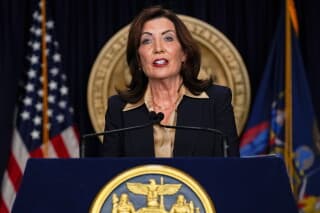
Advertisers in New York must now clearly label when they use artificial intelligence-generated people instead of real actors, under a state law that took effect Tuesday. The legislation, signed by Governor Kathy Hochul in December, imposes financial penalties on companies that fail to disclose their use of what the law calls "synthetic performers."
Why it matters
This marks the first state-level attempt to regulate AI-generated content in commercial advertising, setting a potential template for other jurisdictions. The law directly addresses concerns from creative workers about job displacement while attempting to maintain consumer transparency as AI tools become standard in marketing production.
Requirements and penalties
Under the new statute, any advertisement featuring digitally-created media that appears as a real person must include a conspicuous disclosure. Violations carry a $1,000 penalty for first offenses and $5,000 for subsequent infractions.
The law applies across all advertising mediums but includes several exemptions. Promotional content for movies, television shows, streaming content, and video games that feature synthetic performers throughout the work are excluded. Audio-only advertisements and cases where AI is used solely for language translation also fall outside the law's scope.
Industry pushback and support
Advertising trade groups mounted significant opposition during the legislative process. The American Association of Advertising Agencies argued the law would create "compliance uncertainty" and burden brands operating in New York while stifling innovation.
The New York State Broadcasters Association expressed concern about the broad definition of synthetic performers, though President David Donovan confirmed local broadcast stations are prepared to comply.
SAG-AFTRA, the actors' union, served as the law's primary advocate. The organization recently secured contract provisions addressing synthetic performer protections in negotiations with studios and streaming platforms.
Broader regulatory context
New York's disclosure requirement joins a growing patchwork of state-level AI regulations nationwide. Other states have enacted laws targeting deepfakes, limiting personal data collection, and mandating corporate transparency around AI systems.
The state action comes amid federal tension over AI governance. Shortly after Hochul signed the synthetic performer law, President Donald Trump issued an executive order discouraging state-level AI regulation, citing concerns that fragmented rules could hamper American companies' competitiveness against Chinese AI development. Technology policy critics contend such federal intervention enables companies to operate without adequate oversight.
Governor Hochul framed the legislation as proactive governance. "In New York, we are setting the rules of the road instead of letting AI run the show," she said, characterizing the disclosure requirements as protecting both consumers and creative professionals.
These details were first reported by the Associated Press.
This is an original analysis by the Omega editorial team. Source reporting: AI Watch.
Want systems like this working for your business?
Book a Call
