New York Mandates AI Disclosure Labels in Advertising
State law now requires advertisers to identify synthetic performers or face penalties up to $5,000.
New York Mandates AI Disclosure Labels in Advertising
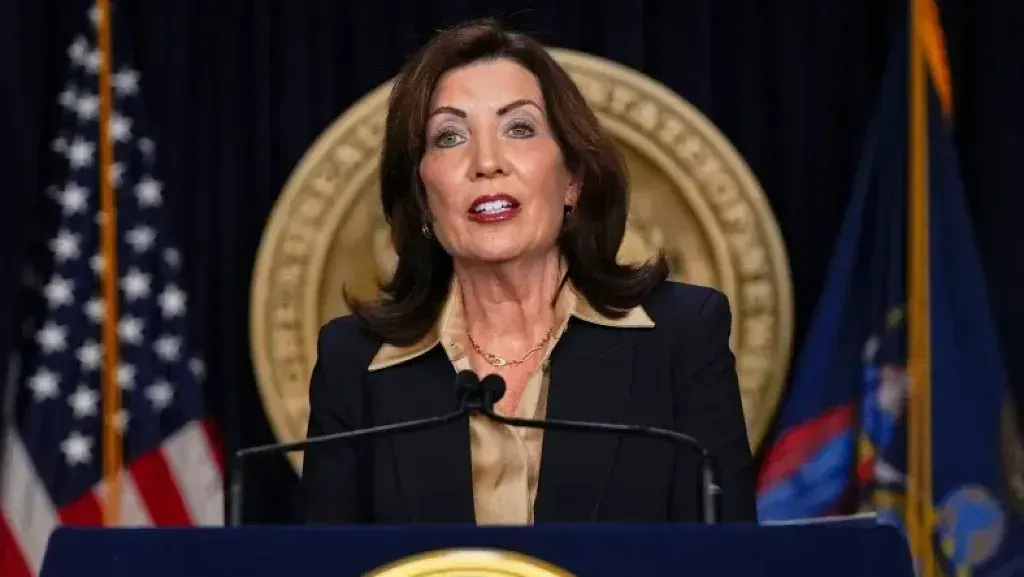
Advertisers in New York must now clearly label when they use AI-generated people instead of real actors, following a state law that took effect this week. The legislation, signed by Governor Kathy Hochul in December, imposes penalties of $1,000 for first violations and $5,000 for subsequent offenses when ads fail to disclose the use of "synthetic performers."
According to details first reported by the Associated Press, the law defines synthetic performers as "digitally-created media that appear as a real person" and applies across all advertising mediums.
Why it matters
This marks the first state-level attempt to regulate AI-generated content in commercial advertising, setting a potential template for other jurisdictions. As generative AI tools become more accessible and realistic, the law addresses growing concerns about transparency in marketing while creating new compliance requirements for brands operating in New York's substantial advertising market.
Scope and exemptions
The disclosure requirement covers advertisements across digital platforms, social media, and traditional channels. However, the law includes several carve-outs. Ads promoting entertainment content—including movies, television shows, streaming services, and video games—that feature synthetic performers throughout the work are exempt. Audio-only advertisements and ads using AI solely for language translation also fall outside the law's scope.
Governor Hochul framed the legislation as establishing "the rules of the road instead of letting AI run the show," emphasizing that the disclosure requirements protect consumers while respecting creative workers.
Industry pushback and support
The advertising industry mounted significant opposition during the legislative process. The American Association of Advertising Agencies argued the law would "inject compliance uncertainty into the advertising process" and undermine innovation. The New York State Broadcasters Association expressed concerns about the broad definition of synthetic performers, though its president David Donovan indicated local stations are prepared to comply.
SAG-AFTRA, the actors' union, emerged as the law's primary supporter. The union recently negotiated contract provisions addressing synthetic performer protections with studios and streaming platforms.
Broader regulatory context
New York's law represents one piece of a growing patchwork of state AI regulations focused on job security, privacy, and transparency. The timing coincides with tension between state-level oversight and federal policy—shortly after Hochul signed the bill, President Donald Trump issued an executive order discouraging state AI regulation, citing concerns about maintaining U.S. competitiveness against China.
Critics of the federal approach argue it leaves tech companies with insufficient oversight at a critical moment in AI development.
This report draws on coverage by Kaitlyn Huamani of the Associated Press.
This is an original analysis by the Omega editorial team. Source reporting: AI Watch.
Want systems like this working for your business?
Book a Call
