Neuroscience Foundation Models Need Standardized Data First
Recent AI breakthroughs in brain research succeeded not because algorithms improved, but because researchers spent years making data compatible.
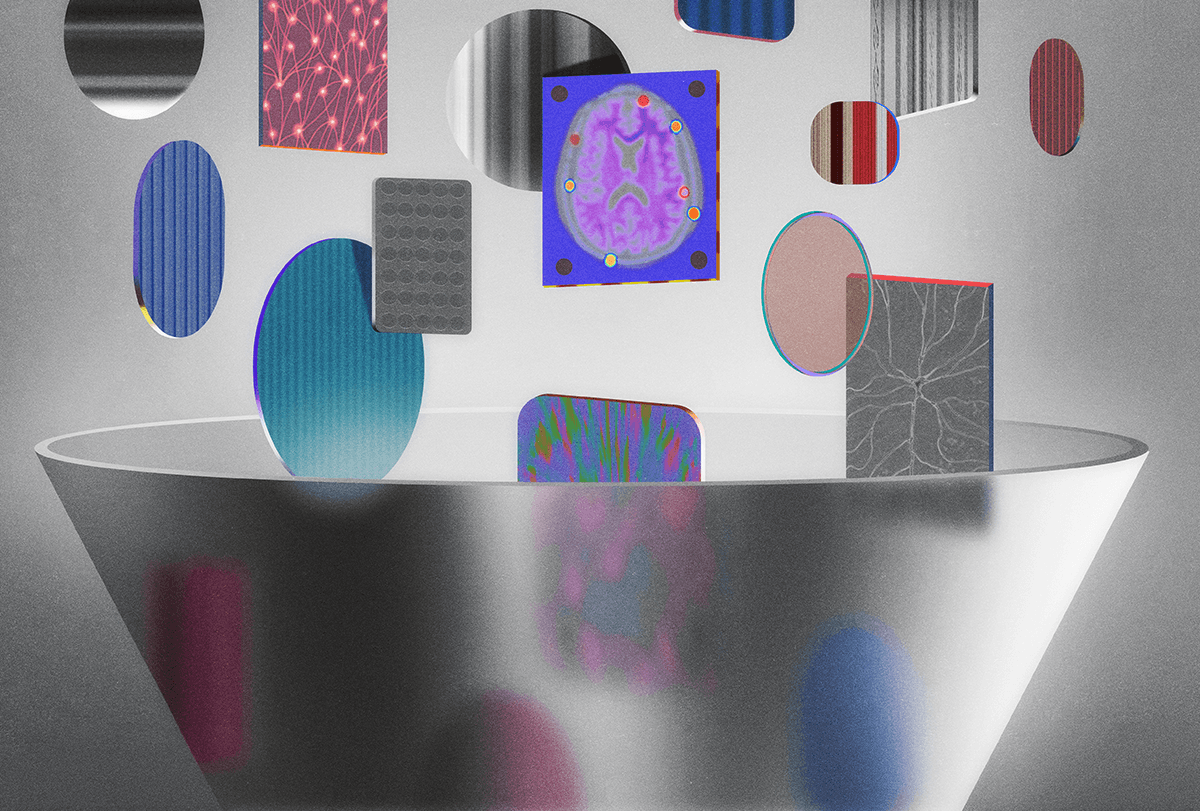
The first foundation models for neuroscience are arriving, but not for the reasons the AI industry might expect. These breakthroughs didn't happen because neural networks got more sophisticated—they happened because researchers spent years doing the unglamorous work of making data compatible across laboratories.
Two recent examples illustrate the pattern. In April 2025, the MICrONS consortium published a foundation model trained on calcium-imaging recordings from roughly 135,000 neurons across mouse visual cortex. The model generalizes to new mice and predicts responses to novel stimuli. In March 2026, Meta released TRIBE v2, which predicts human fMRI responses to visual, auditory, and language stimuli using data from about 720 participants and more than 1,000 hours of scanning.
Both efforts mirror what AlphaFold accomplished in structural biology. AlphaFold succeeded because crystallographers spent decades establishing standardized methodology reporting through the Protein Data Bank. The MICrONS dataset took half a decade to build, coordinating functional imaging and electron microscopy across multiple labs with alignment between modalities planned from the beginning. TRIBE v2 became possible largely through the Brain Imaging Data Structure (BIDS), which gave researchers shared data formats, combined with standardized corpora from the Human Connectome Project and UK Biobank built over more than a decade.
The hidden complexity of data integration
Neuroscience has struggled with data integration for three decades, since the original U.S. Human Brain Project launched in 1993. Major initiatives including the BRAIN Initiative, European Human Brain Project, and Allen Institute have built substantial infrastructure. Coordinating consortia like INCF and standards like Neurodata Without Borders (NWB) have advanced the field. Yet most neuroscience data remains incompatible.
The technical challenges run deeper than most assume. Consider liquid junction potential—a small voltage at the interface between pipette and bath solutions in electrophysiology. Uncorrected, it shifts membrane voltage measurements by 10 to 15 millivolts. Whether labs correct for this varies and often goes unreported. The same cell recorded in two labs ends up measured against different baselines. Because voltage-gated channels operate in narrow windows, these small miscalibrations produce systematically wrong conclusions about neural excitability. This represents just one parameter among dozens, including temperature, electrode type, and filter settings.
A 2015 study by Shreejoy Tripathy and colleagues demonstrated the scale of this problem empirically. After back-modeling methodological covariates across thousands of literature reports, classification accuracy of new recordings against canonical neuron types rose from 48 to 81 percent. The variance hadn't disappeared—most of it was unrecorded methodology.
Why it matters
The conventional view in AI holds that scale alone will solve integration challenges—that foundation models trained on enough heterogeneous data will automatically factor out methodological variation. This assumption fails in neuroscience. A foundation model can learn biological structure only when it can separate biological differences from methodological ones. That requires three components: shared file and data standards, protocol standardization for how experiments are performed, and operational provenance documenting what measurements actually mean. Neuroscience has made progress on the first but barely begun the second and third outside specific consortia.
The recent foundation models prove integration is possible where standardization work has matured. The models neuroscience needs next—covering behavior, development, clinical applications, and causal mechanisms across scales—will not come from making existing heterogeneous data interoperable after the fact. They will come from the same kind of systematic standardization that enabled MICrONS and TRIBE v2.
These details were first reported by The Transmitter in an essay examining the infrastructure requirements for AI in neuroscience research.
This is an original analysis by the Omega editorial team. Source reporting: AI Watch.
Want systems like this working for your business?
Book a Call