AI
Nadella: AI Agents Will Upend Web Economics, Ad Models
Microsoft's CEO says companies blocking autonomous agents risk losing ground to competitors willing to embrace the shift.
Key takeaways
- Microsoft's Nadella predicts AI agents will force internet companies to shift from ad-impression models to transaction-based economics.
- Amazon's decision to block AI agents from its platform could allow competitors like Shopify to capture agent-driven commerce.
- The transition mirrors the earlier disruption when search engines displaced web portals as the primary internet interface.
- Companies too attached to existing business models risk being bypassed as AI agents become the primary way users complete online tasks.
- The shift from human web traffic to agentic interactions will reshuffle which companies capture value from online activity.
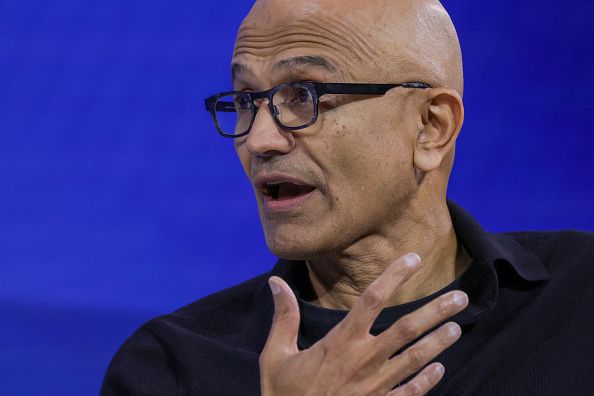
Microsoft CEO Satya Nadella believes the emergence of AI agents will fundamentally alter how money flows across the internet, forcing a reckoning for companies built on advertising revenue and human web traffic.
Speaking at The New York Times DealBook Summit this week, Nadella drew parallels between today's AI transition and the earlier shift from web portals to search engines. Just as Google's rise disrupted Yahoo's portal-based model, he argued, AI agents will reshuffle which companies capture value from online activity.
The End of Eyeball Economics
Nadella pointed to a core tension: current internet aggregators monetize human attention through advertising impressions. AI agents, however, don't view ads—they complete tasks. This shift could force platforms to move from impression-based pricing to cost-per-click or transaction-based models.
"The current aggregators who have a business model which was for the human web will get, in some sense, reshuffled," Nadella said. "And if you were monetizing ads because of the eyeballs, you now have to probably get down to essentially maybe CPC wins; maybe it's more transactional."
The implication is stark: companies that refuse to adapt their monetization strategies may find themselves bypassed entirely.
Amazon's Agent Blockade
Nadella specifically addressed Amazon's decision to prevent AI agents from accessing its retail platform. By blocking agents from browsing product catalogs or completing purchases on users' behalf, Amazon is protecting its existing customer relationship and advertising business.
But Nadella suggested this defensive posture could backfire. If Amazon maintains its blockade while competitors like Shopify welcome AI agents, those rivals could capture a new channel of commerce.
"If you don't accept the agent, somebody else will," he said.
Why it matters
This isn't theoretical disruption—it's a concrete warning to companies whose revenue depends on controlling user attention. As AI agents become consumers' primary interface for online tasks, businesses face a choice: redesign their economics around machine-to-machine transactions or watch traffic migrate to platforms that do. The companies that built empires on the human web may not dominate the agentic one.
Business Model Loyalty as Liability
Nadella framed the challenge as one of attachment to legacy models. Companies deeply invested in particular revenue structures face the difficult task of cannibalizing their own success.
"If you're in love with a particular business model, you have to kind of scramble," he noted.
The pattern repeats across industries: when the fundamental interface changes, incumbents often struggle to abandon what made them successful.
These details were first reported by TechCrunch from Nadella's appearance at the DealBook Summit.