Mining Automation in South Africa Risks Widening Inequality
New research finds fourth industrial revolution technologies could displace workers without stronger governance and retraining programs.
Automation benefits come with documented risks
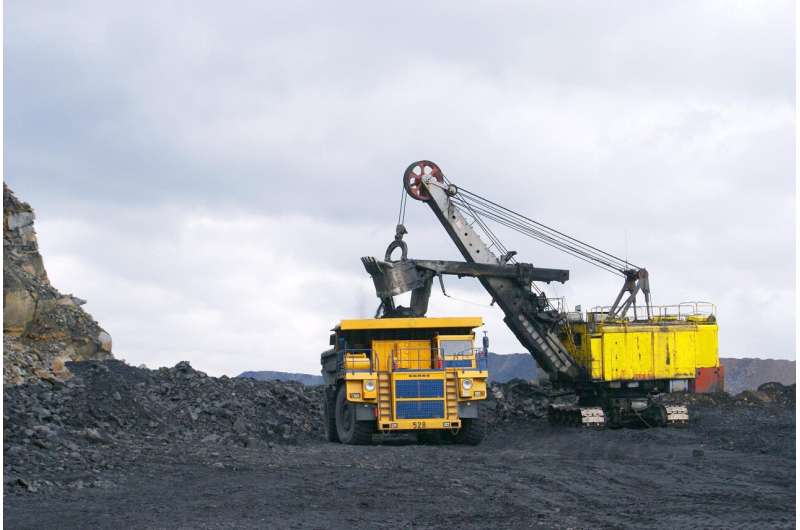
South Africa's mining sector faces a critical choice as it adopts fourth industrial revolution technologies: embrace stronger governance and workforce protections, or risk deepening economic inequality. A new review published in the International Journal of Mining and Mineral Engineering warns that automation's productivity gains may come at significant social cost without deliberate policy intervention.
Researchers analyzed peer-reviewed studies alongside industry and policy documents to separate verified impacts from speculation. Their findings reveal a sector constrained by high capital requirements, skills shortages, regulatory ambiguity, and organizational resistance to change—even as companies deploy autonomous vehicles, drones, smart sensors, and artificial intelligence systems.
Why it matters
Mining remains a major employer in South Africa, particularly for workers with limited formal education. The research documents how automation threatens these jobs specifically while creating new positions that require advanced technical skills. Without coordinated policy response, the transition could accelerate unemployment in communities already facing economic pressure, while concentrating gains among skilled workers and capital owners.
Documented impacts beyond productivity
The review confirms that digital technologies deliver measurable improvements in productivity, worker safety, and real-time hazard monitoring. Equipment sensors can predict failures before they occur, and autonomous systems can operate in conditions too dangerous for human workers.
Yet the research team identified several documented negative effects already emerging in the sector. Job displacement hits low- and semi-skilled workers hardest. Critical infrastructure faces new cybersecurity vulnerabilities. AI-driven decision systems raise ethical questions about accountability and transparency. Digital surveillance of workers creates privacy concerns. Smaller suppliers struggle to meet technology-intensive procurement standards, potentially consolidating supply chains around larger firms.
Policy recommendations for managed transition
The researchers challenge assumptions that technological progress alone will generate broadly shared benefits. Instead, they call for updated employment legislation that addresses automation-driven displacement, stronger regulatory oversight of automated mining systems, substantial investment in worker retraining programs, and targeted support to help local businesses participate in increasingly digital supply chains.
The review suggests South Africa's mining automation trajectory is not predetermined. With coordinated action across government, industry, and labor organizations, the sector could harness fourth industrial revolution technologies while protecting vulnerable workers and maintaining competitive opportunities for smaller enterprises.
The findings were first reported by Inderscience in research conducted by T. Tingini and colleagues.
This is an original analysis by the Omega editorial team. Source reporting: Automation Watch.
Want systems like this working for your business?
Book a Call
