Microsoft Uses Agentic AI to Accelerate Quantum Computing
The company deploys autonomous AI agents across its Majorana 2 chip development to analyze research data, automate experiments, and identify engineering problems.
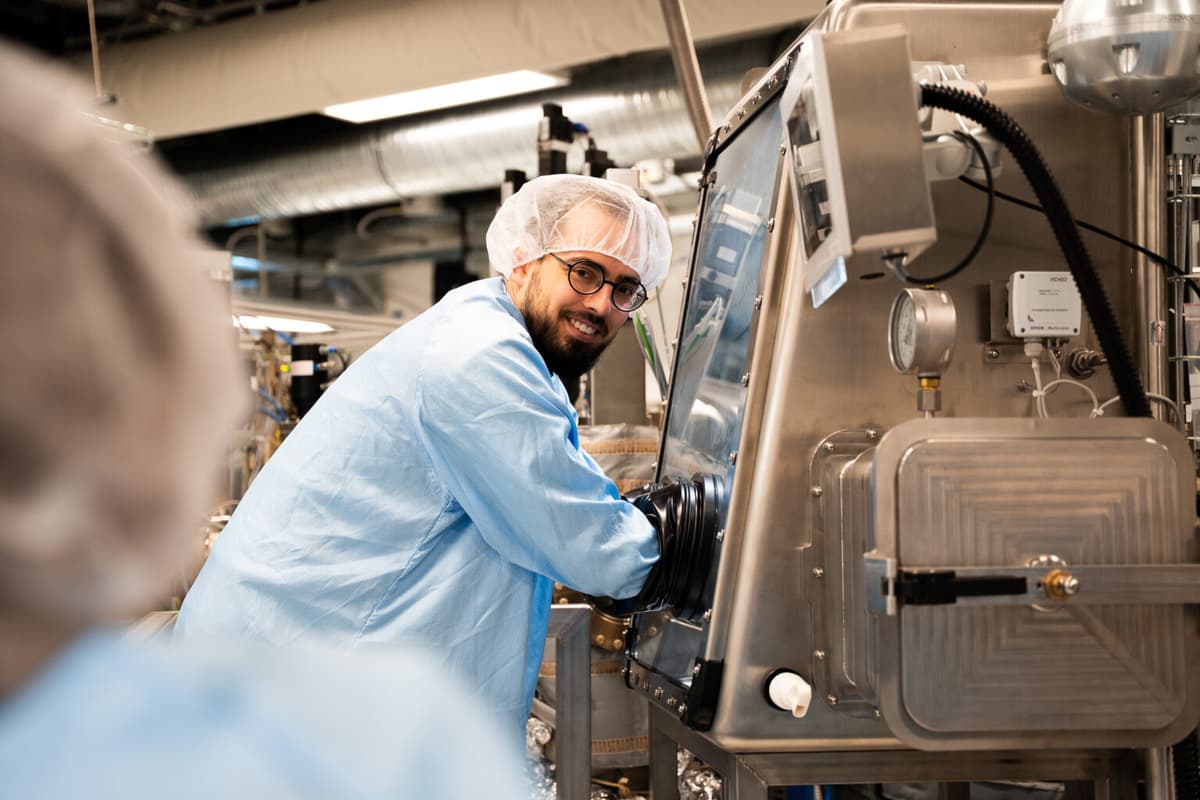
Microsoft has embedded agentic artificial intelligence throughout its quantum computing research program, using autonomous AI systems to speed development of its Majorana 2 chip and pursue a commercially useful quantum computer by 2029.
The company reports that AI agents now help quantum scientists analyze nearly two decades of accumulated research data, manage complex engineering dependencies across disciplines, and automate experimental workflows that previously required weeks of manual adjustment. According to Microsoft executives, the technology has reduced experimental cycle times by orders of magnitude while uncovering manufacturing issues human researchers might miss.
Why it matters
This represents a practical deployment of agentic AI in frontier scientific research, demonstrating how autonomous systems can accelerate complex R&D beyond simple data analysis. For organizations pursuing ambitious technical goals, Microsoft's approach offers a model for using AI to coordinate multi-disciplinary teams and compress development timelines without replacing human decision-making.
Automating quantum experiments
Microsoft's quantum effort centers on topological qubits, a quantum bit architecture designed for greater error resistance than conventional approaches. The company's Majorana 2 chip maintains qubit coherence roughly 1,000 times longer than its predecessor, with mean lifetimes around 20 seconds compared to the microseconds typical in competing systems.
Creating and operating these qubits requires adjusting hundreds of variables before measurements can begin. Zulfi Alam, corporate vice president for quantum at Microsoft, explained that the company previously attempted automation using earlier machine learning systems but hit limitations. With capabilities now available through Microsoft Discovery—a research platform the company released for general availability—specialized AI agents can automate measurements and explore large numbers of parameter combinations simultaneously.
"Using agentic AI to automate the measurements was a game changer," Alam said, noting the systems can adjust voltages in parallel and build detailed operating condition maps while searching for optimal configurations.
Synthesizing cross-disciplinary research
Quantum computing projects span software, chip architecture, materials science, fabrication, measurement systems, and device physics. Microsoft's quantum researchers work across multiple countries and specialties, accumulating nearly two decades of data stored in separate formats and repositories.
Chetan Nayak, technical fellow and head of quantum hardware at Microsoft, said agentic AI has become a natural part of workflow. "The agents can really accelerate things as much or as little as you want," Nayak explained. "It can be as little as pulling information together and summarizing it, or it can go further down the road of synthesizing it more or generating an interesting hypothesis."
Alam added that AI agents can resynthesize data and identify correlations across volumes no single researcher could process, helping teams draw connections between disciplines that would otherwise remain isolated.
Materials development and simulation
Microsoft switched from aluminum to lead as the superconducting material in Majorana 2, a change that required extensive research to manage engineering tradeoffs. Future materials work will rely more heavily on AI-driven simulations to identify probable material configurations before physical experiments, potentially eliminating lengthy trial-and-error cycles.
"In the new world order, through simulations, you can see where the highly probable target is," Alam said. "And then with that knowledge, you ideally only have to experiment once."
Microsoft emphasizes what executives call a "scientist in the loop" model, where human researchers retain decision-making authority while AI processes information and suggests directions. The company said organizations in life sciences, chemicals, materials development, manufacturing, and energy are already using Microsoft Discovery for research projects.
These details were first reported by The Quantum Insider.
This is an original analysis by the Omega editorial team. Source reporting: AI Watch.
Want systems like this working for your business?
Book a Call