Wistron Opens $700M Texas Factory Building NVIDIA AI Superchips
Fort Worth facility will produce tens of thousands of GB300 Grace Blackwell Ultra boards monthly as U.S. manufacturing scales for AI infrastructure demands.
Manufacturing Returns to Build AI Infrastructure
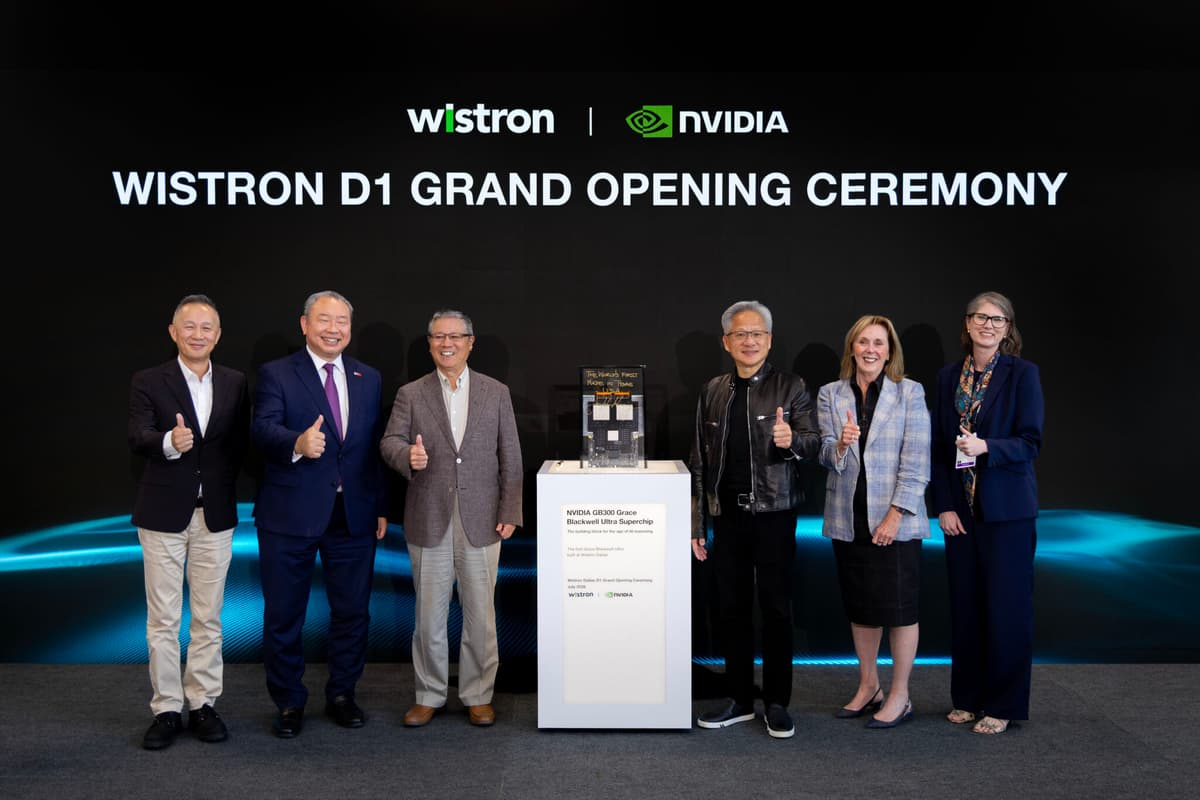
Wistron has opened its first U.S. manufacturing facility, a 324,000-square-foot plant in Fort Worth, Texas, dedicated to producing the superchips that power advanced AI systems. The facility began operations with two manufacturing cells: one producing NVIDIA's GB300 Grace Blackwell Ultra Superchip and another preparing to manufacture the NVIDIA Vera Rubin Superchip.
NVIDIA CEO Jensen Huang joined Wistron Chairman Simon Lin at the opening ceremony, where Huang described the facility as part of a broader U.S. reindustrialization effort. The plant, designated as Wistron's D1 facility, is scaling to produce tens of thousands of boards per month, according to details first reported by NVIDIA.
Why It Matters
The Fort Worth plant represents a concrete step in reshoring critical AI manufacturing capacity. As companies commit hundreds of billions to AI infrastructure, the ability to manufacture at scale domestically reduces supply chain vulnerabilities and creates a skilled workforce capable of adapting as the technology evolves. This shift from offshore dependency to local production capacity could determine which economies lead in the AI era.
Jobs and Investment Scale
The facility represents a $700 million investment in advanced manufacturing and has already created over 500 jobs across the Texas site. Wistron plans to expand the workforce to 1,000 employees by year's end. Huang emphasized the breadth of employment opportunities, spanning plumbing, construction, manufacturing, and electrical work.
The Fort Worth factory supports NVIDIA's commitment to manufacture up to $500 billion in advanced AI platforms within the United States. Huang described the systems built around the GB300 Grace Blackwell Ultra Superchip as containing 1.5 million parts, weighing two tons, and costing $4 million per unit.
Digital Twin Design Process
Before breaking ground, Wistron designed and simulated the entire facility in a digital twin built on NVIDIA's platform, including Nemotron and Cosmos models, Omniverse and Metropolis libraries, and the PhysicsNeMo framework. This virtual environment allowed engineers to validate assembly line layouts, optimize production processes, and train workers on standard operating procedures before physical operations began.
Infrastructure for the AI Economy
Huang framed AI factories as fundamental infrastructure comparable to agriculture, roads, and electricity grids. "Just as agriculture is a fundamental infrastructure of society, in the future these AI factories will be a fundamental infrastructure of society," he said at the ceremony, which included unveiling the first GB300 superchip produced on site.
The opening follows other manufacturing expansions in the region, including Coherent's facility groundbreaking in Sherman, Texas, signaling a broader pattern of semiconductor and AI hardware production returning to American soil.
These details were first reported by NVIDIA in coverage of the facility opening.
This is an original analysis by the Omega editorial team. Source reporting: AI Watch.
Want systems like this working for your business?
Book a Call