Meta's Muse Image Lets Anyone Use Your Instagram Photos for AI
Public accounts are opted in by default to Meta's new generative image tool, which allows tagging to pull content into AI creations.
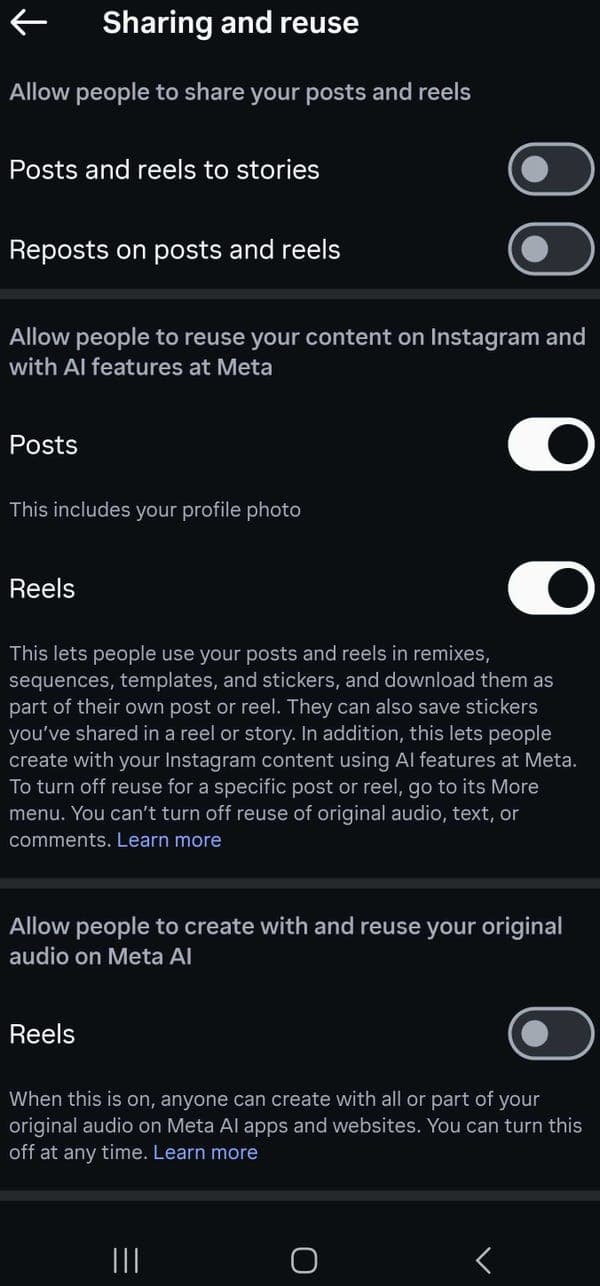
Meta has launched Muse Image, a generative AI model that allows Instagram users to create images by tagging public accounts in prompts — and unless you've changed a specific setting, your public photos are already available for others to use.
The feature, unveiled Tuesday, marks Meta's latest move to integrate AI generation directly into Instagram. Users can now reference another person's public posts, reels, or profile pictures to inform AI-generated images simply by including an account tag in their prompt.
Default opt-in raises privacy concerns
Public Instagram accounts are enrolled in this sharing system automatically. To disable it, users must navigate to the Instagram app's settings menu, locate the "Sharing and reuse" tab, and manually toggle off separate controls for posts and reels. The controls are not accessible through Instagram's web interface.
Once content has been used to generate an AI image, Instagram will not remove those creations even if a user later opts out. The platform also does not notify account holders when their content is referenced in someone else's AI generation.
Why it matters
Meta's default opt-in approach continues a pattern that has drawn sustained criticism from privacy advocates. By requiring users to proactively disable features rather than choose to participate, the company maximizes the pool of training and reference material available for its AI systems while placing the burden of privacy protection on individual users. For businesses and creators who maintain public Instagram presences for marketing purposes, this creates a new consideration: their brand imagery can now be incorporated into AI-generated content they don't control, with no advance notice or approval process.
Competing in the generative AI market
Muse Image represents Meta's effort to position itself against established image-generation tools from OpenAI, Google, Midjourney, and Adobe. By embedding the capability directly into Instagram — which reaches billions of users — Meta gains distribution advantages that standalone AI tools cannot match.
The rollout adds another chapter to Meta's ongoing privacy controversies. The company has faced years of scrutiny over how it handles user data, including previous criticism for using public posts to train AI models without explicit consent. Privacy advocates have consistently argued that opt-out policies give users insufficient control over how their content is repurposed, particularly when those controls are difficult to locate or understand.
These details were first reported by Business Insider.
This is an original analysis by the Omega editorial team. Source reporting: AI Watch.
Want systems like this working for your business?
Book a Call
