Marines Award $20M Contract for Autonomous Resupply Vehicles
Overland AI will deliver more than a dozen self-navigating ground vehicles to support air defense systems under Pentagon's rapid acquisition program.
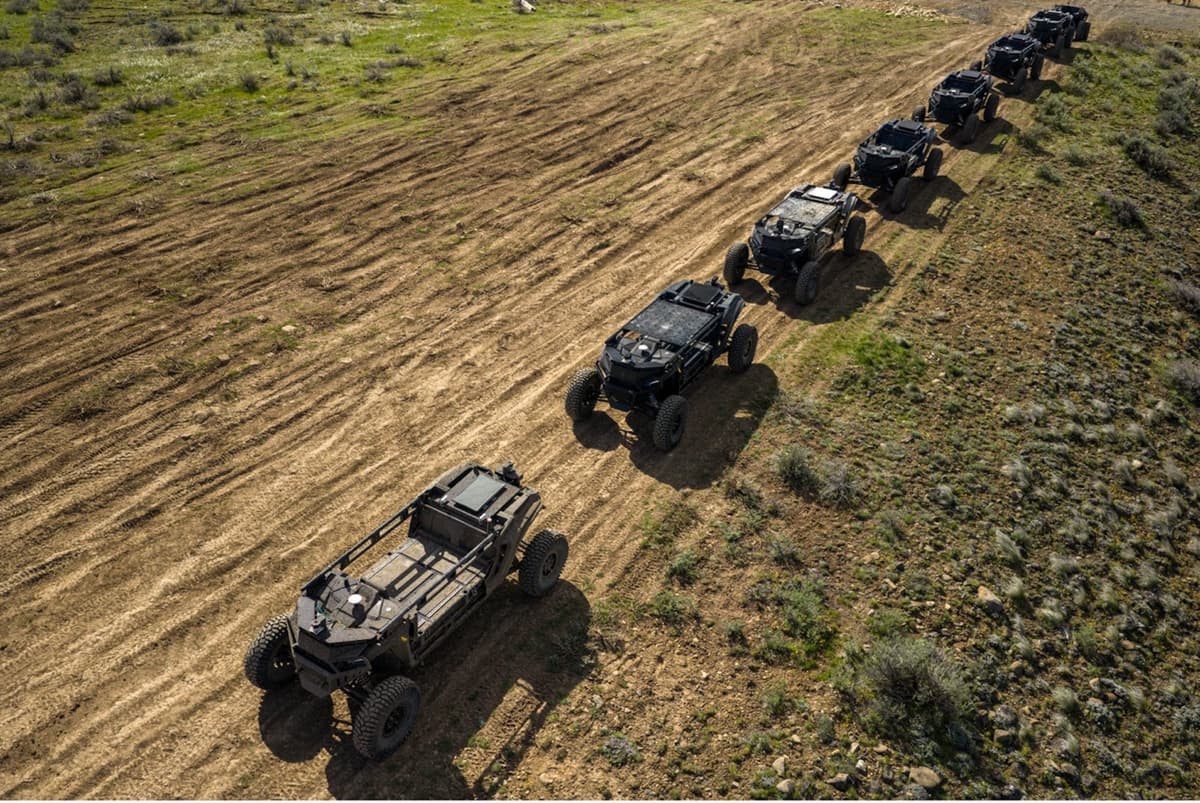
The Marine Corps has awarded Overland AI a $20 million production contract to supply autonomous ground vehicles designed to resupply Marine Air Defense Integrated Systems, the company announced Monday.
The deal, facilitated through the Pentagon's Accelerate the Procurement and Fielding of Innovative Technologies (APFIT) initiative, marks a shift from experimentation to operational deployment of autonomous ground systems. Initial deliveries are scheduled to begin approximately nine months after contract award, with more than a dozen vehicles planned for delivery.
Integration with existing air defense architecture
The autonomous vehicles will support MADIS, a mobile counter-air system built around two Joint Light Tactical Vehicles equipped with sensors and weapons including 30mm cannons, Stinger missiles, and electronic warfare capabilities. Overland AI CEO Byron Boots clarified during a media roundtable that the autonomous platforms are not replacing the JLTVs but rather augmenting the system's logistics capabilities.
"We're going to start by integrating the vehicle into the system, providing a resupply capability for the other vehicles which are part of the system," Boots told DefenseScoop, which first reported the contract details.
The $20 million other transaction agreement encompasses not only the vehicle hardware but also Overland AI's OverDrive autonomy stack and OverWatch command-and-control software, plus spare parts and services.
Autonomous versus uncrewed distinction
Boots emphasized a critical technical distinction between uncrewed and autonomous ground vehicles. While all autonomous vehicles are uncrewed, autonomous systems carry onboard sensors, computing power, and software that enable independent navigation through complex terrain.
"It can perceive the environment, represent it, plan through it, and control the vehicle, so you can tell it where to go, and it will make the decisions on board in order to get there," Boots explained. This capability allows the vehicles to operate effectively in contested communications environments and enables a single operator to manage multiple platforms simultaneously.
Human operators retain the ability to assume direct control when needed. Boots described the platform as a "light" vehicle but declined to provide specific dimensions or payload capacity.
Why it matters
This production contract represents the Pentagon moving beyond prototype testing to operational acquisition of autonomous ground systems—a significant milestone for military robotics. The Marine Corps' decision to field these vehicles for logistics missions addresses a critical vulnerability: keeping human operators out of high-risk resupply routes while maintaining operational tempo. As autonomous ground vehicles proliferate in the Ukraine-Russia conflict, the U.S. military is racing to integrate similar capabilities that provide standoff distance and force multiplication.
Flexible payload integration
Overland AI has already integrated approximately 30 different payloads onto its autonomous platforms. Beyond resupply, potential applications include intelligence, surveillance, reconnaissance missions, and deployment of tethered drones. Boots noted that payload applications are "limitless" within the vehicle's size, weight, and power constraints.
The CEO pointed to Ukraine as evidence of a "revolution in land warfare" where uncrewed ground vehicles provide soldiers and Marines with safety and standoff capabilities by removing humans from direct contact points during operations.
Boots reported "extremely high demand" from U.S. operational units seeking to incorporate autonomous ground vehicle technology into their operational concepts, signaling broader adoption across the military.
The contract details were first reported by DefenseScoop.
This is an original analysis by the Omega editorial team. Source reporting: AI Watch.
Want systems like this working for your business?
Book a Call
