Luxonis raises $14M to build vision systems for AI robots
The Denver startup's cameras and edge AI software provide the perception layer that lets autonomous systems see and understand their physical environment.
Luxonis secures Series A for robot vision technology
Denver-based Luxonis Holding Corp. closed a $14 million Series A round led by Denali Growth Partners to expand production of its camera systems that enable robots and automated machinery to perceive their physical surroundings. The company builds integrated hardware and software that form the visual perception layer for AI-driven robotics across manufacturing, warehousing, and other industrial applications.
Founded in 2019, Luxonis took an unconventional route to market, launching with a 2020 Kickstarter campaign that drew more than 6,500 backers and raised $1.3 million. Including the crowdfunding and this latest round, the company has raised over $23 million in total capital, according to Pitchbook data.
How the technology works
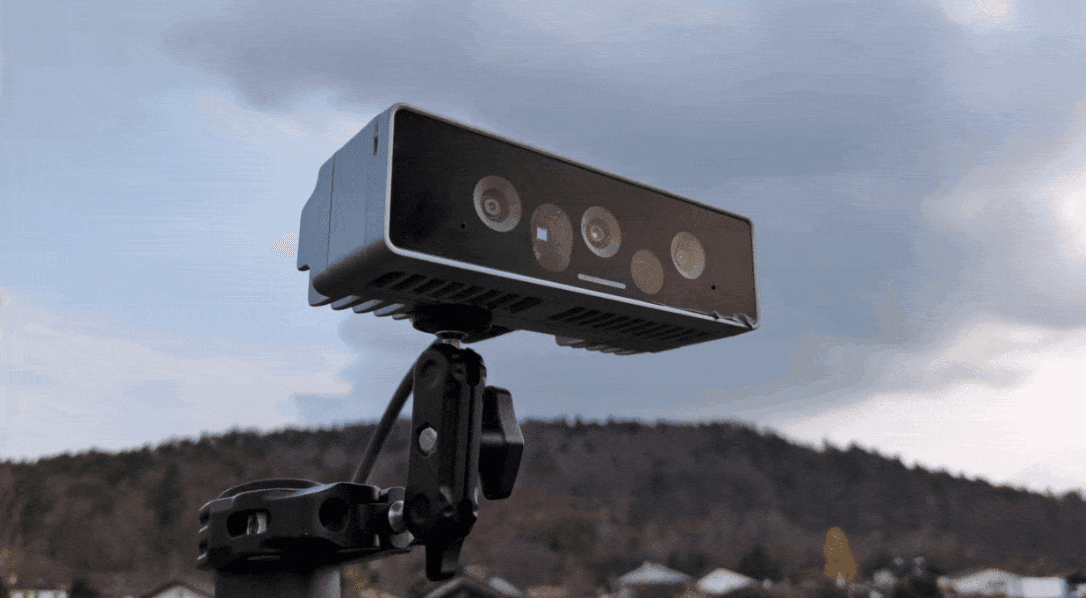
Luxonis manufactures OAK Camera devices that bundle multiple vision sensors with onboard compute processors in single units. The cameras deliver depth perception with precision up to 1/32 subpixel accuracy and can execute AI models locally using INT8 and FP16 compression optimized for edge deployment.
The company pairs its hardware with DepthAI, an open-source software platform that allows developers to build visual perception systems for autonomous agents. The latest OAK4 generation, which launched in 2025, comes in multiple form factors designed for plug-and-play integration.
By processing vision data and running inference at the edge rather than sending streams to cloud servers, the systems reduce latency and enable real-time decision-making. They also maintain functionality during network outages and consume less power than architectures dependent on remote compute.
Targeting the physical AI wave
The funding arrives as investment in physical AI infrastructure accelerates. Vision-action model developers have attracted substantial capital recently, including a $400 million round for Generalist AI Inc. and $600 million for Jeff Bezos-backed Physical Intelligence. These AI systems require high-quality visual input to control robotic actuators and manipulators effectively.
Luxonis positions its cameras as the foundational perception layer that feeds data into these intelligence systems. The company said accurate depth sensing, multi-angle capture, and signal processing capabilities determine whether autonomous systems operate with limited or comprehensive environmental awareness.
Expansion plans
Luxonis will use the Series A proceeds to advance its edge AI architecture and scale production of the OAK4 ecosystem. The company plans to expand supply chain capacity and grow its research, development, and engineering support teams.
The startup also intends to release new devices at accessible price points in flexible configurations. Target markets include defense, industrial machinery, medical technology, and logistics operations adopting AI-powered automation.
Why it matters
As robotics deployments move from controlled lab environments to dynamic real-world settings, vision systems become critical infrastructure rather than optional components. Factories, warehouses, and surgical suites require machines that can navigate unpredictable conditions, identify objects accurately, and respond to changing scenarios without human intervention. Companies building the AI models that control these robots depend on reliable visual perception hardware that processes data locally with minimal latency. Luxonis addresses a specific technical bottleneck in the physical AI stack where quality sensor input directly impacts system performance and safety.
SiliconANGLE first reported the funding details.
This is an original analysis by the Omega editorial team. Source reporting: Automation Watch.
Want systems like this working for your business?
Book a Call