Local Zoning Fights Threaten U.S. Lead in AI Infrastructure Race
More than 70% of Americans now oppose data centers in their communities, creating a permitting bottleneck that could erase America's compute advantage over China.
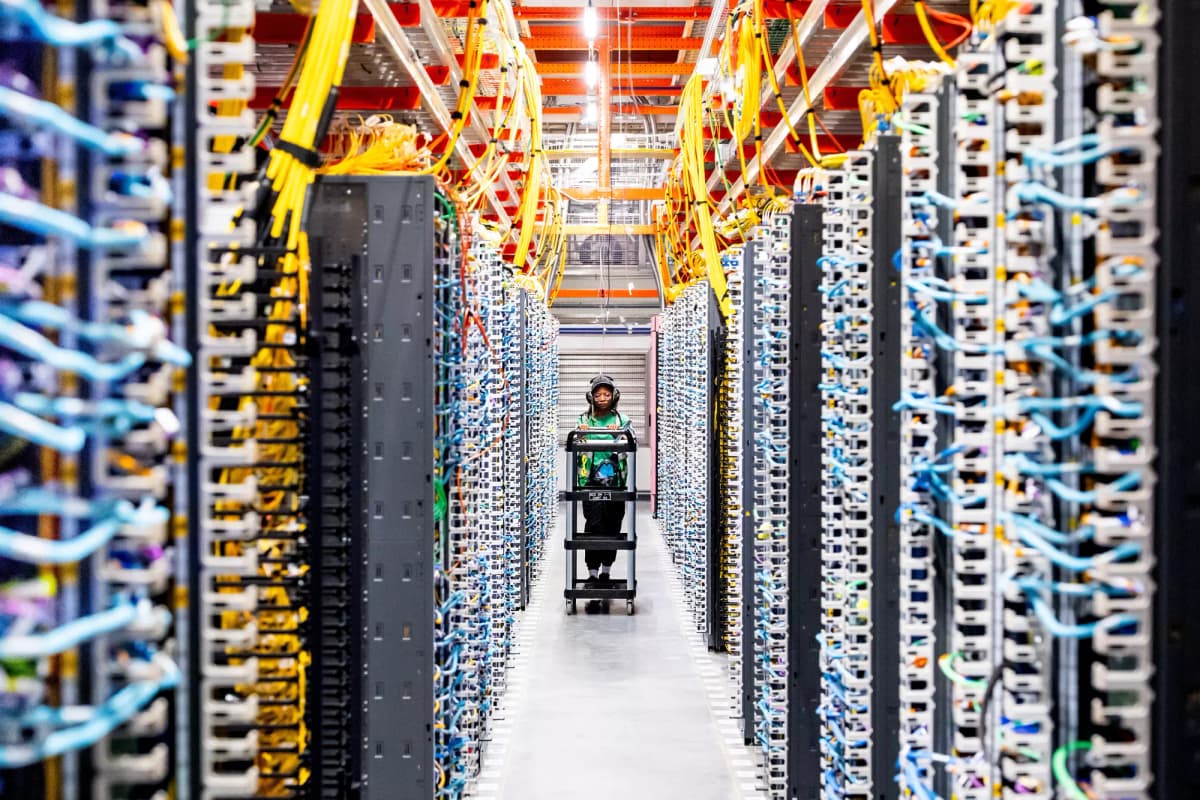
Local resistance threatens national AI strategy
America's lead in artificial intelligence rests on a fragile foundation: the ability to build hundreds of billions of dollars worth of new data centers by 2030. But a Gallup poll released in May 2026 reveals a critical vulnerability—more than 7 in 10 Americans now oppose AI data centers near their homes, with 48% strongly opposed. That level of resistance exceeds opposition to new nuclear power plants.
The United States currently holds roughly a seven-month lead over China in frontier AI capability, according to most estimates. That margin exists almost entirely because of superior access to compute—advanced GPUs, abundant electricity, and large-scale cooling infrastructure. Every credible roadmap assumes massive domestic data-center expansion to maintain this edge.
But in America's federal system, that buildout happens at county planning commissions and utility board hearings, in front of local officials whose constituents worry about water depletion and higher electricity bills. In Monterey Park, California, voters overwhelmingly banned all data centers. Nationally, opposition is gaining momentum.
Why it matters
This is not a public relations problem—it's a structural policy challenge that could determine whether the United States or China leads the next decade of AI development. Stretching infrastructure buildout across five extra years of permitting fights would eliminate America's compute advantage without Beijing winning a single chip-design contest in Washington.
The economics of local opposition
Community concerns are grounded in operational reality. A single hyperscale facility can consume several million gallons of water daily for cooling. Current utility rate structures typically spread the cost of new transmission and generation across all customers, meaning residential ratepayers subsidize infrastructure built primarily for cloud providers. A 550,000-square-foot data center along a major highway is not an abstract concern—it's a neighbor with massive resource demands.
Three structural fixes
Warren Wimmer, CEO of Global Leaders Assembly Foundation and a former energy and infrastructure lender, proposes three reforms in a Los Angeles Times opinion piece that could convert opposition into acceptance.
First, require interruptible load contracts. Data centers would agree to throttle down or switch to on-site battery storage during the few hundred hours per year of peak grid demand. This allows utilities to spread fixed infrastructure costs across a larger base, lowering bills for other customers. The technology exists; the contracts do not.
Second, reform cost allocation. New transmission, substations, and generation built specifically for data centers should be paid by operators, not residential ratepayers. Where new infrastructure produces system-wide savings, those savings should flow back to local households.
Third, provide proportional host-community benefits. Loudoun County, Virginia—home to the world's largest concentration of data centers—collects roughly $890 million in annual data-center tax revenue, about 38% of its general fund. That revenue has funded a decade of residential property tax cuts, building durable local political support.
The alternative to local engagement
Industries that pay for being tolerable neighbors grow; industries that don't, stall. Pipelines fund landowner trusts, wind farms pay county royalties, ports finance neighborhood mitigation. The AI industry faces a choice: do the unglamorous work of community engagement and contract redesign, or lose to China while filing briefs against local counties.
The details were first reported by Warren Wimmer in the Los Angeles Times.
This is an original analysis by the Omega editorial team. Source reporting: AI Watch.
Want systems like this working for your business?
Book a Call
