License Plate Readers Need Warrants, Not Just Regulation
New analysis finds weak evidence that automated surveillance cameras reduce crime, while privacy risks extend far beyond officer misconduct.
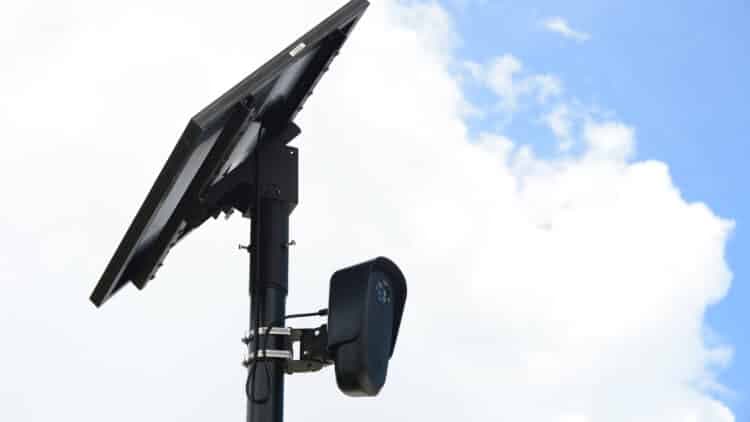
Automated license plate readers have proliferated across American communities at unprecedented speed. Flock Safety alone operates roughly 120,000 cameras nationwide, generating approximately 20 billion license plate scans each month. Yet the evidence supporting their crime-fighting effectiveness remains surprisingly thin, according to a detailed examination of the research.
The Reason Foundation reviewed studies cited by ALPR advocates and found the case for these systems considerably weaker than proponents suggest. Early randomized trials from the 2010s showed little crime reduction benefit, with one study finding that drug crime simply migrated to areas without cameras rather than declining overall. More recent research has produced mixed results that often disappear when researchers account for other variables.
A 2017 Buffalo study initially showed violent crime reductions but found crime actually increased when researchers adjusted for seasonal patterns. A 2019 Charlotte analysis saw apparent improvements in solving vehicle theft and robbery cases vanish after controlling for other case characteristics. Only a 2025 Atlantic City evaluation found statistically significant crime drops—but researchers couldn't separate the camera effect from a concurrent crime-fighting program or national crime trends.
A new 2025 working paper examining 216 jurisdictions suggests Flock deployments may reduce motor vehicle theft by 11 percent, but found no effect on other property crimes and no improvement in overall vehicle recovery rates.
Why it matters
The debate over ALPRs extends beyond whether they work to how society should govern mass surveillance capabilities. As courts increasingly recognize that aggregated location data reveals intimate details about people's lives, the question isn't just about preventing officer misconduct—it's about whether retrospective searches of movement histories should require judicial oversight. The technology's rapid deployment has outpaced both research validation and constitutional guardrails.
Privacy concerns extend beyond misconduct
Advocates for stronger ALPR regulation argue that officer misconduct—such as the Kansas police chief who stalked his ex-girlfriend using the system—represents only one dimension of the privacy problem. More fundamental concerns arise from legitimate law enforcement use.
In Brown County, Wisconsin, deputies used Flock's network to track a driver's legal trips into Michigan, then cited those trips as probable cause to search his vehicle for marijuana. In Colorado, an officer issued a summons based solely on ALPR data matching a truck to a package theft, declining to review exculpatory dashcam footage the driver offered.
The Institute for Justice has documented at least 31 cases of innocent drivers stopped, held at gunpoint, or jailed due to license plate reader errors—with most resulting from human error in data entry or interpretation rather than camera misreads.
The warrant question
Proponents of "smart regulation" suggest 30-day data retention limits, restricted access, supervisory approval, query logging, and penalties for misuse. Flock Safety has voluntarily adopted many such measures. But privacy advocates note these safeguards remain internal to law enforcement agencies.
The Supreme Court has moved toward recognizing that aggregated location data constitutes a Fourth Amendment search. In the 2018 Carpenter decision, the court required warrants for seven or more days of cell phone location history. This year's Chatrie ruling extended that logic to geofence warrants. Justice Elena Kagan's majority opinion held that what matters isn't data volume but whether police can "reconstruct 'retrospective[ly],' and with no real effort, people's comings and goings" without having identified a suspect beforehand.
That capability—retrospectively identifying movement patterns—distinguishes ALPR systems from officers simply observing public streets. The question facing policymakers is whether querying these databases should require the same external judicial review as other searches of aggregated location data.
These findings were first reported by the Reason Foundation in a detailed analysis of ALPR research and regulation.
This is an original analysis by the Omega editorial team. Source reporting: Automation Watch.
Want systems like this working for your business?
Book a Call