JetBrains Centralizes AI Tool Access After 10x Spend Spike
The IDE maker built a unified gateway for developer AI tools rather than restricting choice as token costs surged across frontier models.
JetBrains Centralizes AI Tool Access After 10x Spend Spike
JetBrains confronted a tenfold increase in AI-related development spending over six months by building a centralized access layer that preserves developer tool choice while establishing cost controls and visibility.
The company's approach stands in contrast to organizations that have responded to rising AI costs by restricting approved tools or imposing hard usage limits. Instead, JetBrains created infrastructure to manage consumption without dictating which models or services developers can use.
Why it matters
As frontier AI models become more capable and expensive, engineering organizations face a choice between restricting tool access or building governance infrastructure. JetBrains' approach suggests a middle path: centralized accounting and controls that don't eliminate the flexibility developers need to choose the right tool for each task. This matters particularly as model capabilities and pricing shift rapidly, making long-term vendor commitments risky.
From spreadsheets to automated tracking
The spending surge began in January 2026 as developers adopted increasingly capable models including Claude Opus 4.5 and 4.6. Most engineers were using between three and five AI tools monthly, creating a complex billing landscape across multiple providers.
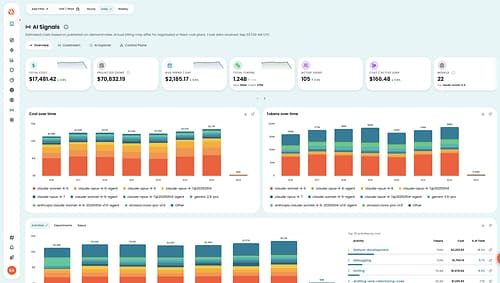
JetBrains initially spent four days manually collecting usage data into spreadsheets to understand where money was flowing. The company then automated this process through provider APIs and internal dashboards, giving teams real-time views of current and projected expenditure.
Visibility alone, however, didn't provide a mechanism for intervention. The dashboards showed spending patterns, but requests still traveled directly from individual tools to their respective providers.
Building a shared control point
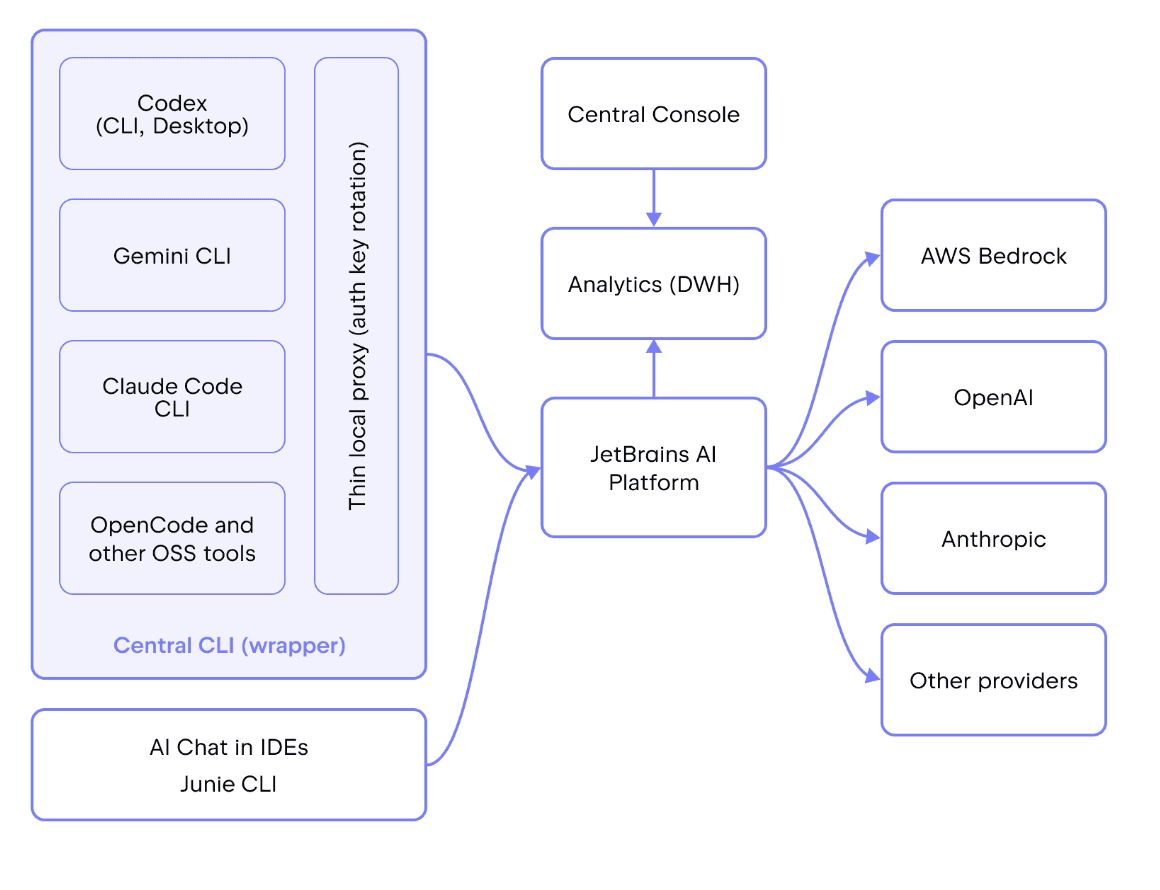
JetBrains expanded an internal wrapper tool into Central CLI, creating a common interface for invoking both proprietary and third-party AI services. By routing requests through the company's existing AI platform, Central CLI became a shared control point between developers and model providers.
This architectural change transformed the platform's role from passive observation to active participation in AI traffic. The company can now apply its AI-credit system to third-party tools, while managers can view spending and configure limits for individual developers, teams, or organizational groups.
More than 1,000 developers adopted Central CLI within weeks of its introduction, according to JetBrains.
Preserving choice amid market volatility
JetBrains deliberately avoided solving the cost problem by reducing available tools. The company noted that other organizations have standardized on one or two AI products, but argued that rapid market evolution makes it difficult to predict which tool will be optimal even months ahead.
Separating the access layer from tool selection allows these concerns to operate independently. Developers retain choice among supported tools while accounting, access management, and spending controls function beneath them.
The system doesn't yet cover all AI expenditure sources. Some terminal-based agents and personal subscriptions remain outside the managed infrastructure, and the company is still developing policies for distributing AI budgets fairly across users and teams.
Broader industry response
The cost-management challenge extends beyond JetBrains. The FinOps Foundation has identified generative AI as a growing area of focus and recommends centralized approaches to tracking usage and costs. Other organizations have taken more restrictive paths: Accenture asked employees to reduce unnecessary AI use, while Uber introduced monthly limits after exhausting an annual AI budget in four months.
These details were first reported by InfoQ.
This is an original analysis by the Omega editorial team. Source reporting: AI Watch.
Want systems like this working for your business?
Book a Call