Insilico Medicine lands $2.5B SK Biopharmaceuticals AI drug deal
The Hong Kong-listed biotech's second mega-deal in three months targets neuroimmune therapies and signals Korea's growing pharma ambitions.
Insilico Medicine secures second billion-dollar pharma partnership
Insilico Medicine has signed a partnership with South Korea's SK Biopharmaceuticals worth up to $2.5 billion to develop treatments for neuroimmune conditions using artificial intelligence. The Hong Kong-listed drug discovery company will deploy its Pharma.AI platform to design new therapeutic candidates, while SK Biopharmaceuticals handles late-stage clinical development and commercialization.
The deal structure includes $18 million in near-term payments to Insilico, with the remaining value contingent on hitting development and commercial milestones, plus royalties. It represents Insilico's largest partnership in the Asia-Pacific region and its second billion-dollar-plus agreement in recent months. In late March, the company struck a $2.75 billion deal with Eli Lilly focused on oral therapeutics in preclinical development.
Why it matters
The partnership illustrates how AI-native biotechs are securing validation—and capital—from established pharmaceutical players willing to bet on computational drug discovery. It also reflects South Korea's expanding role in life sciences innovation, fueled by semiconductor wealth and a higher risk tolerance for novel approaches. For Insilico, the deal provides both financial runway and proof that its AI platform can attract repeat enterprise customers at scale.
Korea's pharma ambitions backed by chip boom
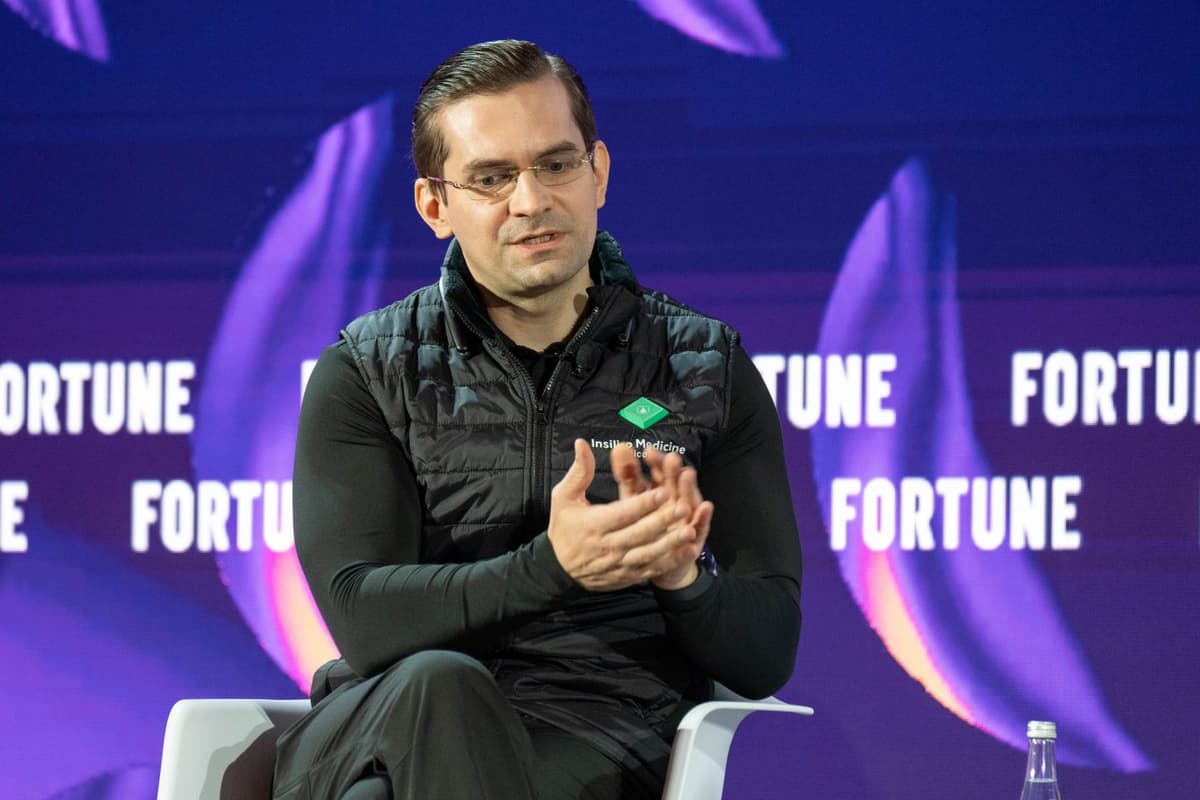
SK Biopharmaceuticals is part of the SK Group conglomerate, which has gained prominence through its ownership of SK Hynix, a critical supplier of memory chips to Nvidia. SK Hynix recently became South Korea's most valuable company, surpassing Samsung Electronics. That semiconductor-driven capital is now flowing into pharmaceutical R&D, according to Insilico co-CEO Alex Zhavoronkov.
"Korea now has substantial resources driven by the boom in AI. Now that innovation is flowing into pharmaceuticals," Zhavoronkov told Fortune, which first reported the partnership details. He expects more Korean companies to pursue larger roles in drug research, clinical trials, manufacturing, and sales.
Zhavoronkov characterized Korean firms as "a bit more adventurous" and willing to accept higher risk for breakthrough innovation, particularly in neuroimmunology—a field he projects could become a "trillion dollar opportunity."
Insilico's AI-first model and clinical pipeline
Insilico's approach uses artificial intelligence to screen vast numbers of molecular candidates before advancing to clinical trials, aiming to compress the timeline and cost of traditional drug discovery. The company, founded in Boston and now operating across mainland China, Hong Kong, and Abu Dhabi, has multiple drugs in human trials. Its lead candidate targets idiopathic pulmonary fibrosis, a lung scarring condition, and is currently in Phase II testing.
Zhavoronkov framed the company's ambitions in aerospace terms: "We want to be the SpaceX of the pharmaceutical industry. The more I scale, the better my AI gets. I want to get to this escape velocity where nobody can even compete."
Insilico's shares rose 5.6 percent in Hong Kong trading following the announcement and are up 35 percent since the company's late December IPO. SK Biopharmaceuticals' shares declined 1.7 percent, extending a 30 percent drop for the year.
The deal also positions Insilico within a broader surge in Asian biotech. China now accounts for roughly one-third of innovative molecules in global drug pipelines and attracts about three-quarters of Asia's biotech venture funding, according to a recent ING report. Zhavoronkov noted that using China as a development platform can yield "two years of speed at the pre-clinical level."
Details of the partnership were first reported by Fortune.
This is an original analysis by the Omega editorial team. Source reporting: AI Watch.
Want systems like this working for your business?
Book a Call