Industrial Automation Spending to Grow 6-9% Annually Through 2030
Roland Berger forecasts strong capital investment cycle while humanoid robots remain years from production readiness.
Strong Multi-Year Growth Cycle Begins
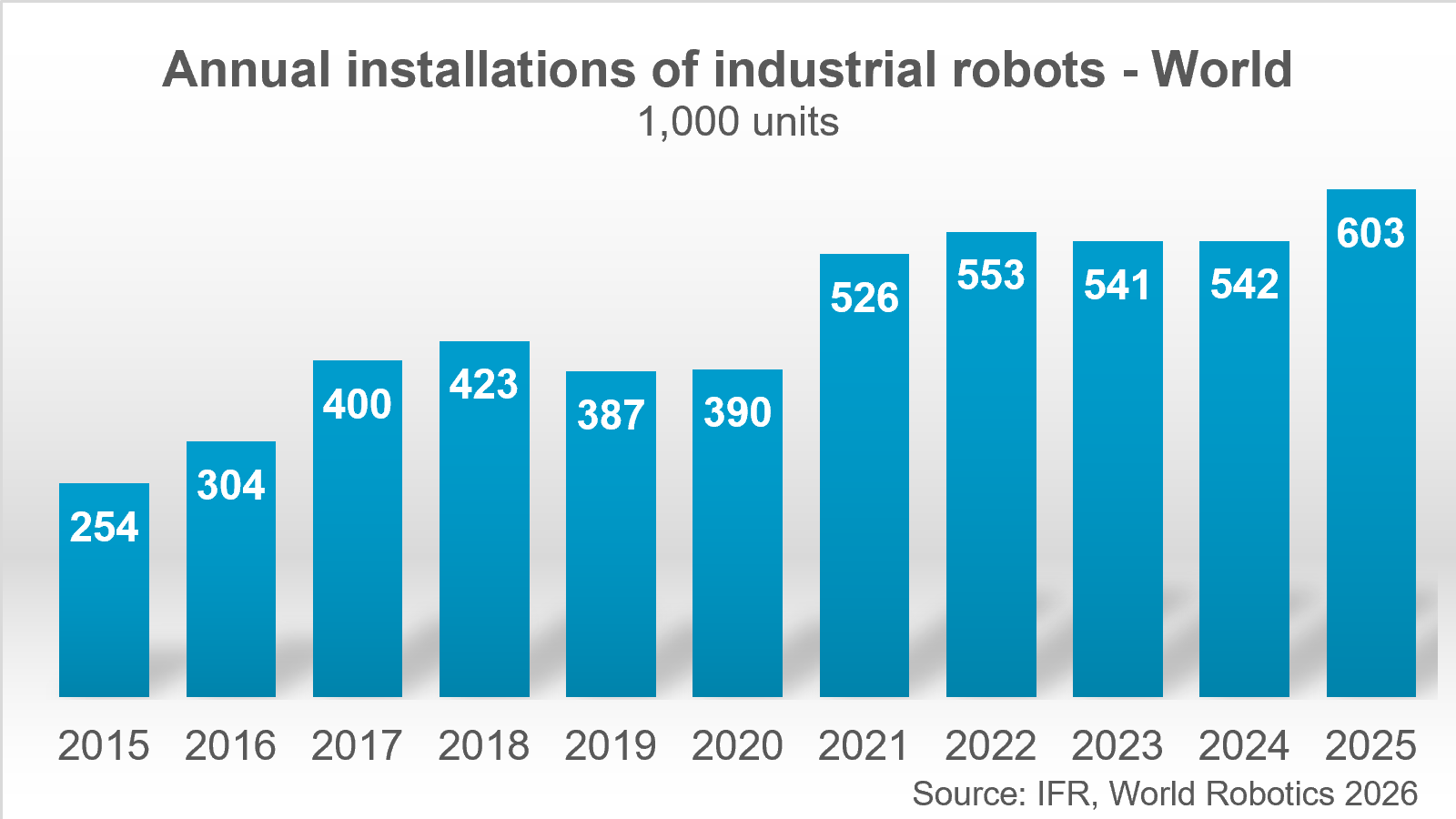
Industrial automation is entering its strongest capital spending cycle in years, with Roland Berger projecting annual growth between 6% and 9% through 2030. The forecast, first reported by Engineering.com, identifies 2026 as the start of five consecutive years of expansion driven by factory modernization, North American reshoring, semiconductor fabrication construction, and demand for flexible production systems.
The growth comes as manufacturers replace proprietary, vendor-locked control systems with standardized, software-driven platforms. This architectural shift reduces deployment costs per production line and improves scalability across facilities—critical factors for operations teams managing multiple plants or planning new builds.
Why It Matters
This five-year growth window creates procurement urgency. As the cycle progresses, component lead times, systems integrator capacity, and skilled deployment resources will tighten. Operations teams planning automation projects for 2027 or 2028 may face a more constrained vendor market and higher costs than those moving in 2026. The shift to open, software-driven platforms also means manufacturers delaying infrastructure audits risk falling behind competitors who can absorb new capabilities without full hardware refreshes.
Reality Check at Automate 2026
At the Automate 2026 trade show in Chicago, which ran June 22-25, the gap between investor enthusiasm and factory-floor reality was stark. While humanoid robots drew crowds with demonstrations of dancing and beverage preparation, industry executives delivered pointed skepticism about their near-term production viability.
Jim Brown, chief commercial officer for Teradyne Robotics, told a panel that attendees risk losing sight of what operational problem humanoids actually solve, according to Manufacturing Dive reporter Nathan Owens. Scalability constraints, unit economics, and reliability across varied surfaces and tasks remain unresolved at production volumes. For most manufacturing environments today, humanoids function as R&D investments rather than deployable production assets.
The robots generating real operational traction were collaborative arms handling pick-and-place and assembly tasks, mobile robots moving materials between stations, and welding and painting cells with integrated vision systems. These categories benefit directly from the capital-spending cycle because they address documented labor constraints and cycle-time targets now.
Where Capital Should Flow
Manufacturing Dive noted that Automate executives highlighted growing automation accessibility for manufacturers of all sizes, not just large-scale OEMs. This expands the addressable market considerably. Mid-market operations directors who previously priced themselves out of automation projects should revisit vendor conversations—the cost curve has shifted significantly in three years.
For capital planning purposes, near-term allocation should target proven categories: collaborative robots, mobile autonomous platforms, and the software infrastructure connecting them to existing production systems. Vendors best positioned in this cycle offer modular, updatable platforms that can absorb new capabilities—including AI-driven vision and adaptive path planning—without requiring complete hardware replacement.
Operations leaders who have not audited current control infrastructure for openness and upgrade paths are starting behind. The platform question is no longer about hardware specifications but about software update cadence and interoperability with existing MES and ERP layers.
Humanoids will eventually matter at the factory floor, but the timeline is years, not quarters. The next Automate show in 2027 will reveal whether commercial humanoid deployments have cleared the scalability threshold.
These details were first reported by Engineering.com and Manufacturing Dive, with coverage from reporter Nathan Owens at the Automate 2026 trade show.
This is an original analysis by the Omega editorial team. Source reporting: Automation Watch.
Want systems like this working for your business?
Book a Call