Industrial Automation Market to Grow 6-9% Annually Through 2030
Roland Berger forecasts five-year expansion as manufacturers shift from proprietary systems to software-driven platforms, while humanoid robots remain years from production deployment.

Strong growth cycle begins as automation architecture evolves
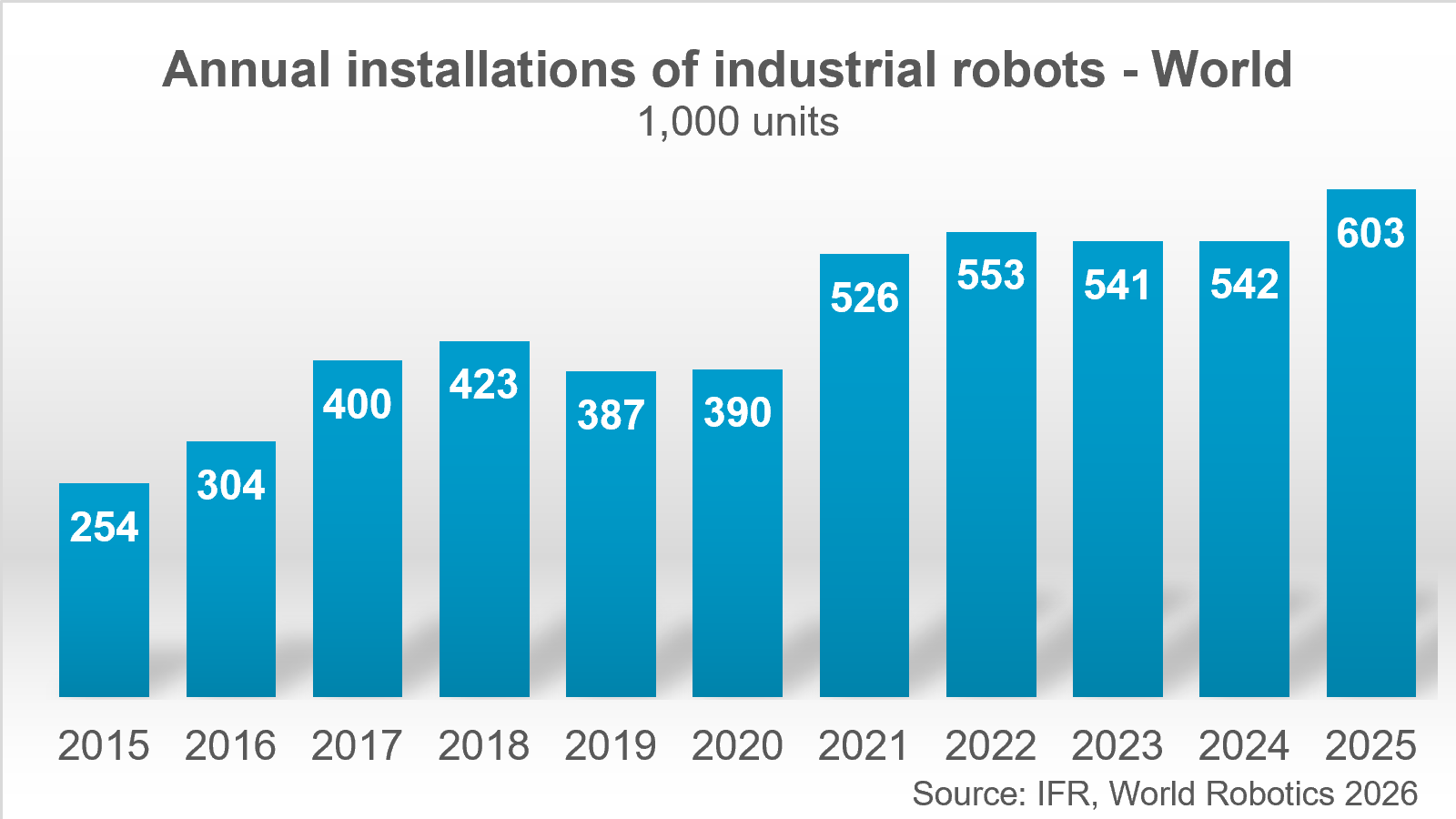
Industrial automation is entering a sustained expansion phase, with Roland Berger projecting annual growth between 6% and 9% through 2030. The five-year cycle beginning in 2026 is being driven by factory modernization programs, North American reshoring initiatives, semiconductor manufacturing expansion, and demand for more flexible production systems, according to Engineering.com.
The forecast reflects concrete capital allocation trends rather than speculative technology bets. Manufacturers are investing in both greenfield facilities and brownfield upgrades that require automation equipment capable of rapid deployment and reconfiguration as product lines evolve.
Why it matters
This growth window creates a procurement advantage for operations leaders who can commit volume early, as vendor competition intensifies and pricing pressure favors buyers. The shift toward standardized, software-driven platforms also means automation architectures built on proprietary systems will carry higher long-term costs, making vendor evaluation criteria more critical than in previous cycles.
Humanoid robots generate attention but not purchase orders
At Automate 2026 in Chicago, held June 22-25, humanoid robots drew significant crowds. Attendees watched bipedal machines interact, dance, and prepare coffee. Yet the enthusiasm did not translate to procurement decisions.
Jim Brown, chief commercial officer for Teradyne Robotics, addressed the disconnect during an executive panel covered by Manufacturing Dive. Brown questioned whether the excitement around humanoid form factors was aligned with actual manufacturing challenges these robots can solve. The technology remains constrained by cost, reliability, and scalability issues that are distinct from the barriers facing conventional industrial arms or autonomous mobile robots, which have established vendor ecosystems and proven ROI profiles.
For operations leaders evaluating capital commitments, humanoid robots represent a 2027-2028 conversation at earliest, not a current production planning consideration.
Platform standardization drives structural market shift
Beneath the trade show demonstrations, Automate 2026 revealed a more fundamental transition. Manufacturers are moving away from closed, proprietary automation architectures toward standardized, software-driven platforms. This shift is driven by the need to reduce deployment costs and improve scalability across multiple facilities with varying production requirements, Engineering.com reported.
Standardized platforms lower switching costs between vendors and simplify integration of new capabilities, including AI-driven process controls and vision systems, without replacing existing infrastructure. For multi-site operations, this architectural evolution is immediately actionable, unlike experimental humanoid deployments.
The reshoring trend adds urgency to these decisions. As production returns to North America, manufacturers need facilities that are competitive from day one, creating demand for automation equipment that deploys quickly and reconfigures easily.
Capital spending patterns reinforce growth trajectory
The Roland Berger projection reflects more than organic demand. Investor activity and corporate capital spending are both accelerating, suggesting the industry's suppliers and integrators expect sustained order volume, according to Engineering.com.
For procurement teams, this growth window means the automation vendor landscape will likely undergo consolidation, see new entrants, and experience platform competition that reshapes supplier relationships by 2030. Vendors competing in an expanding market typically increase product development investment, which benefits buyers through improved capabilities and eventual price reductions.
The immediate decision for most manufacturing operations is whether current automation architecture can accommodate the software-driven platforms already arriving in the market. That assessment should inform the next capital planning cycle.
These details were first reported by Engineering.com and Manufacturing Dive in their coverage of the Roland Berger forecast and Automate 2026 conference.
This is an original analysis by the Omega editorial team. Source reporting: Automation Watch.
Want systems like this working for your business?
Book a Call