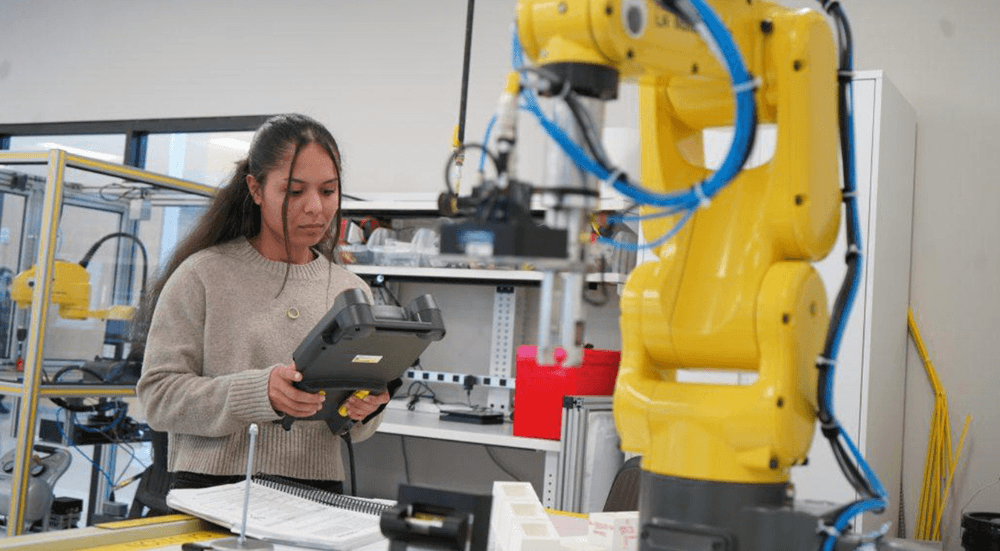
Indian Factory Workers Film Themselves to Train AI Robots
Companies are collecting first-person footage from garment workers and laborers without direct compensation, raising questions about consent and data ownership.
Cameras on the factory floor
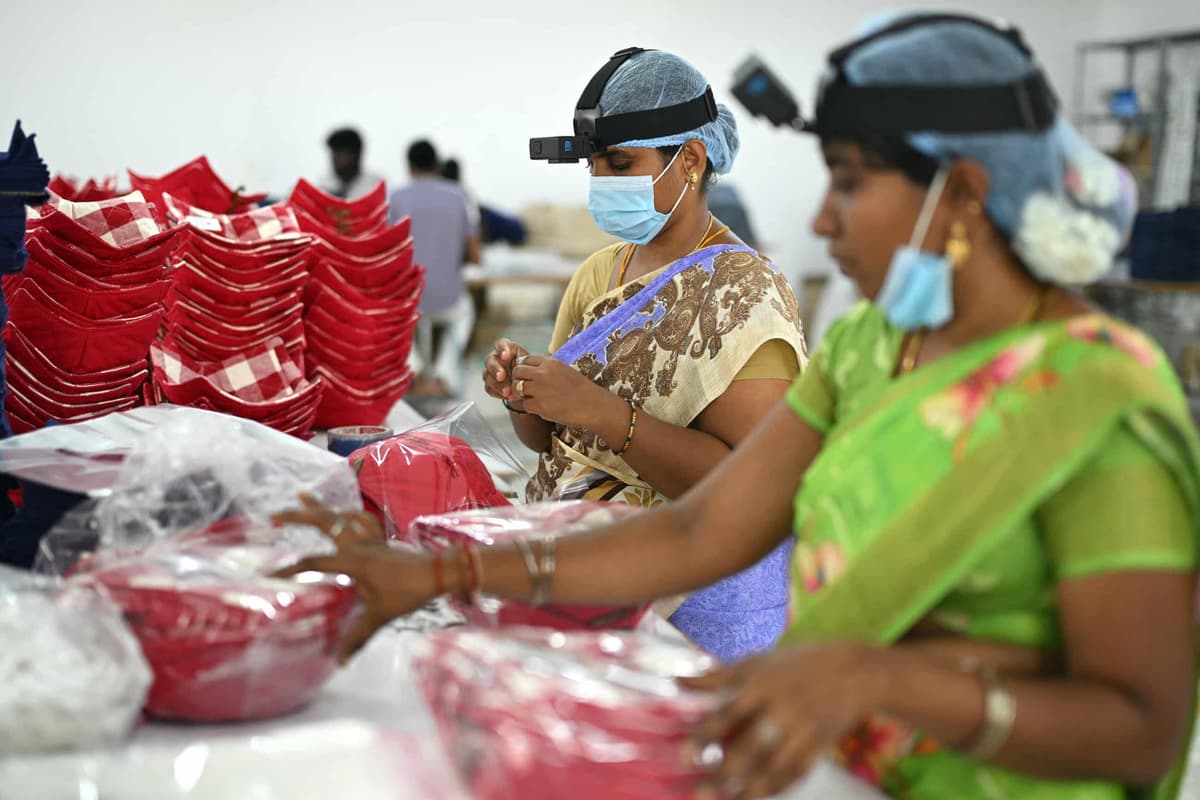
Garment workers at a factory outside Delhi were recently asked to strap small cameras to their foreheads before starting their shifts. Management offered no explanation. The devices recorded everything: hand movements guiding fabric through sewing machines, the precision of aligning seams, conversations with colleagues.
What these workers didn't know was that their daily routines were being captured as egocentric data—first-person recordings of human movements that are now essential for training humanoid robots. The footage from their factory in Gurugram was collected by EgoLab, an Indian data aggregation company whose clients include Tesla.
According to reporting first published by The Guardian, India has become a crucial hub for collecting this type of workplace data. A growing ecosystem of firms—including Humyn AI, FPV Labs, Scale AI, and others—has emerged to build data pipelines for robotics companies racing to automate industrial work.
Why it matters
Unlike large language models trained on text scraped from the internet, robots require massive volumes of first-person footage showing how humans perform physical tasks. Industry experts say hundreds of millions or billions of hours may be needed before robots can reliably navigate real-world environments. As companies build valuable AI systems on datasets generated by workers' bodies and skills, fundamental questions about compensation, consent, and data ownership remain unanswered—and current labor arrangements offer no clear framework for addressing them.
Workers receive no direct payment
The Guardian's examination of data-collection practices across six factories in five Indian states found that workers wearing devices ranging from Meta smart glasses to head-mounted cameras received no compensation for generating footage later sold to technology companies. One worker said she sometimes received a soft drink, though she wasn't sure if that was related to the data collection or simply because of Delhi's heat.
When asked why workers weren't paid separately for producing valuable datasets, several companies argued that factories were already compensated for facilitating recordings and no additional payments were necessary. Workers typically earn around $200 per month from their regular factory jobs.
Puneet Jindal, founder of Labellerr AI, a technology company that collects egocentric data in India, noted that cost is a major factor. Companies paying $30 per hour for data collection in the United States can often get similar work done in India for less than one-sixth that amount.
Surveillance and privacy concerns
In some factories, the footage serves dual purposes. Records reviewed by Scroll.in found that companies also generated productivity reports from recordings, ranking workers based on time spent actively working and tracking how much time they spent talking to colleagues. Some reports singled out specific workers.
Geeta Thatra, a researcher at the Bengaluru-based Work Fair and Free Foundation, raised concerns about privacy and consent. She described hearing accounts of women garment workers going to the washroom while forgetting they were wearing head-mounted cameras. In workplaces where employment is insecure or mediated through contractors, she said, the question of consent becomes extremely complicated.
None of the seven technology companies interviewed by The Guardian said they sought consent directly from workers. Some stated that permissions were obtained through factory management instead.
Beyond the factory
Data collection is expanding beyond factory floors. Several technology companies are now recruiting informal workers—construction laborers, delivery workers, street vendors—to record their daily activities. These workers are typically compensated directly through local contractors, earning around $3 per hour for recording sessions.
One mason in Bengaluru said the additional income is significant, but he has little idea what happens to the footage he generates. Companies acknowledge that workers recording footage are not told exactly how the data will ultimately be used.
Madhumita Dutta, an Ohio State University researcher who studies AI and labor, noted that workers are generating valuable digital assets. If they're unaware their movements and skills are being converted into datasets that can be licensed or sold, they have little opportunity to negotiate compensation or object to downstream uses.
Details in this report were first published by The Guardian.
This is an original analysis by the Omega editorial team. Source reporting: AI Watch.
Want systems like this working for your business?
Book a Call