HII commits $900M to AI robotics for Navy shipbuilding
America's largest military shipbuilder will deploy autonomous systems for welding, grinding, and fabrication if performance milestones are met over seven years.
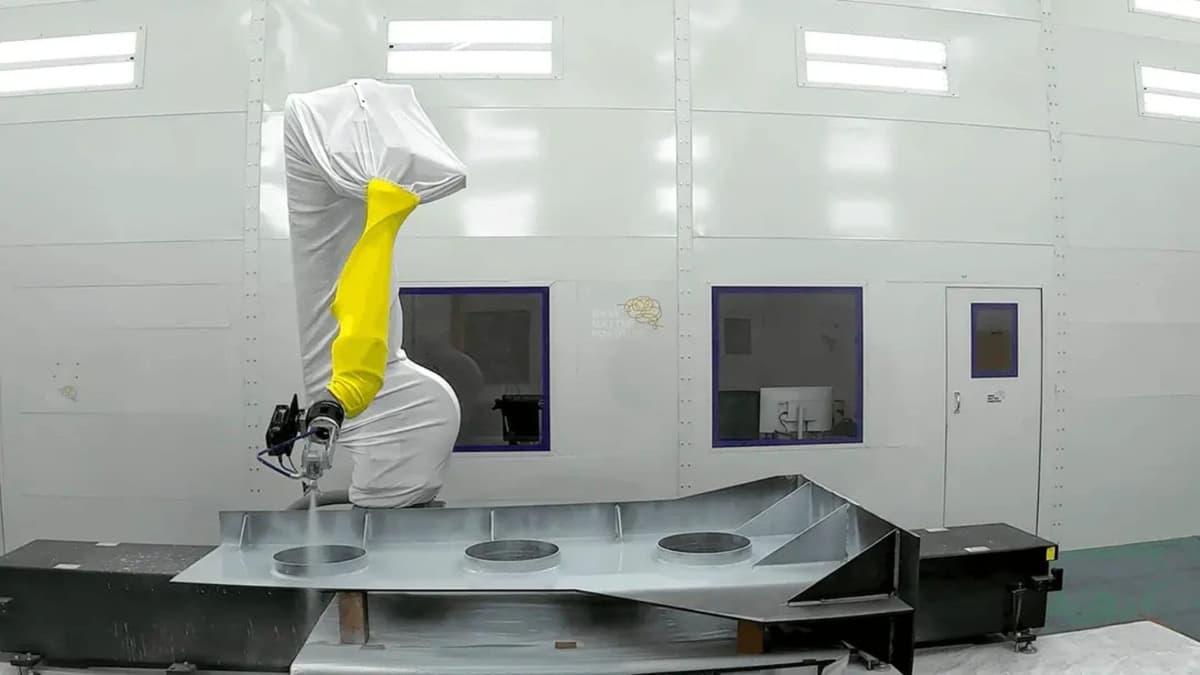
Huntington Ingalls Industries, the largest military shipbuilder in the United States, has announced long-term agreements with Path Robotics and GrayMatter Robotics that could direct up to $900 million in shipbuilding work toward AI-powered autonomous manufacturing systems over the next seven years.
The arrangement represents a significant shift in how naval vessels might be constructed, moving toward robotic systems capable of handling welding, grinding, blasting, painting, inspection, and structural assembly tasks that have traditionally required skilled human labor.
Why it matters
Naval shipbuilding remains one of the most labor-intensive manufacturing sectors globally, with persistent shortages of skilled welders and fabricators. If HII's approach succeeds, it could demonstrate that physical AI has matured enough to handle complex, variable manufacturing environments—not just standardized production lines. The initiative also addresses a strategic concern: expanding America's shipbuilding capacity at a time when the Navy's fleet requirements are growing and the industrial base is constrained.
Performance-based structure
Unlike conventional defense contracts, HII structured this agreement around achievement rather than upfront commitment. The $900 million represents work that will become available only if Path Robotics and GrayMatter meet predefined manufacturing, technology, and production milestones.
The first phase concentrates on developing and qualifying autonomous production techniques that satisfy the rigorous quality standards required for Navy vessels. Systems must demonstrate acceptable performance on cost, schedule, and quality metrics before HII begins outsourcing production work through the new manufacturing network.
The shipbuilding challenge
Naval shipbuilding presents engineering obstacles that differ fundamentally from automotive or electronics manufacturing. Large steel structures vary in size, shape, and assembly sequence, with no two projects following identical specifications. This variability has historically made shipbuilding resistant to automation.
HII's initiative relies on what the company describes as physical AI—combining robotics, sensors, machine vision, and autonomous decision-making to enable machines to adapt to changing production conditions. The systems are designed to learn and improve while operating in one of manufacturing's most demanding environments.
Expanding distributed production
HII plans to outsource more than 2.5 million hours of shipbuilding work during 2026, representing a 30 percent increase over 2025 levels. The company is simultaneously expanding its distributed manufacturing network, which allows structural sections to be fabricated outside primary shipyards before final assembly.
Initially, robotic production will focus on smaller steel structures before scaling to larger units and complete modules. The automation technologies are being developed for use across multiple Navy programs, including aircraft carriers, nuclear-powered submarines, destroyers, amphibious assault ships, future frigates, and unmanned surface vessels.
The collaboration operates under HII's High-Yield Production Robotics (HYPR) initiative, which aims to combine robotics, autonomous manufacturing, and industrial AI to improve efficiency while strengthening the naval industrial base.
Details of the agreement were first reported by Interesting Engineering.
This is an original analysis by the Omega editorial team. Source reporting: Automation Watch.
Want systems like this working for your business?
Book a Call