Honeywell Spin-Offs and AI Robotics Funding Reshape Automation
Major restructuring at industrial giants and venture capital flooding into AI-powered robotics create new vendor dynamics for manufacturers.
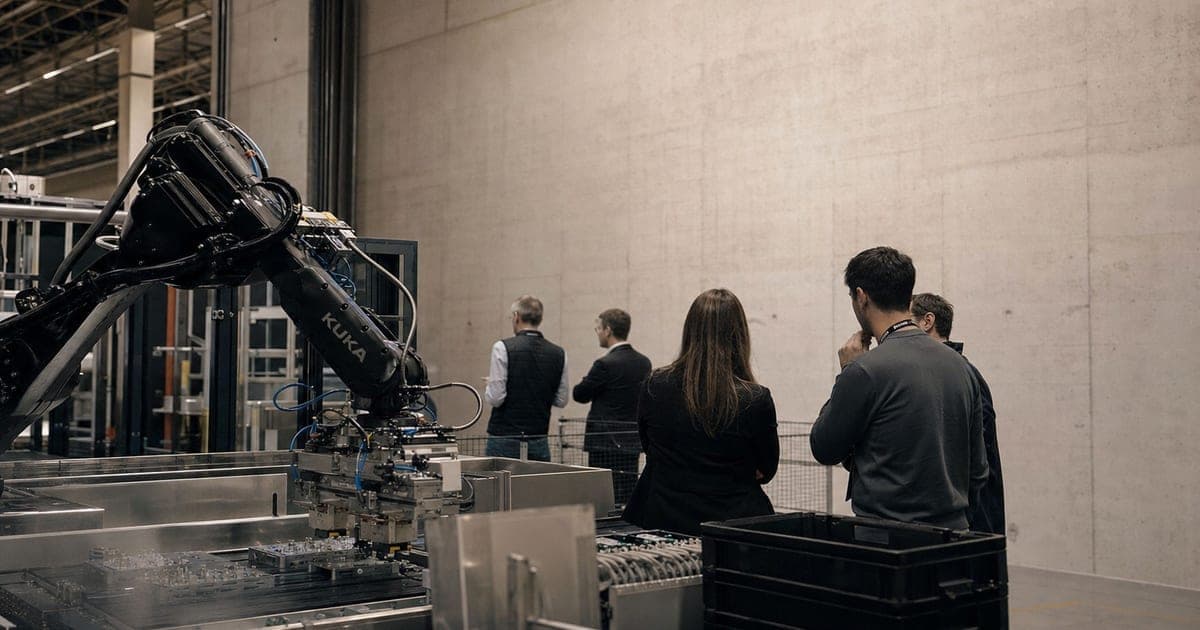
Venture capital meets industrial restructuring
The industrial automation landscape is experiencing simultaneous disruption from two directions: established players like Honeywell are breaking apart into focused standalone units, while venture capital is pouring into AI-powered robotics startups at unprecedented scale. For manufacturers managing automation infrastructure, both shifts demand immediate attention to vendor relationships and procurement strategies.
Venture funds are backing companies including Neura Robotics and Prometheus with substantial capital, signaling that AI-driven industrial robotics has moved beyond proof-of-concept into production-ready deployment. These well-capitalized startups now possess the financial runway to compete directly with legacy automation OEMs in enterprise procurement processes, according to reporting first published by Engineering.com and covered by MarketScale.
Why it matters
Manufacturers face a compressed timeline to reassess their automation vendor landscape. Honeywell's restructuring introduces contractual uncertainty for existing customers, while newly funded robotics companies offer capabilities that weren't viable options in recent RFPs. The combination creates both risk and opportunity that operations leaders cannot afford to ignore.
What Honeywell's spin-offs mean for customers
Honeywell is separating major business units into independent companies, a structural change that goes beyond typical reorganization. For enterprises running Honeywell automation systems, building management platforms, or industrial software, the immediate question is which entity now owns product roadmaps, support contracts, and integration dependencies.
Spin-offs typically create transition periods where accountability for existing deployments becomes unclear. Procurement teams should proactively verify which legal entity inherits master service agreements, confirm that escalation paths remain functional post-separation, and determine whether licensing terms transfer automatically or require renegotiation.
The strategic rationale behind Honeywell's move is that focused standalone businesses can move faster and attract capital independently. For customers, this could deliver more specialized product development and sharper vertical expertise, but it also means managing multiple distinct vendor relationships where one previously existed.
AI robotics funding targets real manufacturing conditions
The venture capital flowing into industrial robotics is not distributed broadly. Investors are concentrating on companies that combine robotics hardware with AI software capable of handling variable, unstructured factory and warehouse environments—conditions that have historically required human workers.
Advances in sensing technology enable this shift. Richer sensor arrays allow autonomous systems to perceive and respond to their surroundings with precision sufficient for mixed-product lines, not just fixed high-volume runs. This capability gap, long cited as the reason to keep humans in the loop, is closing faster than many plant managers anticipated.
For operations leaders, well-funded startups can now credibly commit to multi-site rollouts, maintain integration teams, and invest in ongoing model training. These factors belong in vendor evaluations alongside traditional metrics like unit economics and throughput specifications.
Cloud platforms and integration partnerships accelerate
Cloud manufacturing platforms are expanding in parallel with the funding and restructuring activity. These systems connect factory-floor data to enterprise software, enabling real-time visibility into throughput, quality, and asset health across distributed sites.
Strategic partnerships are multiplying as AI capabilities become modular and API-accessible. Robotics vendors are forming integrations with PLM, ERP, and MES providers, reducing the custom engineering burden that has historically made automation projects slow and expensive to scale.
The convergence of available capital, maturing AI platforms, and established vendors restructuring for agility places 2026 at an inflection point for industrial automation adoption. Market assessments completed even 18 months ago may no longer reflect current competitive options or contractual risks.
These developments were first reported by Engineering.com and detailed in MarketScale's industrial automation coverage.
This is an original analysis by the Omega editorial team. Source reporting: Automation Watch.
Want systems like this working for your business?
Book a Call
