Half of Manufacturers Target End-of-Line Automation by 2027
Labor pressures and new vision systems are driving a compressed deployment cycle for packaging, palletizing, and inspection robotics.
Deployment window narrows as industry reaches consensus
Close to half of manufacturers intend to deploy end-of-line automation within the next 24 months, according to IndustryWeek's 2025 State of Manufacturing survey. That timeline places procurement and operations teams in active evaluation now, with peer facilities already engaged in vendor discussions.
End-of-line processes—packaging, palletizing, labeling, inspection, and sortation—have historically trailed mid-line robotics adoption. Variable workflows, mixed-SKU complexity, and product-specific handling requirements made these stations difficult to automate cost-effectively. Recent advances in vision systems, collaborative robotics, and software orchestration have changed that calculation. Modern end-of-line cells can be configured without months of custom engineering, while persistent labor availability issues at the back end of production floors have shifted ROI decisively in favor of automation.
Why it matters
When nearly half of an industry shares the same 24-month deployment target, the competitive implications are immediate. Early movers in automation cycles typically capture efficiency and throughput advantages before technology saturates the sector. Facilities with automated end-of-line operations show more consistent case weights, fewer mislabels, and tighter ship-confirmation timing—factors that directly affect retailer and third-party logistics relationships carrying compliance penalties for errors.
What operations teams are automating
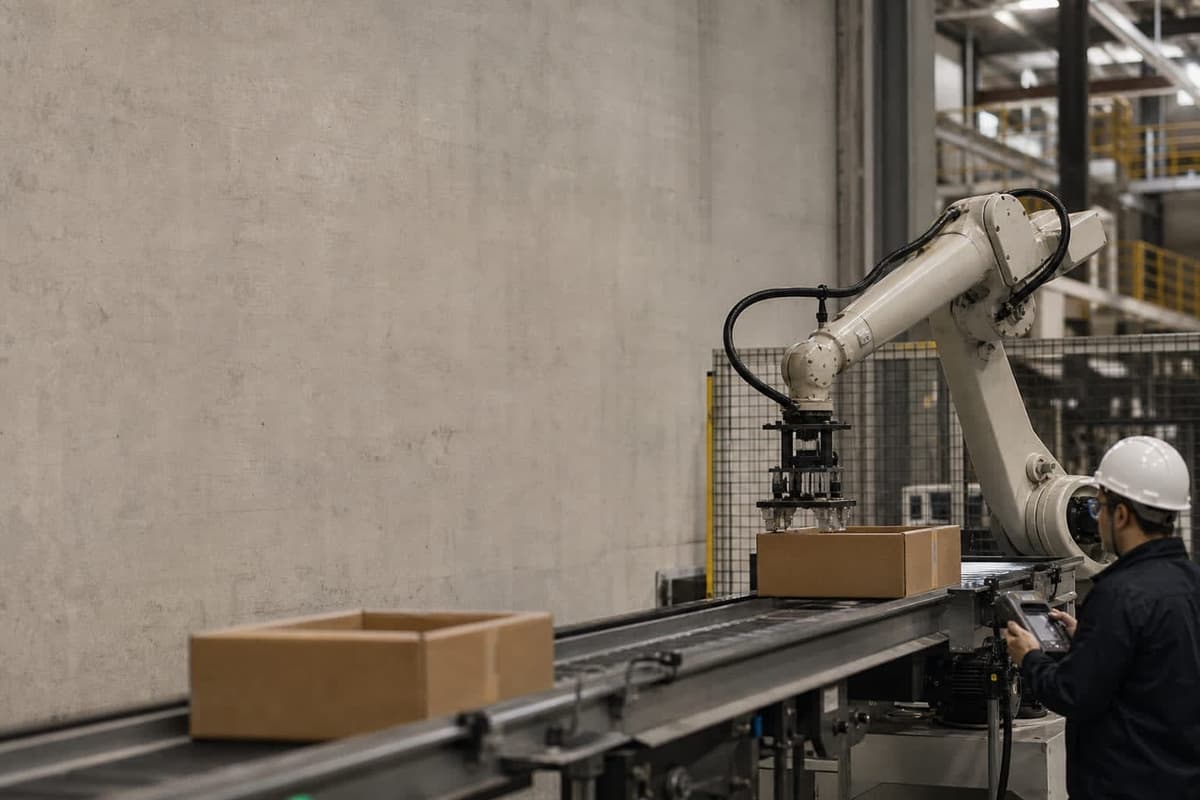
Palletizing has served as the entry point for many facilities given its repetitive, high-payload nature and the maturity of available robotic palletizer options. Current deployment activity extends to case erecting, void fill, label application, and end-of-line vision inspection as manufacturers work to reduce touchpoints and improve consistency across shifts.
Integration complexity remains the primary friction point. End-of-line systems must communicate with warehouse management systems, ERP platforms, and in regulated industries, track-and-trace or serialization layers. Teams that have not mapped these data dependencies before project kickoff typically discover them mid-implementation, which is where timelines slip.
Procurement considerations for the current cycle
Operations leaders should audit current end-of-line error rates and throughput bottlenecks before issuing requests for proposal. Baseline data shortens vendor evaluation cycles and sharpens ROI projections. Mapping integration requirements with warehouse management and ERP systems before vendor demonstrations filters out solutions requiring expensive middleware.
With close to half the industry targeting the same 24-month window, equipment and integration capacity will tighten. Early procurement conversations preserve optionality on lead times and implementation schedules.
Success metrics should tie to labor hours per unit and ship-accuracy rates rather than uptime alone. Those figures justify the next phase of investment to finance teams and demonstrate tangible operational impact.
These findings were first reported by MarketScale in coverage of the IndustryWeek survey.
This is an original analysis by the Omega editorial team. Source reporting: Automation Watch.
Want systems like this working for your business?
Book a Call