Google's Gemma AI Runs on a $300 Mini PC for Local Text Tasks
A writer tested whether budget hardware and free software could handle everyday AI work without cloud subscriptions or privacy concerns.
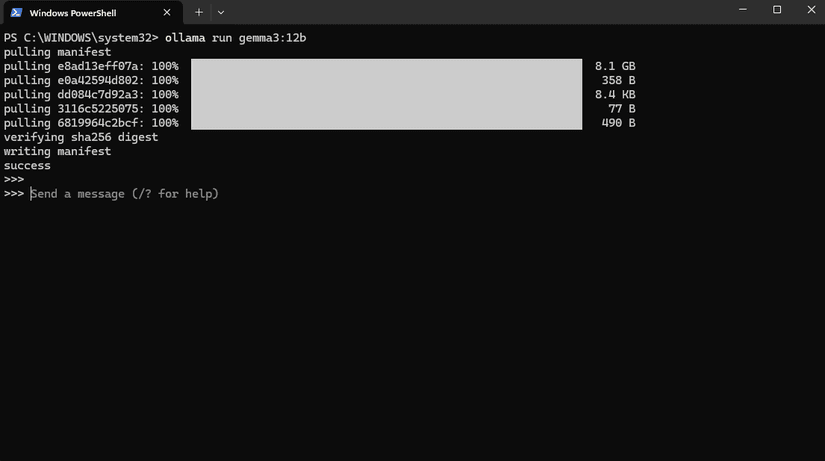
A technology writer has demonstrated that local AI can handle practical everyday tasks on modest hardware, running Google's Gemma model on a $300 mini PC without requiring cloud-based subscriptions or sending sensitive data to external servers.
The experiment, first reported by How-To Geek, tested whether local AI had reached a point where it could replace common uses of ChatGPT, Claude, and Gemini for routine work—particularly for users concerned about subscription costs or privacy when handling unpublished work and personal notes.
The hardware and setup
The writer purchased a Peladn mini PC with a Ryzen 5 7640HS processor, Radeon 760M integrated graphics, and 32GB of RAM for just under $300 on Facebook Marketplace. After installing Ollama—free software that manages local AI models—and downloading Google's Gemma 3 12B model, the entire setup took approximately two and a half minutes.
The choice of Gemma was deliberate: it balanced capability with the constraints of integrated graphics and limited RAM. Response times ranged from 5 to 25 seconds depending on task complexity—slower than cloud chatbots but fast enough for practical use.
What worked locally
The test focused on common writing and organization tasks. Gemma successfully handled copy editing while preserving the author's voice, generated multiple title options from existing summaries, and reorganized rough outlines into clearer hierarchical structures. It also proved useful for identifying patterns in data already on hand and explaining unfamiliar code snippets.
Crucially, all of this happened without sending any information to external servers—a significant advantage for anyone working with confidential material, unpublished drafts, or proprietary information.
Where cloud AI still wins
Local models face fundamental limitations. Gemma's training data has a cutoff date, meaning it cannot access current information, recent software updates, or breaking news. The writer noted that cloud platforms like ChatGPT, Claude, and Gemini remain superior for complex coding projects, large document analysis, and tasks requiring deeper reasoning or more sophisticated file handling.
The larger AI platforms also offer stronger models, bigger context windows, and more polished interfaces. Local AI worked best for focused, self-contained tasks with information the user could provide directly.
Why it matters
This test demonstrates that local AI has crossed a practical threshold for everyday users. A $300 mini PC and free software can now handle routine AI tasks that previously required cloud subscriptions—without the recurring costs or privacy tradeoffs. For professionals working with sensitive information or users wanting to avoid multiple AI subscriptions, local models like Gemma offer a viable middle ground. The technology is no longer limited to developers or users with expensive dedicated hardware.
The full experiment and detailed setup instructions were originally published by How-To Geek.
This is an original analysis by the Omega editorial team. Source reporting: AI Watch.
Want systems like this working for your business?
Book a Call