Google Cloud Revenue Surges 82% as AI Spending Pays Off
Alphabet's cloud division hit $24.8 billion in quarterly revenue, driven by enterprise AI adoption and easing investor concerns about capital expenditures.
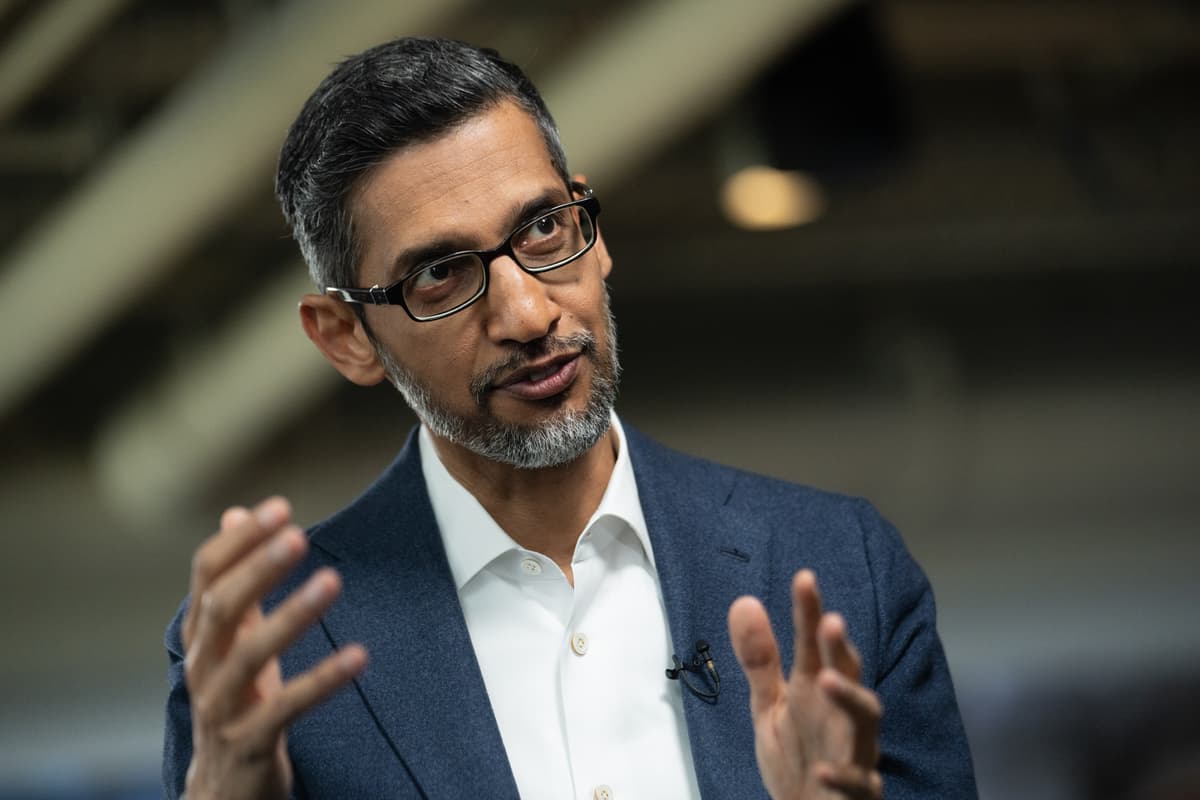
Alphabet delivered a resounding answer to investor skepticism about its artificial intelligence spending strategy, reporting Google Cloud revenue of $24.8 billion for the quarter—an 82% increase from the same period last year.
The cloud division's performance exceeded Wall Street expectations of $22.46 billion and represented a significant acceleration from the previous quarter's 63% growth rate. According to the company's latest earnings report, enterprise adoption of AI solutions and infrastructure drove the surge.
Strong financial performance across the board
Alphabet's overall financial picture showed robust health. The company reported $112.1 billion in profit, a dramatic increase from $28.1 billion in the year-ago quarter. Total revenue climbed 24% year-over-year to $119.8 billion, while Google Services revenue grew 15% to $94.5 billion.
The cloud business also accumulated a backlog of $514 billion in contracted work that hasn't yet converted to revenue, signaling sustained demand ahead.
Google's Gemini AI chatbot reached 950 million monthly active users, up from 750 million in the fourth quarter of 2025, demonstrating growing consumer adoption alongside enterprise growth.
Why it matters
Alphabet's results provide concrete evidence that massive AI infrastructure investments can generate near-term returns, not just long-term promises. With cloud competitors also spending heavily on AI capabilities, Google's ability to convert that spending into accelerating revenue growth sets a benchmark for the industry and may influence how other tech giants approach their own AI capital allocation decisions.
Addressing the spending question
Despite the strong results, analysts pressed CEO Sundar Pichai during the earnings call about the company's substantial capital expenditures, estimated between $180 billion and $190 billion for the year. These investments fund data center construction, chip purchases, and infrastructure expansion.
Pichai pointed to 2027 as a key period for compute capacity investments to deliver returns. "We are seeing strong demand indicators, including long-term deals," he said. "I think, if anything, the dynamics look healthier than where we were about a year ago, so that's what gives us the confidence to undertake those investments."
The CEO characterized the momentum as spanning the entire business: "Our AI investments are redefining what's possible across every part of our business. We have exciting momentum across the board."
This marks Alphabet's twelfth consecutive quarter of double-digit revenue growth, though the current quarter stands out as particularly strong even by that consistent standard.
These details were first reported by TechCrunch.
This is an original analysis by the Omega editorial team. Source reporting: AI Watch.
Want systems like this working for your business?
Book a Call