Goldman Sachs Plans Modest Entry-Level Hiring Cuts as AI Reshapes Work
CEO David Solomon says the bank will still hire thousands of graduates annually, but faces new challenges training workers when AI eliminates grunt work.
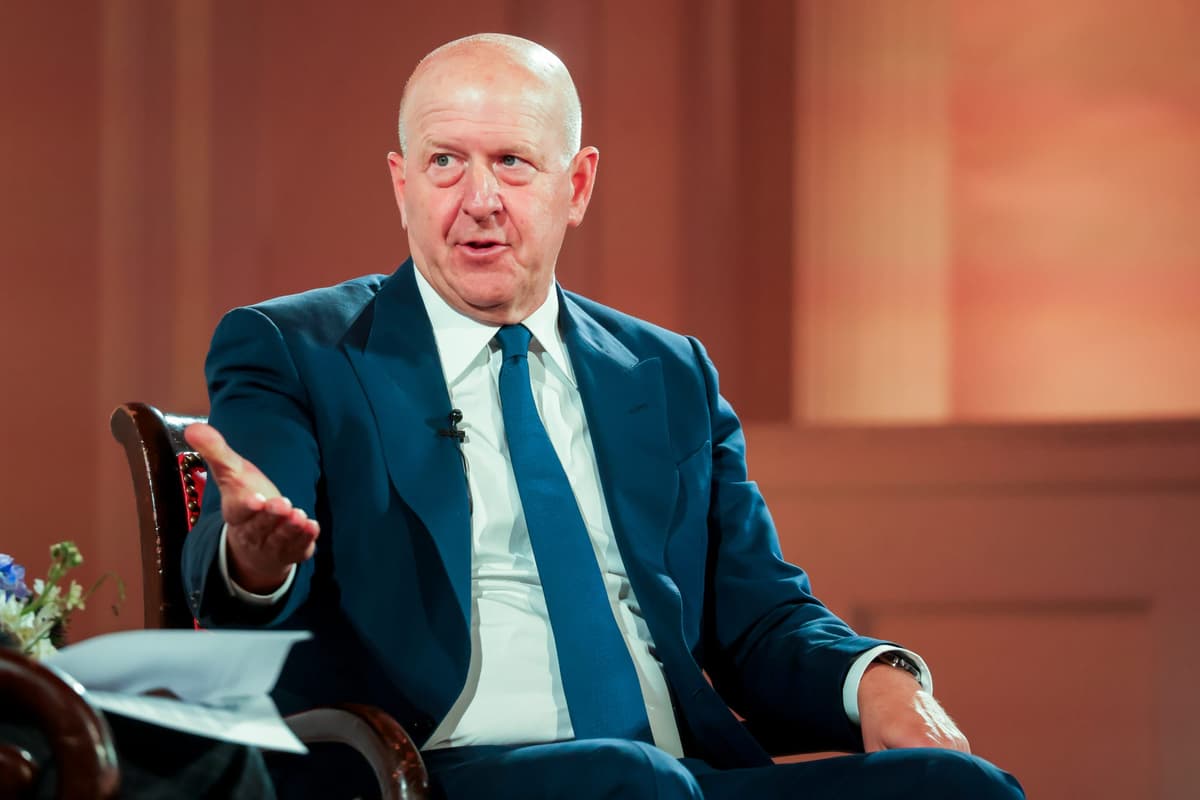
Goldman Sachs expects to modestly reduce its entry-level hiring over the next three years as artificial intelligence transforms how junior bankers work, though CEO David Solomon emphasized the changes will be gradual rather than dramatic.
In an interview on Bloomberg's "Odd Lots" podcast released Thursday, Solomon said the firm's out-of-school hiring could "contract a little" but stressed that Goldman will continue bringing in thousands of interns and recent graduates annually. This year alone, the bank is onboarding an estimated 2,400 to 2,500 interns and a similar number of permanent new hires starting in July, according to details first reported by Business Insider.
Subtle shifts in talent mix
Solomon described the changes in Goldman's hiring patterns since the pre-ChatGPT era as "subtle, subtle changes." The firm has already been shifting toward engineering talent over the past decade, and Solomon indicated that mix will likely shift further "given the power of these tools and our ability to code."
The current hiring levels roughly match pre-pandemic numbers but fall below the more than 3,000 new hires Goldman brought on during 2021.
Why it matters
Goldman's measured approach to AI-driven workforce changes offers a counterpoint to more alarming predictions about entry-level job displacement. While some AI executives have warned of potential wipe-outs for junior roles, major employers like Goldman are signaling that AI will reshape rather than eliminate early-career positions. The real challenge may be pedagogical: how do firms develop critical thinking skills in young workers when AI can instantly generate answers that once required hours of manual analysis?
The training challenge
Solomon identified a more pressing concern than headcount: how to train young workers when AI eliminates the grunt work that once built foundational skills. He recalled his own early banking career, when analyzing stock performance required digging through microfiche, pulling prices from The Wall Street Journal, plotting data on graph paper, and doing calculations by hand.
That slow process taught critical thinking skills that instant AI-generated answers may not provide. "Now, if you ask for it, you get it instantaneously," Solomon said. "Has your brain really absorbed what's actually happening?"
The firm is now rethinking how it approaches skill development for junior employees operating in an AI-augmented environment.
Solomon's advice to young bankers remained decidedly traditional: pick up the phone and talk to people. "A telephone call to someone is 10 times more valuable than a text or an email," he said, adding that his daughter called it "an unverified statistic."
Solomon's comments align with his late-May New York Times op-ed arguing that predictions of an AI jobs apocalypse are overblown. His perspective contrasts with more dire warnings from some technology leaders while echoing economists and business leaders who see limited evidence of AI-driven layoffs so far.
Business Insider first reported these details from Solomon's Bloomberg interview.
This is an original analysis by the Omega editorial team. Source reporting: AI Watch.
Want systems like this working for your business?
Book a Call