GitLab 19.4 Adds Goal-Driven AI Automation and Cost Controls
The DevSecOps platform's latest release focuses on making AI workloads auditable and budgetable for enterprise engineering teams.
GitLab has released version 19.4 of its DevSecOps platform, introducing capabilities designed to make AI automation more controllable and financially predictable for enterprise customers.
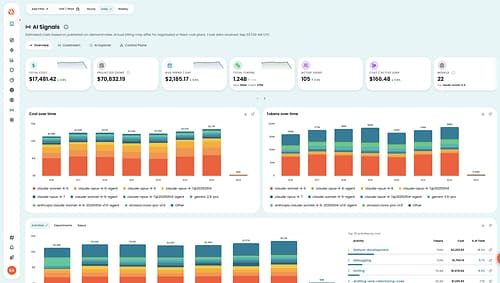
The update centers on the GitLab Duo Agent Platform, which now supports goal-driven automation through a /goal command that moves beyond code suggestions to full task execution with built-in verification and guardrails. The release also adds support for multiple open-weight model options, Slack integration, and enhanced visibility into GitLab Credits consumption.
Why it matters
For organizations evaluating AI developer tools, the ability to govern and budget AI spend has become as important as the automation itself. GitLab's emphasis on cost visibility and model choice addresses a key friction point: finance teams need predictable, auditable AI expenditure before they'll approve scaling. If GitLab can demonstrate that Duo usage translates into measurable productivity gains without budget surprises, it strengthens the case for platform consolidation over point solutions.
The monetization challenge
GitLab's investment thesis rests on whether its unified DevSecOps and AI platform can capture budget as teams consolidate tools. The company operates a hybrid seat-plus-usage pricing model, and the 19.4 features directly support that approach by making AI consumption trackable at a granular level.
Analysts project GitLab will reach $1.6 billion in revenue and $185.5 million in earnings by 2029, according to Simply Wall St, which first reported the details. That forecast assumes 15.3 percent annual revenue growth and a swing from today's $52.7 million loss to profitability.
The most bullish projections see revenue approaching $1.8 billion by 2029, though those estimates carry a price-to-earnings ratio above 1,300x—a valuation that reflects high uncertainty.
Competitive pressure remains
GitLab faces direct competition from GitHub and a crowded field of AI developer tools while still operating at a loss. The 19.4 release addresses important operational concerns—model selection, cost controls, integration with collaboration tools—but the features alone won't determine GitLab's trajectory.
The critical question for investors is execution: whether these governance and automation capabilities translate into measurable Duo adoption, new customer wins, and retention of existing subscribers who might otherwise balk at usage-based AI pricing.
Slack integration and per-feature model selection give customers flexibility, but the real test is whether GitLab can demonstrate that centralized AI automation on a single platform delivers better ROI than assembling best-of-breed point tools.
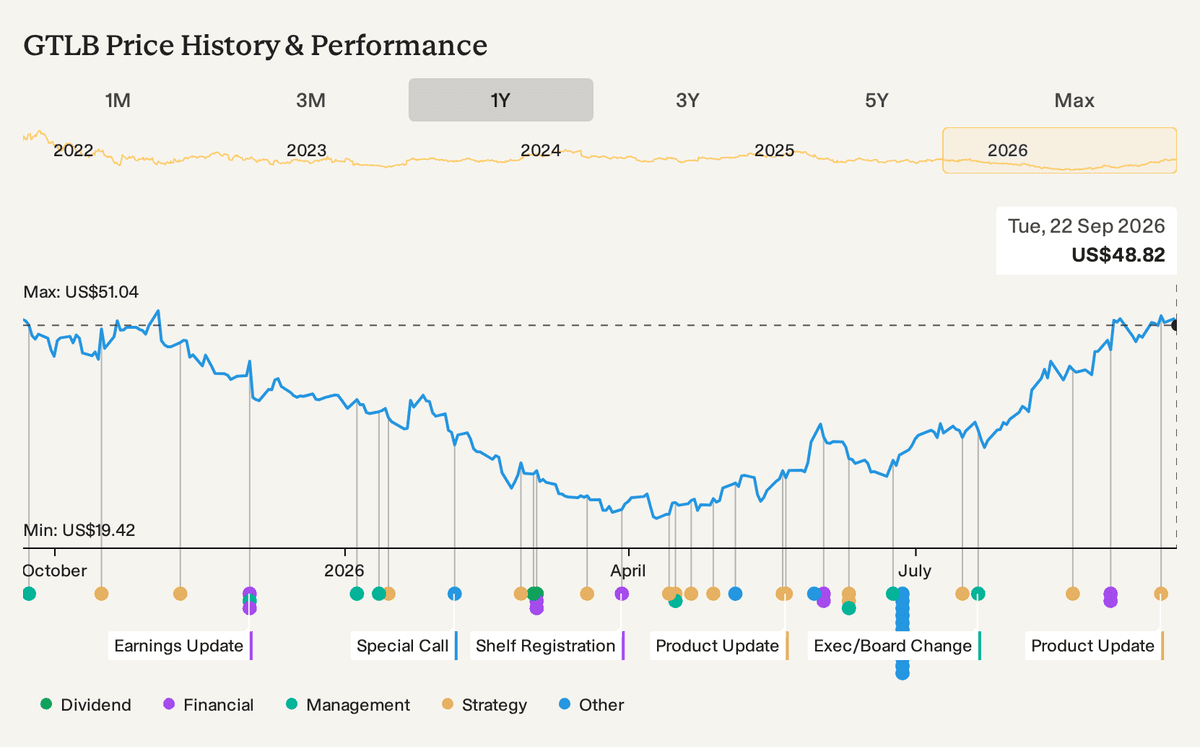
Simply Wall St reported these developments and noted that some fair value estimates suggest up to 14 percent upside from GitLab's current price, though such projections carry significant uncertainty given the company's pre-profitability stage and competitive dynamics.
This is an original analysis by the Omega editorial team. Source reporting: Automation Watch.
Want systems like this working for your business?
Book a Call