Florida County Faces Vote on 600-Megawatt AI Data Center Near Everglades
Palm Beach County commissioners will decide whether to approve a hyperscale facility that opponents say threatens water supplies and exceeds zoning limits.
Florida County Faces Vote on 600-Megawatt AI Data Center Near Everglades
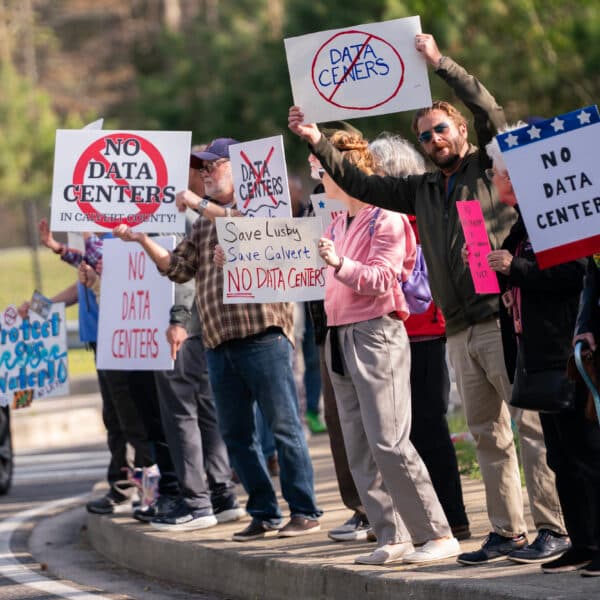
Palm Beach County commissioners will vote July 15 on whether to approve Project Tango, a proposed hyperscale artificial intelligence data center on 202 acres near the eastern edge of the Everglades. The facility would sit approximately 1,250 feet from a two-year-old elementary school and could consume more than 600 megawatts of electricity—over 17 times the power draw of Florida's largest traditional data center, according to project opponents.
The vote follows a July 2 zoning commission hearing where 39 residents spoke against the project. The commission voted 6-0 to recommend denial, breaking with county planning staff who had endorsed approval.
Why it matters
The Project Tango decision will set precedent for how Florida counties handle hyperscale AI infrastructure in environmentally sensitive areas. With at least 10 Florida municipalities enacting data center moratoriums and the issue entering the Republican gubernatorial primary, the vote reflects broader tensions between AI industry expansion and local control over water, power, and land use.
Zoning dispute centers on facility classification
Developer PBA Holdings seeks to amend a 2016 master plan that approved the site as an employment center with warehouses and a 206,000-square-foot server farm. The amendment would shrink warehouse space while expanding the data center nearly fivefold to 1 million square feet.
Opponents led by Earthjustice, representing the Western Palm Beach Community Alliance, argue the facility cannot legally qualify as "light industrial" under county code. The county's comprehensive plan defines light industrial as uses that don't send "noise, vibration, light" beyond property lines, while heavy industrial—prohibited on this site—covers uses that "may cause or result in" those effects. A facility operating around the clock with industrial cooling and backup generators constitutes heavy industrial use by the county's own definition, opponents contend.
PBA Holdings describes on-site backup generation, cooling systems, and electrical infrastructure as "ancillary features" in one section of its application while calling the same equipment "integral" and "needed to power and cool the data center" elsewhere. Opponents say the facility cannot be both.
Water supply concerns in hydrologically sensitive location
The site drains into the L-12 canal, which the Friends of the Arthur R. Marshall Loxahatchee National Wildlife Refuge identified as "one of the primary sources of freshwater flow from north to south through the Refuge," a 145,000-acre Everglades habitat. Any coolant water discharges pose "particular, high-level concern to this sensitive wetland ecosystem," the group wrote to county planners in December.
The Everglades marshes recharge aquifers providing drinking water for roughly one in three Floridians. The state has invested decades and billions of dollars building the canal, reservoir, and treatment infrastructure that the Project Tango site drains toward.
How much water the facility would consume remains unclear. PBA Holdings says it would draw about 5,000 gallons of potable water daily and use a recirculating "closed-loop" cooling system. Yet plans include a 20,000-square-foot on-site water treatment building, and the county's December staff report acknowledges the cooling method "has not been determined." An earlier proposal contemplated evaporative cooling, which consumes far more water.
As of July 10, the South Florida Water Management District confirmed it "has not received any consumptive use or [environmental resource] permit applications for Project Tango." A state law effective July 1 requires the district's governing board to hold a hearing before issuing water permits to data centers with peak demand of at least 50 megawatts—a threshold Project Tango would far exceed.
Much of the surrounding rural area—The Acreage, Loxahatchee, Loxahatchee Groves—relies on private wells tapping a shallow aquifer. Residents fear aquifer depletion or contamination, particularly since PBA Holdings has not disclosed how it would dispose of cooling wastewater.
Economic benefits disputed
Developer Ernie Cox has publicly stated Project Tango would create 500 to 600 permanent jobs. However, in its zoning application, PBA Holdings argued for reduced parking based on "a much lower employee count" and a "low number of employees." County staff agreed the facility "will not require an extensive number of employees."
Food & Water Watch analysis estimated only 23,000 people nationwide held permanent data center jobs in 2024, with Virginia facilities built since 2020 creating roughly one permanent job per $54 million invested.
PBA Holdings would be powered from the grid through a binding agreement with Florida Power & Light, whose 3,750-megawatt West County Energy Center—one of the nation's largest natural gas plants—sits directly across the canal. PBA Holdings, Cox, and the company's land-use attorney did not respond to written questions before publication.
These details were first reported by Inside Climate News.
This is an original analysis by the Omega editorial team. Source reporting: AI Watch.
Want systems like this working for your business?
Book a Call
