China's June Exports Jump 27% as AI Chip Demand Surges
Semiconductor sales and electric vehicle shipments drove the acceleration, offsetting weak domestic consumer spending.
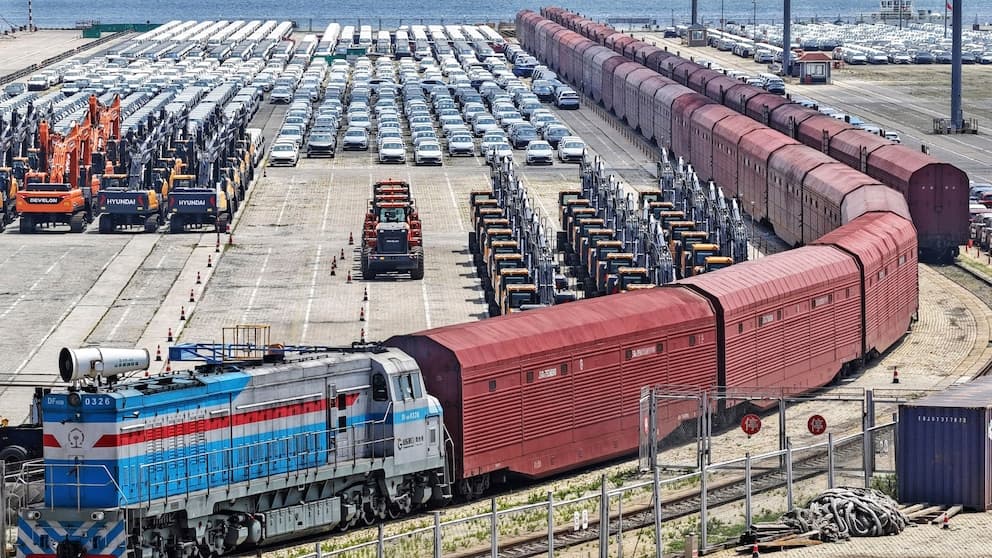
Strong export growth defies expectations
China's exports surged 27% in June compared to the same month last year, significantly exceeding economist forecasts and marking an acceleration from May's 19.4% growth, according to data released Tuesday by the country's customs agency.
The jump was driven largely by soaring global demand for semiconductors tied to the artificial intelligence boom, along with continued strength in electric vehicle exports. Imports also climbed sharply, rising 36% year-over-year, resulting in a trade surplus of $125.6 billion for the month — up from $105.4 billion in May.
Why it matters
China's export engine is compensating for persistent weakness in domestic consumption and investment, particularly in the troubled property sector. But this growth model faces mounting geopolitical headwinds as the U.S. and European Union express concern over widening trade deficits and consider additional barriers to Chinese goods.
Semiconductors and AI drive the surge
"This predominantly reflects the recent surge in semiconductor prices on the back of the AI boom," wrote Julian Evans-Pritchard, head of China Economics at Capital Economics, in a Tuesday note first reporting these findings. "But even putting that aside, foreign demand for Chinese goods remains robust."
Rapid AI adoption worldwide has increased demand for chips and related electronic equipment, categories where Chinese manufacturers have significant capacity. Vehicle exports, especially EVs, also contributed meaningfully to the growth.
Geographic diversification continues
Facing higher tariffs in developed markets, Chinese exporters are expanding their geographic footprint. June shipments to Southeast Asia jumped nearly 35% year-over-year, while exports to Latin America rose more than 28% and those to the European Union increased over 18%.
Exports to the United States climbed almost 14% compared to June of the previous year, though this partly reflects comparison against a weak baseline after President Donald Trump implemented higher tariffs following his return to office.
Fragility beneath the strength
Despite the robust headline numbers, analysts see vulnerabilities. Wei Li, head of multi-asset investments at BNP Paribas Securities (China), cautioned that continued export growth remains "increasingly fragile," dependent on sustained global demand and the regulatory environment in key markets.
For the first half of 2024, China's exports climbed 17.6% year-over-year while imports jumped 26.6%. The government is scheduled to release second-quarter GDP data Wednesday, with officials targeting annual growth of 4.5% to 5% for the full year.
The International Monetary Fund last week raised its 2024 China growth forecast by 0.2 percentage points to 4.6%, though it projects a slowdown to 4.1% by 2027. Chinese policymakers have introduced trade-in subsidies for vehicles and appliances to stimulate domestic consumption, but many consumers remain cautious amid economic uncertainty.
These details were first reported by the Associated Press based on customs agency data.
This is an original analysis by the Omega editorial team. Source reporting: AI Watch.
Want systems like this working for your business?
Book a Call
