Flock Stops Disclosing Where Its Surveillance Cameras Are Made
The license plate reader company once promoted US manufacturing but has quietly removed those claims as public backlash intensifies.
Flock Stops Disclosing Where Its Surveillance Cameras Are Made
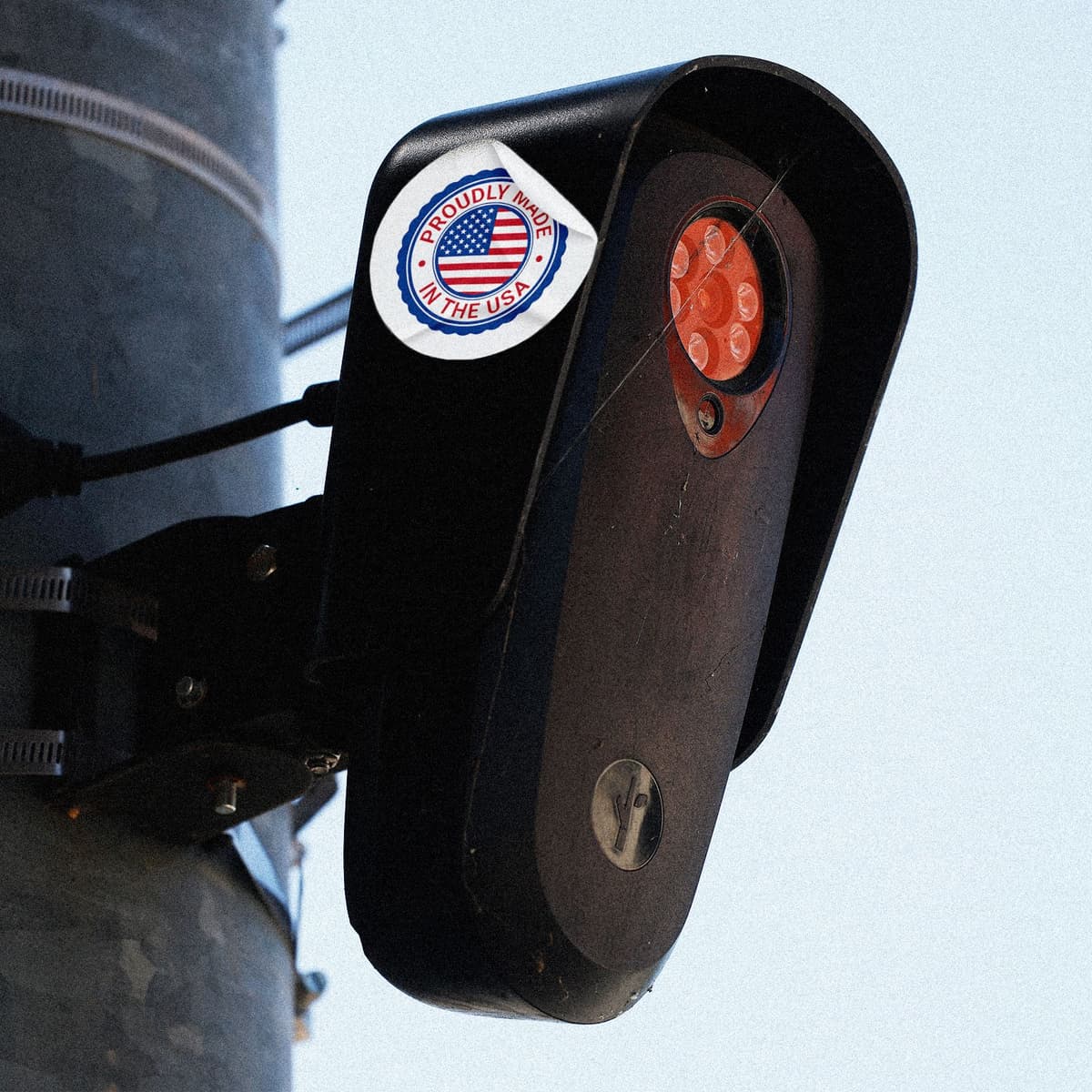
Flock Safety, the controversial license plate surveillance company, has stopped telling customers where it manufactures its cameras. For years, the Atlanta-based startup promoted its devices as made in the United States, but recent marketing materials no longer specify production locations, according to an investigation by WIRED.
The shift comes as Flock faces nationwide protests, with dozens of local governments abandoning its technology. Congress is considering legislation to cut federal funding for states that fail to limit license plate reader use. While police defend the cameras as crime-fighting tools, critics say they enable officers to track personal vehicles and share data with immigration authorities.
Why it matters
Where surveillance hardware is manufactured has direct implications for national security and supply chain integrity. If components or assembly involve adversarial nations, cameras deployed across thousands of American communities could be vulnerable to tampering or backdoors. The lack of transparency also highlights a broader accountability gap: tens of thousands of surveillance devices are being installed with minimal oversight of their origins, security, or data handling.
From dining table to mystery supply chain
Flock CEO Garrett Langley has said he built the company's first cameras in his Atlanta home a decade ago. Early prototypes used cameras extracted from Android phones purchased on Alibaba, attached to batteries and solar panels.
As the company grew, it moved assembly operations through several Atlanta facilities, eventually contracting with manufacturers East West Manufacturing in North Carolina and Plexus in Wisconsin, according to sources familiar with the operations. Marketing materials from 2019 through 2023 variously described cameras as "manufactured in the United States," "made in the USA," and "designed & manufactured in the U.S."
But import records reviewed by WIRED show Flock increasingly sources components from Primax Electronics in Thailand. Primax, based in Taiwan, operates manufacturing facilities in China and elsewhere. The shipments include complete camera systems and radar components, not just basic parts.
In May, as public criticism intensified, East West Manufacturing quietly removed Flock from its customer list on its website, according to archived versions.
Current manufacturing location unknown
Flock's 2024 marketing materials make no mention of where cameras are assembled. The company told WIRED only that its products comply with the National Defense Authorization Act, which restricts government contractors from using parts made by certain Chinese tech firms.
A spokesperson did not respond to specific questions about current manufacturing locations or the supply chain changes.
US Occupational Safety and Health Administration records show Flock was cited in July for allegedly failing to promptly report a June incident involving an employee leg amputation at what OSHA described as a Flock "audio and video equipment manufacturing" site in Houston. Whether this represents an actual assembly facility or an installation location remains unclear.
Competitors and the drone exception
Flock's top competitors take varying approaches to manufacturing disclosure. Motorola Solutions has stated its license plate cameras are assembled at its own Richardson, Texas facility. Axon has revealed little about where its competing cameras are produced.
Flock has been more transparent about its new surveillance drones, which US law requires to be domestically manufactured. The company opened a facility in Smyrna, Georgia in October to assemble drones and solar panels, though deployment timelines have repeatedly slipped.
Matthew Guariglia of the Electronic Frontier Foundation told WIRED that domestic manufacturing alone does not address fundamental concerns: "The multi-billion dollar industry churning out mass surveillance technology is not safer or more acceptable based on where it is assembled."
These details were first reported by WIRED.
This is an original analysis by the Omega editorial team. Source reporting: WIRED.
Want systems like this working for your business?
Book a Call