Flock Safety's ALPR Updates Fall Short on Privacy, ACLU Says
The surveillance firm's operational changes address PR concerns but fail to fix fundamental civil liberties issues with its 120,000-camera network.
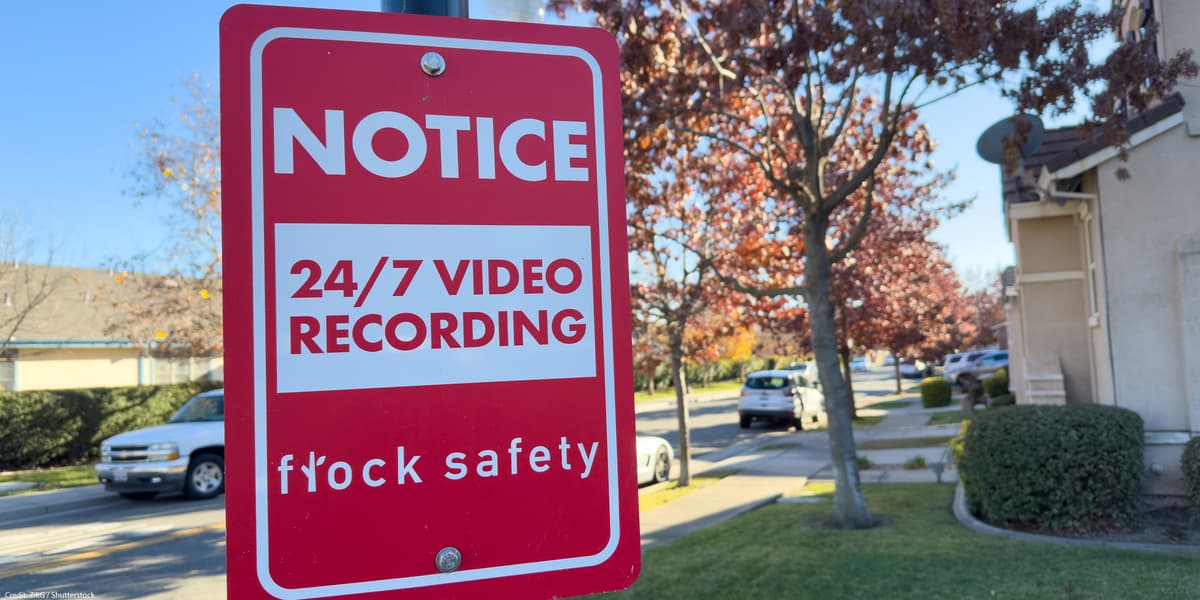
Surveillance company Flock Safety rolled out operational changes to its automatic license plate reader (ALPR) network in August 2026, responding to mounting criticism over its mass surveillance capabilities. The ACLU, which has been fighting Flock's expansion alongside local communities, says the updates amount to public relations theater rather than meaningful privacy protections.
Flock operates more than 120,000 ALPRs nationwide that photograph every passing vehicle, log detailed information into a nationwide database, and enable tracking of movement patterns using AI analysis. The company's announcement, first reported by the ACLU, includes four main changes: reduced data retention periods, enhanced local control over search parameters, universal deployment of audit tools, and mandatory case codes for searches.
Why it matters
ALPR systems create comprehensive location databases that reveal intimate details about people's lives—where they worship, seek medical care, attend political meetings, or visit romantic partners. As these networks expand and AI analysis grows more sophisticated, the potential for abuse increases. Flock's market dominance and venture-backed growth model, fueled by nearly $1 billion in funding, creates pressure to prioritize expansion over privacy safeguards.
Shorter retention, but with a catch
Flock reduced its standard data retention from one month to one week, acknowledging that roughly 90 percent of searches already occur within seven days of collection. The company introduced "Evidence Mode" to preserve data tied to case numbers beyond the seven-day window at no additional cost.
The ACLU notes this falls short of its recommended 48-hour retention period. More critically, the effectiveness depends entirely on how Evidence Mode operates. If it retains all searched data rather than only confirmed evidence in active investigations, the change could actually worsen privacy protections by indefinitely preserving vast amounts of location information on people never suspected of wrongdoing.
Repeated failures on search controls
Flock claims its updates give local police more control over what other departments can search their cameras for—allowing one city to permit searches for violent crimes while blocking immigration enforcement queries, for example.
The ACLU points out Flock has tried this before and failed. In June 2025, the company launched a "Proactive Search Term Tool" meant to block impermissible searches, including abortion-related queries in states with data protection laws. Officers quickly discovered they could bypass restrictions by entering generic terms like "investigation" or even "hehehe" as search reasons. Flock switched to dropdown menus, but officers simply selected acceptable purposes regardless of accuracy.
Audit tools lack independent verification
Flock made its "Audit Assistance" tool standard across all customers, claiming it flags abnormal search behavior. The company cites increased identification of misuse as proof of effectiveness.
The ACLU notes dozens of officers have been arrested or fired for using Flock as a personal stalking tool, as documented by the Washington Post. However, without knowing the total number of violations, it's impossible to assess whether the audit tool catches 95 percent or 5 percent of abusers. The organization calls for independent evaluation of the tool's actual effectiveness.
Making failed measures mandatory
Flock now requires case codes for every search, converting a previously optional feature from July 2025 into a mandate. The announcement doesn't explain how making an ineffective voluntary measure mandatory improves its functionality.
The ACLU concludes that Flock's operational model—dependent on venture capital returns—fundamentally conflicts with robust privacy protection. The organization continues analyzing the company's proposals while pushing for contract cancellations and legislative safeguards. These details were first reported by the ACLU in its analysis of Flock's announcement.
This is an original analysis by the Omega editorial team. Source reporting: The Verge.
Want systems like this working for your business?
Book a Call
