Figma's AI Security Agents Cut Alert Resolution Time by 70%
The design platform's engineering team built agents that investigate incidents, query systems, and draft code fixes while maintaining human oversight.
Figma has deployed AI agents that handle security alert investigations across its infrastructure, achieving a 70% reduction in resolution time for complex alerts while maintaining human oversight throughout the process.
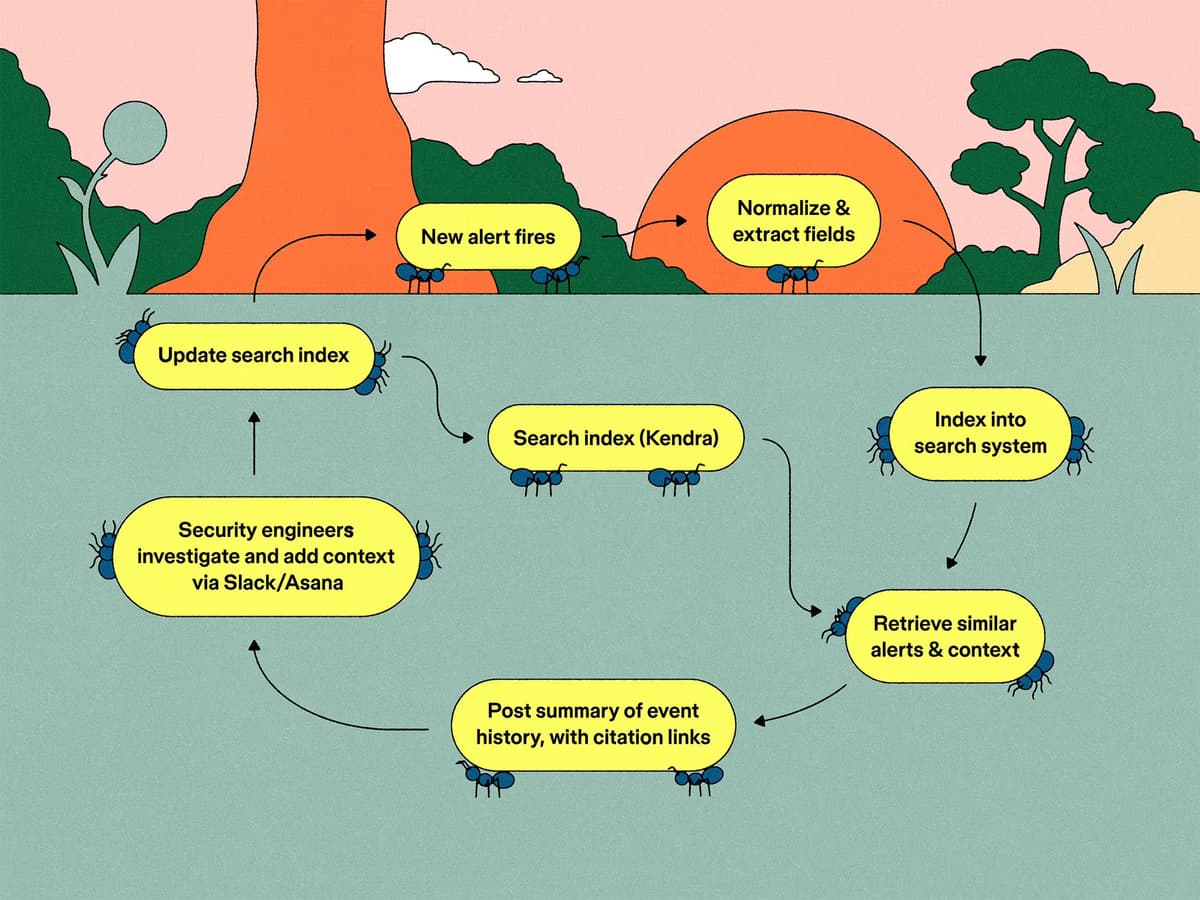
The design software company's security engineering team built an agentic system that investigates alerts, searches historical incidents, queries company systems spanning AWS, Okta, GitHub, and Google Cloud Platform, and prepares draft code fixes. The system also reduced on-call pages by 20% by appropriately downgrading the severity of certain alerts, according to Matthew Sullivan, formerly a security engineer at Figma, and Brad Girardeau, the company's security engineering manager.
How the system works
The core alert triage agent runs on models like Claude Opus and receives full Slack thread history as context along with tools typically used by security on-call engineers. The system queries more than 100 data sources and leverages osquery, an open-source tool that enables SQL-based queries of computers for security information.
Figma's implementation uses AWS Bedrock Knowledge Bases, Amazon Kendra, Tines, and a Snowflake-based tool to search historical alerts and investigate data from Panther SIEM, the security information and event management platform at the system's foundation.
Memory architecture drives improvement
The engineering team identified memory as the most impactful factor in the system's usefulness over time. They implemented three distinct memory types: records of past alerts, behavioral guidance for investigations, and learned database structures. Keeping these memory categories separate proved essential to the system's effectiveness.
Safety controls are embedded directly into the tools. Agent-created pull requests default to draft status, and prompts are designed to prevent sensitive data from appearing in public Slack channels.
Vulnerability detection results
In a separate disclosure, Figma reported that its agents discovered more than 100 previously unknown vulnerabilities, including two critical flaws that traditional security tools had missed. The company's code review agent achieved 80% precision within one month of deployment.
The system improved detection of known bugs by approximately 30% through a second review step. Automated guidance contributed to a roughly 50% reduction in certain coding errors. However, the team cautioned that organizations must prioritize improving precision before recall, noting that historical bugs primarily measure recall and provide limited help with the precision issues that require immediate attention.
Why it matters
As security teams face growing alert volumes and increasingly sophisticated threats, AI agents offer a path to scale investigation capacity without proportionally expanding headcount. Figma's results demonstrate that agents can handle repetitive investigative work while learning from past incidents, freeing human engineers to focus on complex decision-making. The 70% time reduction and 20% decrease in on-call burden represent tangible operational improvements, though the company's emphasis on maintaining human approval and strict safety controls reflects ongoing uncertainty about appropriate trust boundaries for AI in security contexts.
Open questions on trust boundaries
Figma acknowledges its AI agents are imperfect, as are human investigators. The company frames the challenge not as choosing between automation and human judgment, but as finding the right balance between them—a balance that continues to evolve.
Recent research from cloud security company Wiz highlighted risks in AI coding assistants, demonstrating that six such tools could be manipulated by malicious repositories while displaying benign approval prompts to users. These findings underscore the importance of the safety controls Figma has built into its system.
The details were first reported by Figma on its engineering blog.
This is an original analysis by the Omega editorial team. Source reporting: AI Watch.
Want systems like this working for your business?
Book a Call