Fed's Warsh Links AI Data Center Debt to Rising Treasury Yields
Hyperscalers borrowed $121 billion in bonds last year to fund infrastructure buildouts, four times their historical average, creating competition for capital.
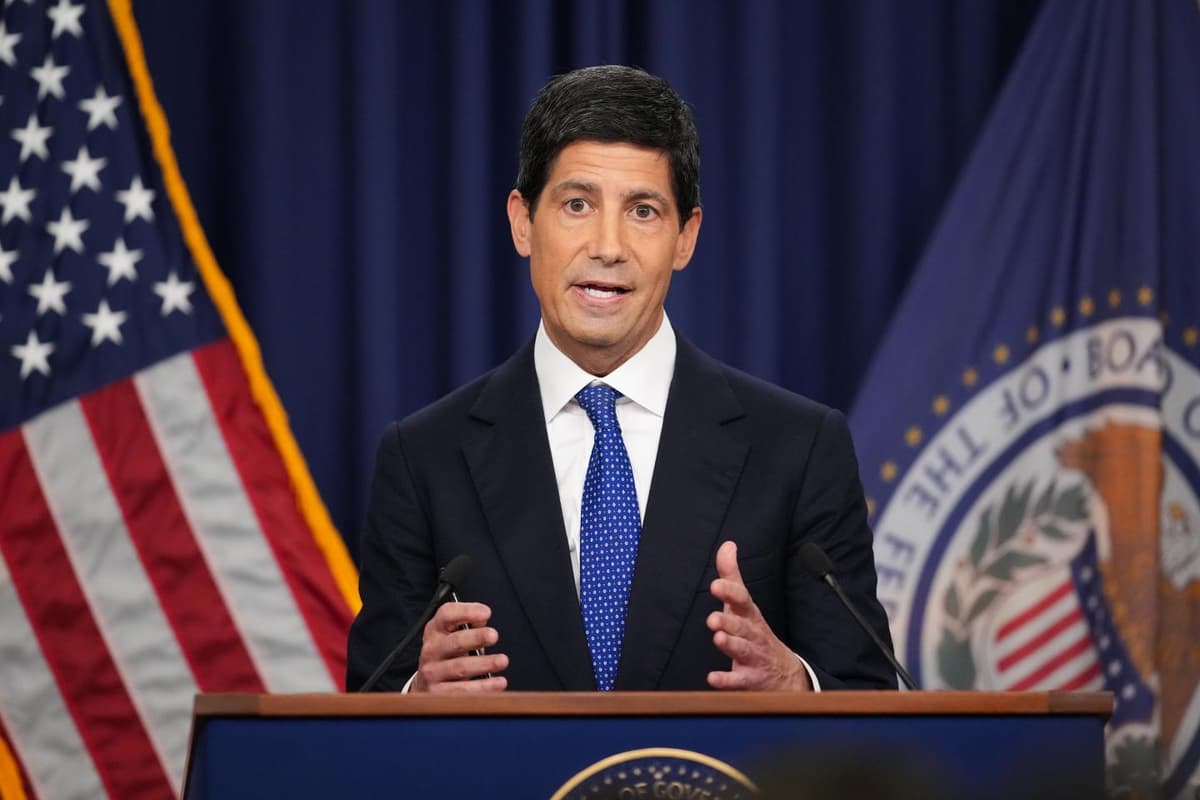
Federal Reserve official Kevin Warsh has identified a new factor driving up long-term interest rates: the enormous debt loads tech companies are taking on to build AI infrastructure.
Speaking at a conference, Warsh pointed to what he called "hyperscalers"—the major cloud computing companies racing to construct data centers for artificial intelligence workloads. When these firms borrow hundreds of billions of dollars, they compete directly with the U.S. Treasury and other borrowers for available capital, pushing borrowing costs higher across the board.
The scale of AI infrastructure debt
The numbers underscore an unprecedented shift in corporate finance. The five largest hyperscalers—Amazon, Microsoft, Alphabet, Meta, and Oracle, along with specialized provider CoreWeave—issued $121 billion in U.S. corporate bonds during 2025, according to BofA Securities. That figure represents more than four times their average annual issuance of $28 billion between 2020 and 2024, as first reported by Fortune.
Morgan Stanley's analysis shows the global picture is even larger. AI-related debt reached nearly $236 billion by the end of May 2026, quadruple the pace from a year earlier. The investment bank projects total AI infrastructure debt will approach $570 billion for the full year.
The borrowing reflects a fundamental change in how these companies fund expansion. Hyperscaler capital spending now runs close to 100% of operating cash flow, with some firms exceeding that threshold. They can no longer finance AI buildouts from profits alone and must tap bond markets instead.
Why it matters
Warsh described the 10-year Treasury as "the most important asset anywhere in the world" and the benchmark against which virtually every other asset is priced. If AI infrastructure spending is materially affecting Treasury yields, it has implications for mortgage rates, corporate borrowing costs, and investment returns across the global economy—not just for tech companies.
Competing explanations
Warsh offered three factors driving higher long-term yields: hyperscaler borrowing, economic growth strengthening throughout 2026, and geopolitical tensions including conflict in Iran. Notably absent from his list was the federal deficit, the explanation most bond investors cite for rising yields. Warsh declined to address deficit questions, consistent with his stated view that Fed independence requires staying "in our lane" on fiscal policy.
Some analysts dispute the AI infrastructure thesis. PIMCO characterized the effect as "overstated," attributing yield movements primarily to Iran tensions and reassessment of Warsh's rate-hiking stance. MSCI noted that hyperscaler bond spreads have widened to normal investment-grade levels, reducing their direct competition with government debt.
AI's dual impact on Fed policy
The AI investment wave presents competing signals for monetary policy. Warsh cited strong productivity growth and robust capital investment as evidence of economic strength and loose capital conditions—factors supporting rate increases. Yet he has also expressed optimism that AI will eventually expand economic capacity and prove disinflationary.
Warsh revealed the Fed has established an internal task force on AI, expected to report by year-end, examining "implications for our future policy conjuncture." He provided no additional details and deflected questions about AI safety risks to "other parts of the government."
These details were first reported by Fortune.
This is an original analysis by the Omega editorial team. Source reporting: AI Watch.
Want systems like this working for your business?
Book a Call