Federal Reserve Examines AI's Impact on Jobs and Productivity
New panel will study whether artificial intelligence accelerates growth or displaces millions of white-collar workers.
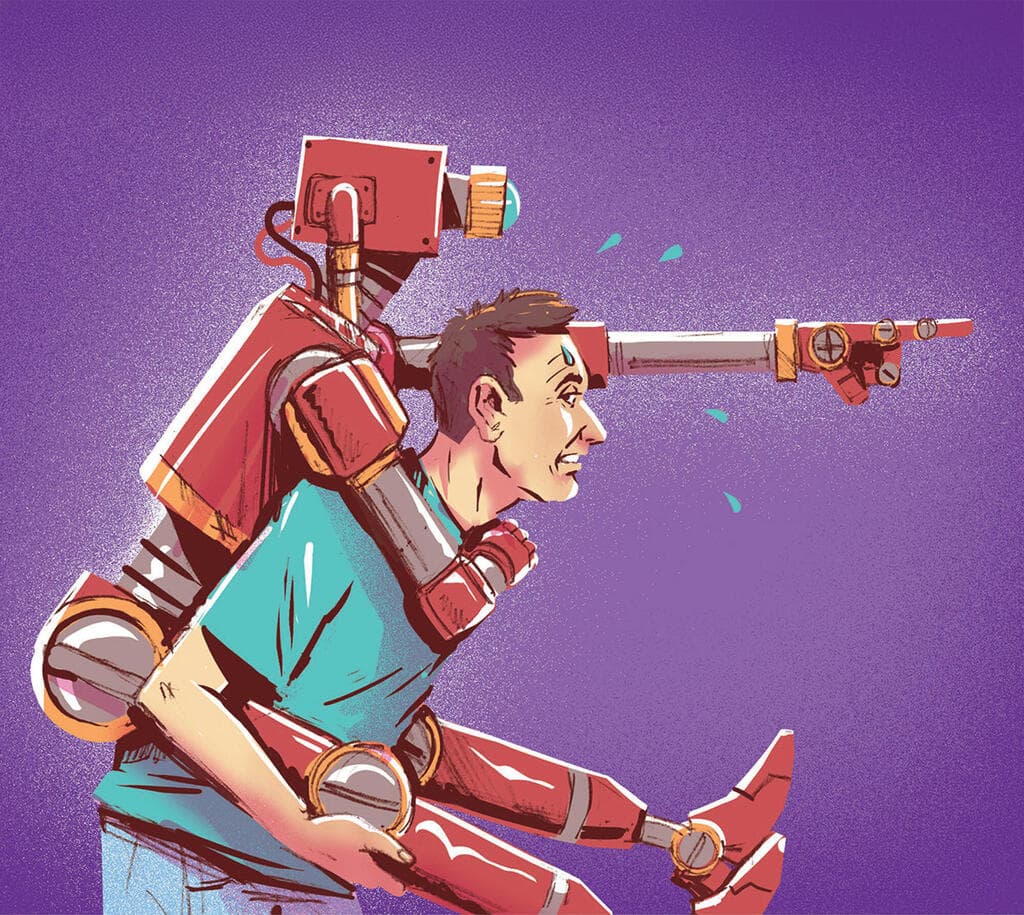
The Federal Reserve has launched a dedicated panel to examine artificial intelligence's effects on productivity, economic growth, and employment as part of a broader strategic review under new Chair Kevin Warsh. The move comes as AI simultaneously enables rapid business formation while raising concerns about widespread job displacement in white-collar occupations.
Michelle Turner's experience illustrates the technology's dual nature. The Virginia Beach mother of six used AI tools to teach herself startup fundamentals, develop a business plan, and refine investor presentations for Here Now Health, her mental health platform serving foster children. Launched in January 2025, the company now employs 16 people and operates in three states providing Medicaid-funded counseling.
"A mom of six kids who's a first-time founder, who's a sole female founder, should not be able to raise venture capital," Turner said, noting she lacks an MBA or traditional credentials. She described using AI for pitch development as "like going to a master's-level class every day with the robot."
Why it matters
The Federal Reserve's focus on AI reflects uncertainty about whether the technology will follow historical patterns—where innovation ultimately created more jobs than it destroyed—or produce a fundamentally different outcome. The answer will shape monetary policy decisions on interest rates, inflation targets, and employment goals for years to come. Fed officials must determine whether AI-driven productivity gains allow faster economic growth with less inflation, or whether the technology structurally raises unemployment by reducing labor demand.
Competing economic scenarios
Jean Boivin, head of the BlackRock Investment Institute, described markets facing "dramatically different competing narratives" between scarcity and abundance. Current AI infrastructure investment is driving up costs for electricity, construction, and skilled labor. Yet the technology could also deliver productivity breakthroughs that push growth beyond the economy's typical 2% ceiling.
Torsten Slok, chief economist at Apollo Global Management, attributes rising business formation partly to AI "dramatically reducing the cost and complexity of launching a company." John Bailey, a senior fellow at the American Enterprise Institute, argues the technology enables traditional companies to deliver services "more efficiently, more quickly, and at lower cost."
White-collar disruption risks
Thomas Barkin, president of the Federal Reserve Bank of Richmond, acknowledged genuine employment risks while noting many businesses use AI to address labor shortages rather than eliminate positions. "We are all quick to see the disasters, which is about jobs getting replaced," Barkin said, but added that manufacturers and other sectors report persistent hiring difficulties.
A recent Brookings Institution and Opportunity@Work study warns AI could produce disruption similar to 1990s globalization, which devastated manufacturing communities and contributed to political polarization and "deaths of despair." Researchers estimate 23 million Americans work in career paths leading toward occupations highly exposed to AI automation, with greatest impact expected in Florida, the Northeast, Texas, and California.
At his first press conference as Fed chair, Warsh called AI "the most important economic change that we've had in my adult lifetime," predicting the United States "is ultimately going to be better off" while acknowledging the transition "certainly doesn't mean it's not going to be disruptive."
These details were first reported by Calcalistech.
This is an original analysis by the Omega editorial team. Source reporting: AI Watch.
Want systems like this working for your business?
Book a Call
