Federal Officials Warn AI Accelerates Terrorist Attack Planning
Former Homeland Security leaders say adversaries now compress years of preparation into minutes using artificial intelligence tools.
Growing threat from AI-enabled attacks
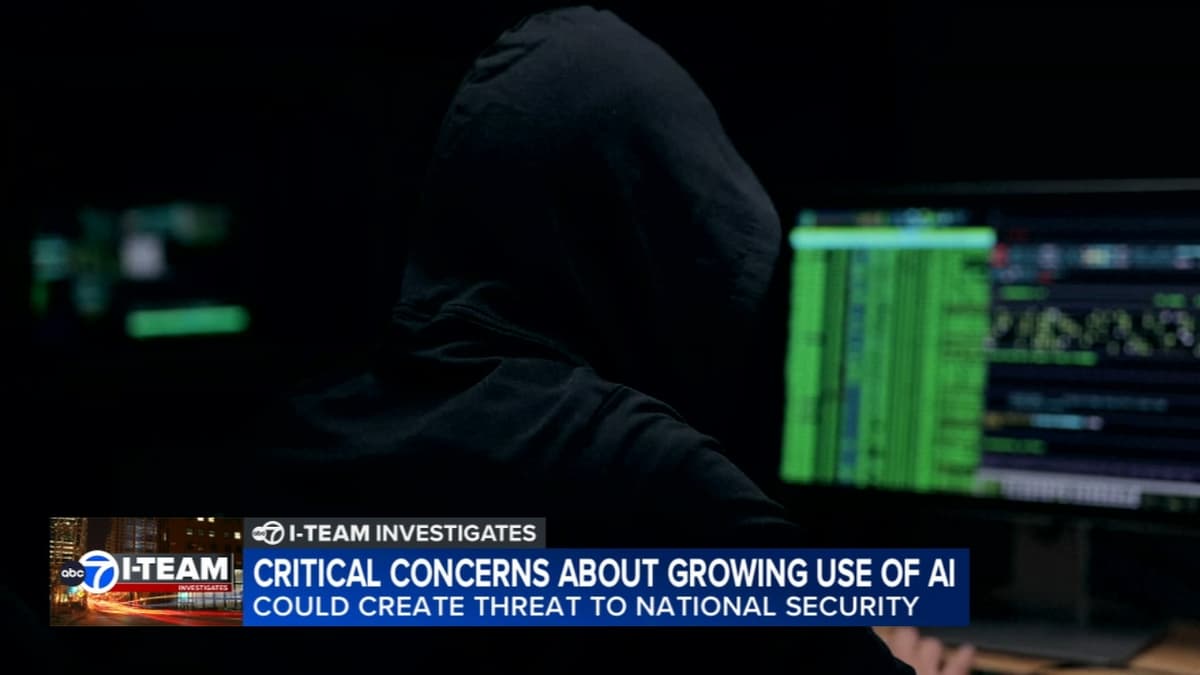
Federal cybersecurity agencies and former Department of Homeland Security officials are sounding alarms about artificial intelligence becoming a force multiplier for terrorists and criminal organizations. The technology is fundamentally changing the speed and sophistication of threats facing national security.
John Cohen, former Acting Undersecretary for Intelligence at Homeland Security and now an ABC News contributor, told ABC7 Chicago that hostile actors are already deploying AI across multiple attack vectors. These applications range from conducting cyberattacks to developing detailed operational plans and constructing weapons.
Why it matters
The compression of attack timelines represents a paradigm shift in threat assessment and prevention. Where the September 11 attacks required years of planning, modern adversaries can now generate detailed attack blueprints—including instructions for building explosive devices—in minutes. This acceleration challenges traditional counterterrorism models built around detecting prolonged preparation phases.
From years to minutes
The most concerning aspect of AI adoption by threat actors is the dramatic reduction in planning cycles. Cohen emphasized that artificial intelligence has "dramatically shortened the time it takes for a terrorist group to plan an attack, and it increases the likelihood that their attack plan will be successful."
This capability extends beyond organized groups. A single individual with limited technical knowledge can now leverage AI systems to develop sophisticated attack methodologies that previously required extensive training and coordination.
Real-world exploitation attempts
The warnings are grounded in documented incidents. AI company Anthropic recently disclosed that it had blocked numerous misuse attempts involving its Claude AI system. These cases included efforts to reverse engineer offensive drone technology, conduct surveillance on government officials, automate disinformation campaigns, and execute financial scams.
Meanwhile, the National Security Agency has specifically flagged China's efforts to exploit American-developed AI technology and extract its underlying capabilities for potential adversarial use.
Law enforcement adaptation
Cohen noted that the sophistication and integration of AI into society creates a dual challenge for law enforcement. Agencies must simultaneously understand how criminals and threat actors are weaponizing the technology while developing their own AI-powered countermeasures to detect and prevent illegal activities.
These concerns arrive amid a broader pattern of cyberattacks on critical U.S. infrastructure, including incidents attributed to Iranian groups, underscoring questions about security vulnerabilities in emerging AI systems.
These details were first reported by ABC7 Chicago.
This is an original analysis by the Omega editorial team. Source reporting: AI Watch.
Want systems like this working for your business?
Book a Call