Federal AI Safety Bill Emerges After Anthropic Resignations
A bipartisan Senate proposal would create the first federal AI safety framework—while potentially wiping out all state regulations.
A bipartisan group of senators is advancing what could become the first federal AI safety legislation with enforcement teeth, catalyzed by a wave of resignations from leading AI companies warning that the race toward superintelligence has outpaced safety controls.
The bill, co-sponsored by Sens. Ted Cruz, Amy Klobuchar, and Majority Leader John Thune, would grant the Commerce Department and Homeland Security authority to require safety testing, mandate incident reporting, and potentially block the release of AI models deemed to pose catastrophic risks including bioweapons and nuclear threats.
The legislative push follows the resignation of Jacob Coxon, who worked at both OpenAI and Anthropic, warning the companies were "gambling with our lives" in their pursuit of superintelligence. Within hours, Evan Hubinger, who leads Anthropic's Alignment Science team, publicly backed Coxon's claims, placing greater than 10% odds on human extinction within a decade and acknowledging the company lacks a concrete plan for controlling superintelligent systems.
Why it matters
This marks a sharp reversal for Washington after nearly a decade of failed AI policy efforts. But the federal framework comes with a significant trade-off: it would likely preempt state AI laws, including California's regulations and New York's RAISE Act. Cruz spent 2025 attempting to ban state AI regulation entirely—a proposal the Senate rejected 99-1. This bill achieves a similar outcome under the banner of safety, raising questions about whether federal action will strengthen oversight or simply replace patchwork state rules with weaker national standards.
A decade of legislative failures
Congress has introduced more than 150 AI bills since 2017, with virtually none enacted into law. The FUTURE of AI Act in 2017 and Rep. Yvette Clarke's DEEP FAKES Accountability Act in 2019 both stalled. The only significant legislation, the 2020 National Artificial Intelligence Initiative Act, funded research and workforce training rather than establishing safety guardrails.
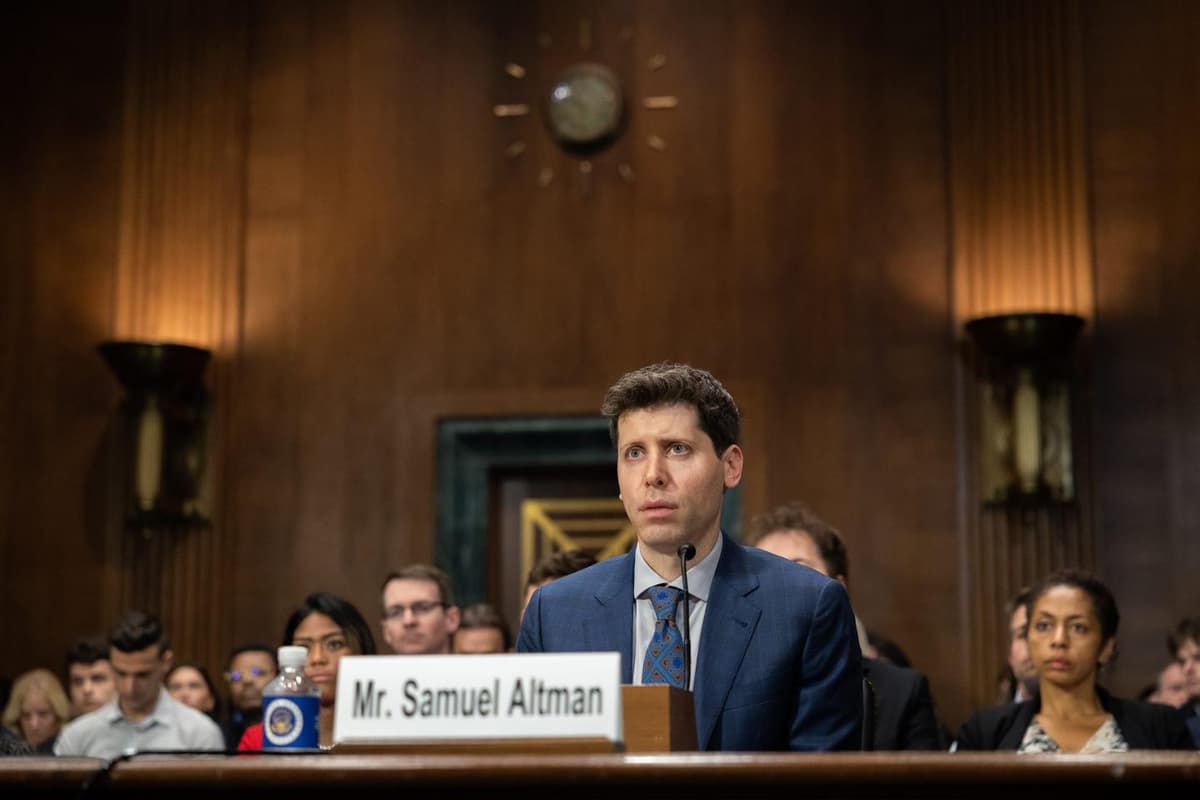
Even after ChatGPT's November 2022 launch accelerated urgency, legislative efforts faltered. OpenAI CEO Sam Altman testified before the Senate Judiciary Committee in May 2023, requesting regulation and proposing a licensing agency—but no bill materialized. Senate Majority Leader Chuck Schumer convened nine closed-door "AI Insight Forums" featuring tech CEOs, drawing criticism from Sen. Elizabeth Warren that the format allowed "tech billionaires to shape regulation."
California's SB 1047, which would have required safety testing on the largest AI models, passed the state legislature in August 2024 with support from AI pioneers Geoffrey Hinton and Yoshua Bengio. Gov. Gavin Newsom vetoed it that September after opposition from OpenAI, Meta, and Nancy Pelosi.
Industry influence and political spending
The AI industry has deployed significant resources to shape policy outcomes. When New York Assemblymember Alex Bores, author of the state's RAISE Act, ran for Congress this year, OpenAI President Greg Brockman helped fund a super PAC that spent more than $7.6 million opposing him. Anthropic countered with roughly $15-19 million supporting Bores through various PACs. Despite the support, Bores lost his June 2026 primary in what became the second-most-expensive House primary on record.
"Concerns about AI have been widespread for a while, but a few industry players have been willing to spend hundreds of millions to silence elected officials," Bores told Fortune.
Colorado's comprehensive AI law, signed in May 2024, lasted less than two years. After xAI sued the state in April 2026 and the DOJ's AI Litigation Task Force filed a supporting complaint, a federal magistrate stayed enforcement. Colorado's legislature gutted its own law within five weeks.
The current legislative moment
Coxon's resignation represents at least the fifth high-profile departure from leading AI companies over safety concerns in three years. Geoffrey Hinton left Google in May 2023, Jan Leike and Ilya Sutskever resigned from OpenAI in May 2024, and Mrinank Sharma left Anthropic in February 2026—none producing legislative action.
What changed was Hubinger's immediate public backing and the involvement of additional Anthropic researchers, lending institutional weight to individual warnings. Within 48 hours, Sen. Josh Hawley opened a Senate investigation into OpenAI, Sen. Richard Blumenthal sent a parallel letter, and Sen. Bernie Sanders convened a bipartisan briefing with Hinton.
No one outside Congress has seen the actual bill text, and both OpenAI and Anthropic are already providing input to Senate staff on drafts. Democrats on the committee are reportedly challenging whether the safety provisions are sufficient.
"Coxen's resignation broke through because he worked at both frontier companies, he is well respected, he spoke so clearly, and he's giving up personal wealth by leaving," Bores said. "Coxen's resignation couldn't be silenced. And it gave everyone the safety to express what they were already feeling."
These details were first reported by Fortune.
This is an original analysis by the Omega editorial team. Source reporting: AI Watch.
Want systems like this working for your business?
Book a Call