Policy
Fed Chair Warsh Models Three AI Economic Scenarios
From shared prosperity to mass displacement to market correction—the central bank is preparing for divergent outcomes as artificial intelligence reshapes the economy.
Key takeaways
- Federal Reserve Chair Kevin Warsh said the central bank is modeling three distinct scenarios for AI's economic impact, ranging from shared prosperity to mass job displacement to market correction.
- Productivity growth has been strong recently but hasn't yet shown a definitive structural breakout, according to Warsh.
- Nearly 90 percent of Wall Street survey respondents in the Fed's latest financial stability report cited AI-related risks as their top concern.
- Warsh established a productivity and jobs task force with external advisers including venture capitalist Marc Andreessen to examine AI's labor market effects.
- The Fed's role is preparation and contingency planning rather than advocacy for or opposition to AI development, Warsh emphasized.
Fed prepares for uncertain AI futures
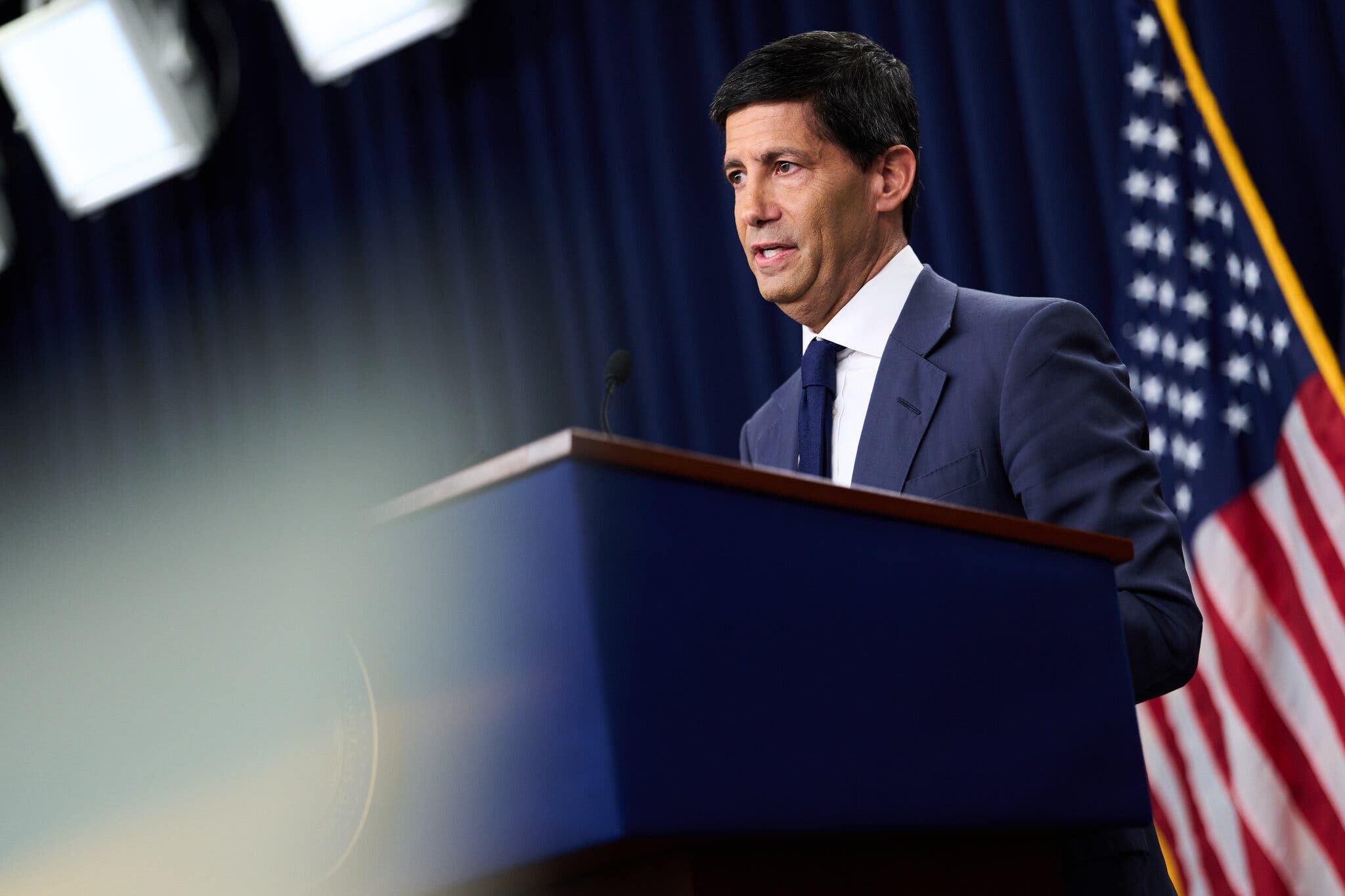
Federal Reserve Chair Kevin M. Warsh revealed Monday that the central bank is actively modeling multiple scenarios for how artificial intelligence could reshape the U.S. economy, acknowledging both transformative potential and significant risks ahead.
Speaking at a Federal Reserve Bank of San Francisco conference, Warsh presented three distinct pathways the AI boom could follow, each with dramatically different implications for jobs, growth, and financial stability. The remarks came as the Fed released its semiannual financial stability report showing nearly 90 percent of Wall Street respondents cited AI-related risks as their top concern.
Three divergent paths
In the optimistic scenario, AI drives productivity gains that benefit both workers and capital owners broadly. Economic growth would rise "persistently above its long-run average" while unemployment remains stable—a rare combination that would represent a genuine breakthrough for the economy.
The second scenario paints a darker picture of "substantial labor market disruption" where AI displaces rather than complements human workers. This path would likely produce higher economic growth alongside rising unemployment, creating painful transitions for displaced workers even as aggregate output expands.
The third possibility addresses a risk increasingly visible in financial markets: that AI returns could disappoint relative to the massive capital investment flowing into the technology. This scenario would trigger an economic slowdown as inflated stock valuations correct downward, dampening the consumer spending that has helped power recent growth. Productivity gains would be unlikely to materialize under these conditions, Warsh noted.
Contingency planning in real time
Warsh emphasized that productivity growth has been "reasonably strong" in recent months but "hasn't yet broken out definitively and structurally to the upside." The Fed's role, he said, is "neither advocacy nor opposition" but rather preparation for whatever materializes.
"Our job is to prepare for whatever comes next," Warsh said. "That means contingency planning, which becomes only more important when the world is changing this fast."
The conference focused on work from a productivity and jobs task force Warsh established—one of five groups examining issues he considers central to monetary policy. External advisers to that task force include venture capitalist Marc Andreessen, who participated in a fireside chat with Warsh and former Commerce Secretary Gina Raimondo.
Why it matters
The Federal Reserve's explicit scenario planning around AI marks a shift from abstract acknowledgment to concrete policy preparation. As the institution responsible for maintaining price stability and maximum employment, the Fed must navigate an economic transformation whose direction remains genuinely uncertain. Whether AI becomes a broadly shared productivity engine, a disruptive force concentrating gains among capital owners, or an overhyped bubble will fundamentally shape monetary policy decisions in the years ahead. The fact that Wall Street now ranks AI risks above traditional concerns signals how quickly this technology has moved from peripheral interest to central economic variable.
These details were first reported by The New York Times.