Policy
FAA's AI Air Traffic System Faces Scrutiny After Ground Stop
Officials insist SMART wasn't involved in Friday's outage, but lawmakers and safety experts want stronger oversight of the AI tool now deployed nationwide.
Key takeaways
- The FAA's AI-powered SMART system is under scrutiny after Friday's nationwide ground stop, though officials say legacy equipment—not AI—caused the outage.
- House Democrats requested a GAO audit in October, citing concerns about workforce exclusion from development and potential AI hallucinations of safety data.
- SMART operates in an advisory capacity, with human specialists validating recommendations before they reach air traffic controllers.
- The system has been deployed nationwide across all 22 air traffic control centers since November 10 under an $875 million, 12-year contract.
- Aviation safety experts emphasize the FAA needs robust verification guardrails when using AI in safety-critical operations.
FAA defends AI system after nationwide flight disruption
The Federal Aviation Administration is defending its new artificial intelligence-powered air traffic management system after a nationwide ground stop on Friday raised questions about the technology's reliability and oversight, according to The Associated Press.
The FAA, Transportation Department, and the system's developer all maintain that SMART—the AI tool now deployed across all 22 U.S. air traffic control centers—played no role in Friday's disruption. The ground stop, which began around 3:30 p.m. ET and lasted until 8:15 p.m., led to approximately 12,462 flight cancellations, though not all were directly caused by the outage.
According to the FAA, the problem stemmed from legacy equipment that became unstable when overwhelmed by roughly 1,000 connection attempts every four to five seconds. The agency characterized SMART as a data aggregator that doesn't feed information directly into air traffic control systems.
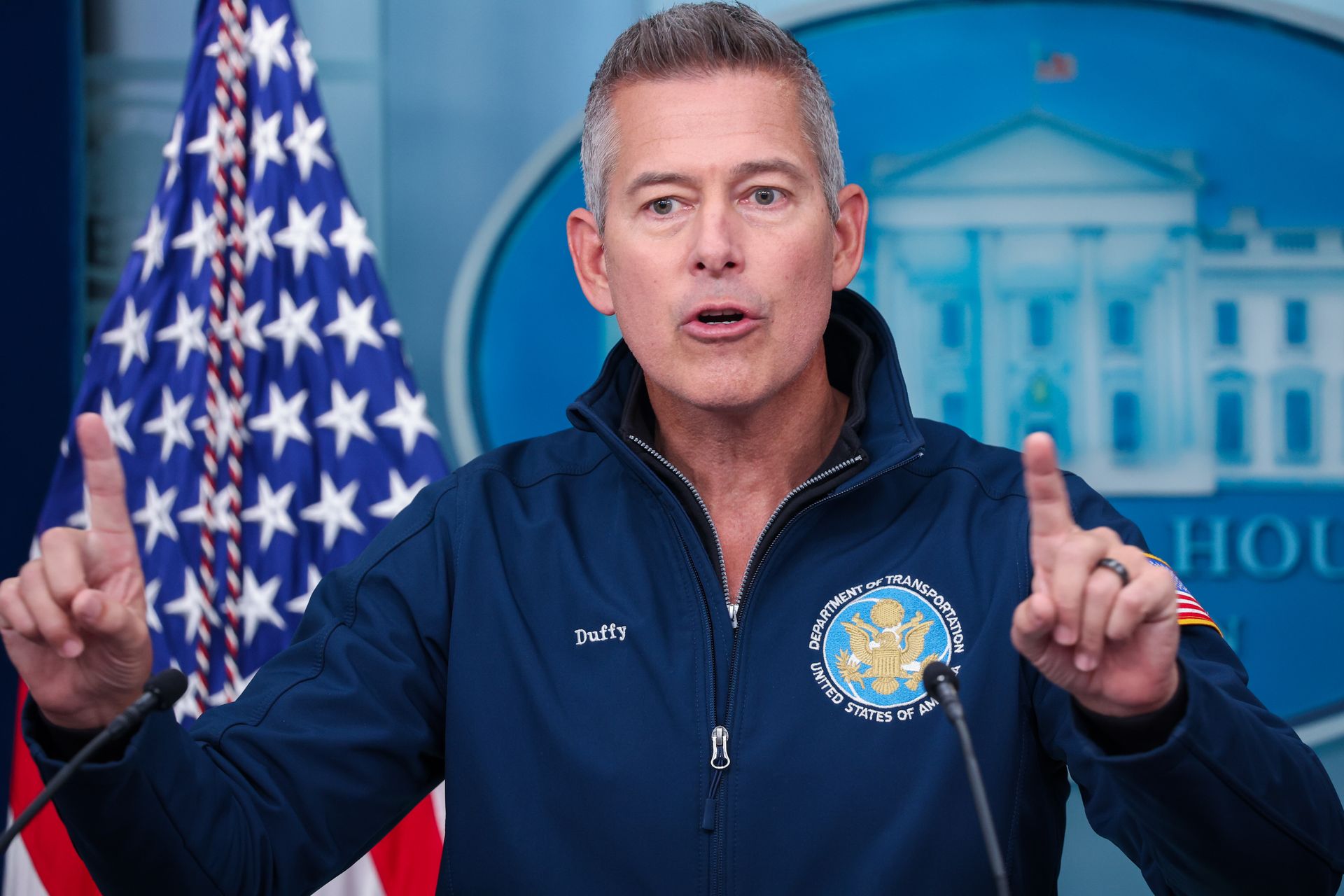
Transportation Secretary Sean Duffy told reporters at a White House briefing that SMART "isn't plugged in," The Hill reported. Homeland Security Secretary Markwayne Mullin similarly said officials saw no evidence linking the communications problems to the AI system.
Lawmakers demand accountability
Despite official assurances, concerns about SMART's deployment persist. House Democrats sent a letter to the Government Accountability Office on October 13 requesting an audit of the software. The letter highlighted that "front line aviation safety workforce apparently had little to no input into SMART's development" and raised concerns about the system's potential to "hallucinate safety-critical information"—a reference to AI's tendency to generate false or misleading outputs.
Mike O'Donnell, a former FAA official now consulting on aviation safety, told the AP that the agency "cannot afford to be wrong on this." He emphasized the need for guardrails to verify AI-generated recommendations.
How SMART operates
The system makes scheduling recommendations to human operators rather than directly controlling flights. A team of FAA specialists in Washington analyzes and validates SMART's data before sending recommendations to the agency's Command Center in Warrenton, Virginia. Local air traffic control facilities then decide whether to implement the suggestions.
The FAA expanded SMART nationwide on November 10, following an initial September rollout in the National Capital Region. According to the agency, SMART has rerouted 180 flights since September 21, saving an average of 10 minutes and nearly 80 gallons of fuel per flight.
Air Space Intelligence, which built SMART under a contract valued at $875 million over 12 years, stated on X that the ground stop was not caused by its products.
Why it matters
The scrutiny of SMART reflects broader tensions around deploying AI in safety-critical infrastructure. Even when AI systems operate in advisory roles with human oversight, questions about transparency, workforce input, and verification mechanisms remain paramount. For aviation—where failures can have catastrophic consequences—the bar for AI reliability and accountability must be exceptionally high. This incident underscores that technical safeguards and institutional trust must advance in tandem as agencies integrate AI into operations affecting millions of travelers.
These details were first reported by The Associated Press.