Europe Holds Just 5% of Global AI Compute as Investment Gap Widens
Policy experts warn the EU's €200 billion plan pales against $400 billion in annual US private spending, risking economic marginalization.
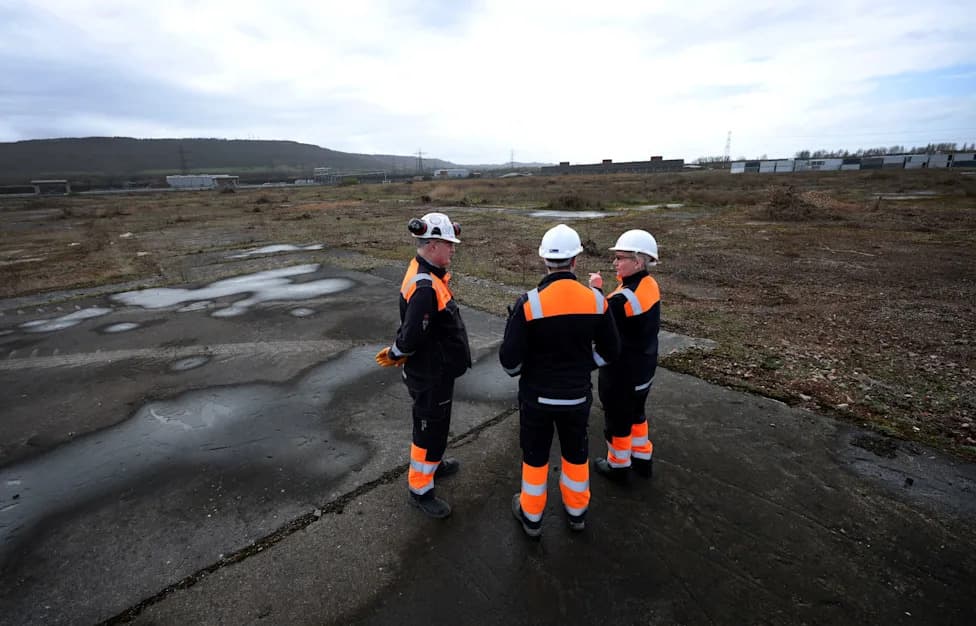
Europe's AI infrastructure crisis
Europe controls just 5% of global artificial intelligence compute capacity while the United States commands 80%, according to a new analysis from AI policy researchers. The stark disparity underscores a widening investment gap that threatens to relegate the European Union to economic irrelevance in an AI-dominated future.
The EU's flagship investment initiative totals €200 billion (approximately $230 billion), but much of that figure represents repackaged commitments spread across multiple years. By contrast, US technology companies alone spent more than $400 billion on AI infrastructure expansion in 2025—nearly double Europe's multi-year plan in a single year of private sector investment.
Why it matters
The compute capacity gap isn't just about technology—it's about economic sovereignty. As AI systems increasingly drive competitive advantages in defense, cybersecurity, and geopolitical influence, regions without substantial compute infrastructure risk becoming dependent on foreign AI capabilities for critical national functions. Europe's regulatory caution, while protecting citizens from certain AI risks, may be creating a different vulnerability: strategic irrelevance in the technologies reshaping global power dynamics.
A cautionary scenario
To illustrate the potential consequences, the policy group presented a fictionalized scenario set in 2031. In this near-future projection, part-written by Tom Chivers of Flagship, Europe's combination of heavy regulation and limited ambition leaves it powerless as AI becomes central to defense systems, cybersecurity operations, and international relations.
The scenario acknowledges Europe's understandable skepticism toward Big Tech—a stance rooted in legitimate concerns about market concentration, data privacy, and algorithmic accountability. However, the researchers argue this caution has not been balanced with sufficient investment in homegrown AI capabilities.
The infrastructure reality
The compute capacity figures reveal a fundamental asymmetry in AI readiness. Training and deploying frontier AI models requires massive computational resources—specialized chips, data centers, and energy infrastructure. Without this foundation, European companies and institutions must rely on capacity controlled by entities outside EU jurisdiction.
The spending comparison highlights the scale mismatch: private US technology firms are deploying AI infrastructure investment at roughly twice the rate of Europe's entire public-private plan, and doing so annually rather than over extended timelines.
Regulation versus capability
Europe has positioned itself as a global leader in AI regulation, with frameworks designed to ensure safety, transparency, and accountability. The challenge identified by the policy group is whether regulatory leadership can coexist with technological capability—or whether Europe is inadvertently choosing one at the expense of the other.
The analysis was first reported by AI Watch, drawing on research from a group of AI policy experts examining Europe's strategic position in the global AI landscape.
This is an original analysis by the Omega editorial team. Source reporting: AI Watch.
Want systems like this working for your business?
Book a Call
