Emerson, FOBA, Mitsubishi Embed AI in Industrial Hardware
Three manufacturers shift from software overlays to purpose-built intelligent automation at the physical layer.
Industrial AI moves from software layer to silicon
Three major industrial equipment manufacturers announced hardware-integrated AI deployments in late July 2026, marking a decisive turn away from cloud-dependent analytics toward intelligence embedded directly in automation platforms, laser workstations, and cooling infrastructure.
Emerson, FOBA Laser Marking + Engraving, and Mitsubishi Electric each targeted distinct operational challenges—fault detection in critical infrastructure, multi-material laser processing, and data center thermal management—but share a common architecture: AI capability built into the physical equipment itself rather than bolted on through software subscriptions.
Emerson eliminates cloud latency in fault detection
Emerson is embedding autonomous AI agents directly into its industrial automation platform, with initial deployments focused on power and water facilities. The architecture runs intelligent fault detection at the edge of the automation layer, removing the latency inherent in cloud-based analytics.
For operations managing critical infrastructure, the difference between millisecond edge detection and multi-second cloud roundtrips determines whether an anomaly is caught before it cascades into a service disruption. By folding AI into the core automation platform rather than offering it as an external analytics layer, Emerson changes the procurement equation from software add-ons to native controller capability.
FOBA demonstrates variable-wavelength laser integration
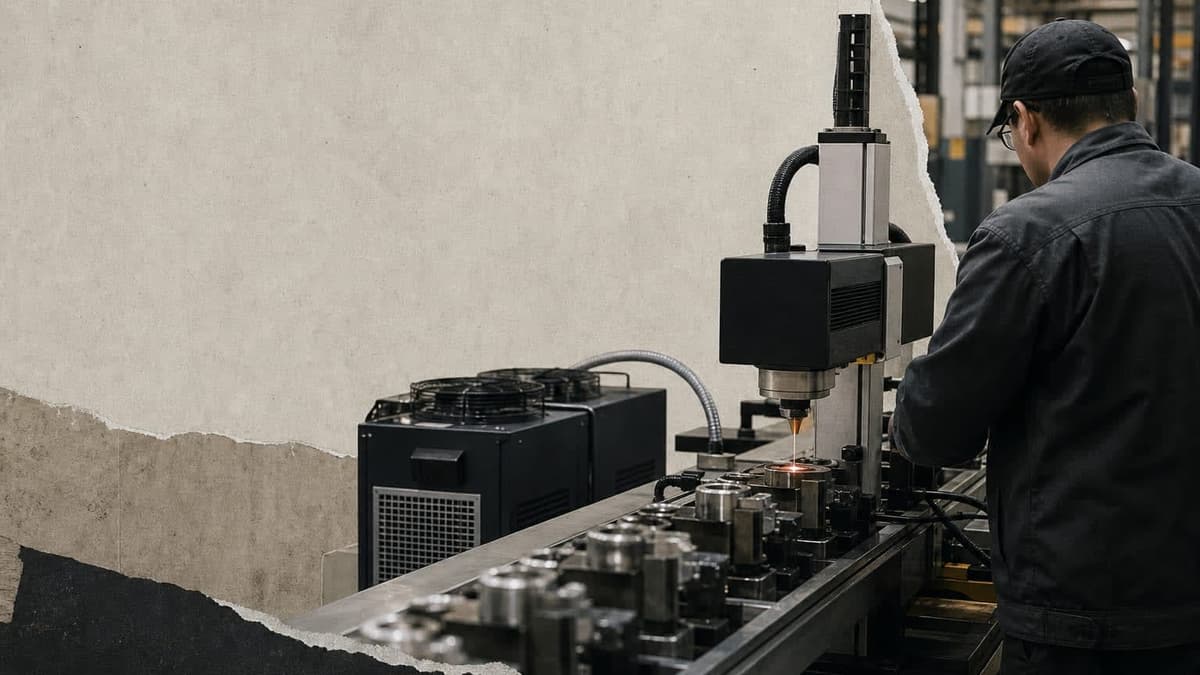
FOBA will showcase variable-wavelength laser systems integrated into fully automated workstations at IMTS 2026, running September 14–19 in Chicago. The systems address a materials processing constraint: different substrates absorb laser energy at different wavelengths, traditionally requiring multiple dedicated marking cells.
A workstation that shifts wavelength dynamically consolidates what would otherwise demand two or three separate stations, with direct implications for capital expenditure, floor space, and throughput. FOBA's emphasis on integrated workstations rather than standalone laser units signals an expectation that buyers will evaluate marking as part of broader automation cell design.
Mitsubishi establishes US cooling production
Mitsubishi Electric has opened a US manufacturing facility dedicated to IT cooling equipment, targeting the supply chain delays and extended lead times that have complicated data center procurement over the past two years. Domestic production shortens the procurement cycle and eliminates import logistics.
The facility also supports what Mitsubishi calls a "one-stop service" model, combining equipment, maintenance, and emergency response under a single vendor relationship. For data center operators where cooling failures carry immediate financial consequences, integrated service models increasingly outweigh unit price in vendor selection.
IDS upgrades machine vision with Sony sensors
IDS Imaging Development Systems expanded its uEye FA industrial camera series with Sony STARVIS 2 sensors ranging from 2 to 12.5 megapixels. The ruggedized cameras bring higher sensitivity and dynamic range to low-light and high-contrast inspection scenarios, extending the conditions under which fixed industrial cameras can replace more expensive specialized imaging setups.
Why it matters
These announcements reflect a fundamental shift in how industrial AI is deployed. Rather than treating intelligence as a cloud service layered over commodity hardware, manufacturers are building decision-making capability into controllers, workstations, and infrastructure equipment. For operations and procurement teams planning capital investments, the conversation is moving from feature roadmaps and software subscriptions to native capability and integrated service models. The pilot phase is over; AI is now part of the physical stack.
These developments were first reported by Industry USA and covered by MarketScale.
This is an original analysis by the Omega editorial team. Source reporting: Automation Watch.
Want systems like this working for your business?
Book a Call