Defense Leaders Push Agentic AI to Front Lines by 2035
Open-source models and battlefield speed demands are forcing military to rethink autonomy, software economics, and human decision-making roles.
Defense Leaders Push Agentic AI to Front Lines by 2035
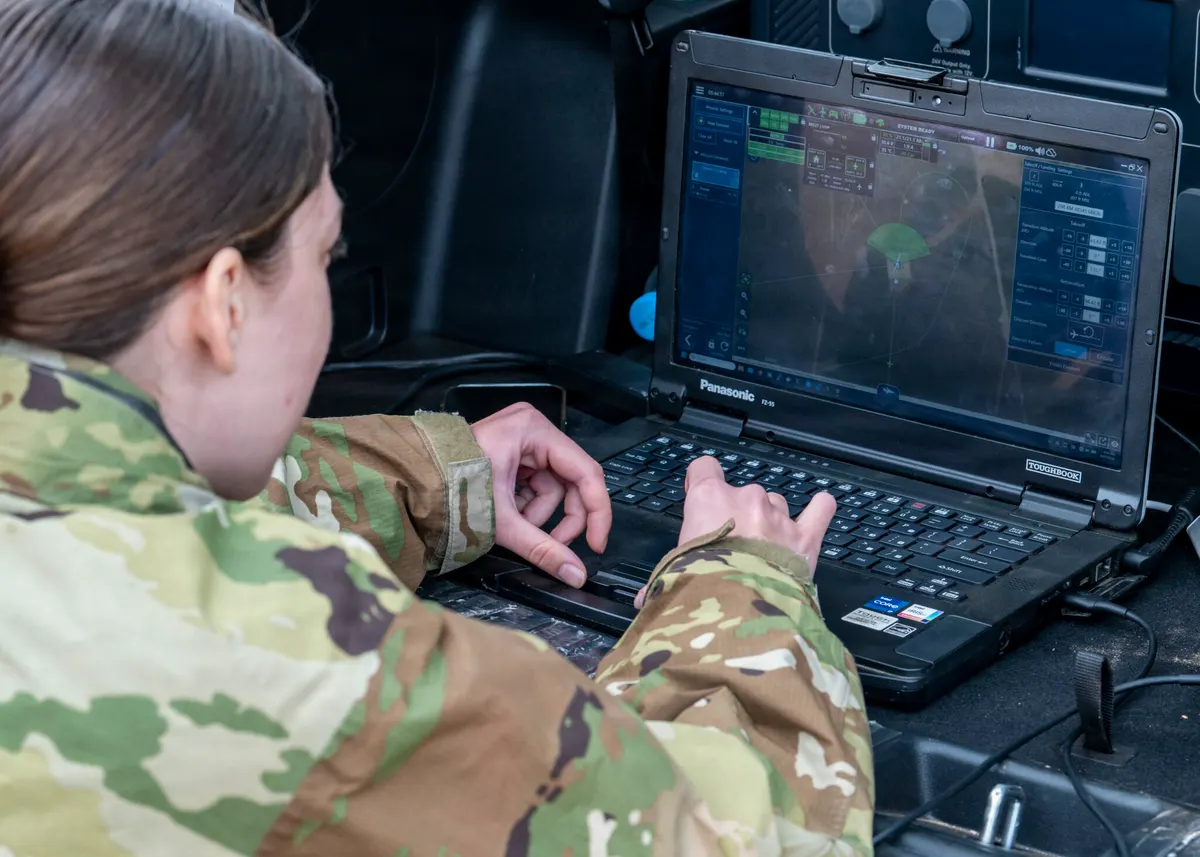
The U.S. military is racing to embed agentic AI systems directly into operational units, driven by the rapid proliferation of open-source AI models and the battlefield speed demonstrated in conflicts like Ukraine. Garrett Berntsen, Chief AI Officer at Accenture Federal Services and former Deputy Chief Data and Artificial Intelligence Officer for Scaled Capabilities, outlined a vision where software capabilities become as distributed as rifles—built, deployed, and discarded at the tactical edge.
Two forces are accelerating this shift. First, powerful AI models now reach open-source availability within months of release, giving adversaries and non-state actors the same tools once reserved for classified programs. Second, autonomous weapon swarms and rapid electronic warfare cycles are outpacing human decision loops, creating what Berntsen calls a "ticking clock" to delegate workflow execution to machines or risk losing speed advantages.
Why it matters
This represents a fundamental restructuring of military software economics and command authority. If the cost to build software drops dramatically through agentic coding, defense organizations can abandon multi-year procurement cycles in favor of mission-specific tools that are created, used, and torn down as needed. That shift requires new contracting models, new skill sets embedded at the platoon level, and new frameworks for when humans authorize versus audit AI decisions.
Dynamic autonomy replaces binary control
Berntsen argues that autonomy cannot operate as a simple on-off switch. Instead, military forces need a sliding scale calibrated to mission risk—similar to how rules of engagement vary between high-intensity combat and peacetime operations. Low-risk tasks like supply chain logistics can run with high autonomy and human auditing after the fact. High-stakes targeting decisions require human-in-the-loop or human-on-the-loop constraints where AI presents verified options but commanders hold sole authorization.
The goal is not replacing human judgment but clearing cognitive noise so decisions rest on synthesized ground truth rather than data overload.
Re-engineering processes, not digitizing old ones
A recurring trap in defense modernization is automating outdated workflows. Berntsen warns that building 12 AI agents to handle a 12-step paper approval process is digitization, not transformation. Real modernization requires asking what a mission process would look like if designed today with current tools—often collapsing multi-step procedures into a single automated workflow with one human checkpoint.
When speed exceeds human capacity, the answer is not forcing humans to work faster but fundamentally re-engineering business processes around machine capabilities.
The 2035 force: software abundance and tactical coders
Berntsen envisions three major shifts by 2035. First, a clearer division between purely automated operational support—logistics, paperwork, routine intelligence sorting—and uniquely human high-stakes tactical decisions. Second, a transformation in defense software economics where plummeting build costs enable software abundance, allowing capabilities to be created for specific missions and discarded when no longer useful rather than maintained indefinitely.
Third, and most striking, is the push to embed software skills directly at the front lines. Berntsen describes a future where infantry platoons include a software NCO or warrant officer who can build digital capabilities on the spot to solve tactical problems, execute the mission, and tear down the tool—no headquarters approval required.
This distributed, agile capability depends on outcome-based contracting that replaces rigid multi-year feature specifications with rapid iteration, and on embedding engineers alongside operators to create continuous feedback loops.
These details were first reported by Breaking Defense in an interview with Berntsen.
This is an original analysis by the Omega editorial team. Source reporting: AI Watch.
Want systems like this working for your business?
Book a Call