Data Centers Turn to Inefficient Gas Turbines for AI Power
Amazon, Meta, and others are deploying simple-cycle turbines that emit far more greenhouse gases per unit of energy than conventional power plants.
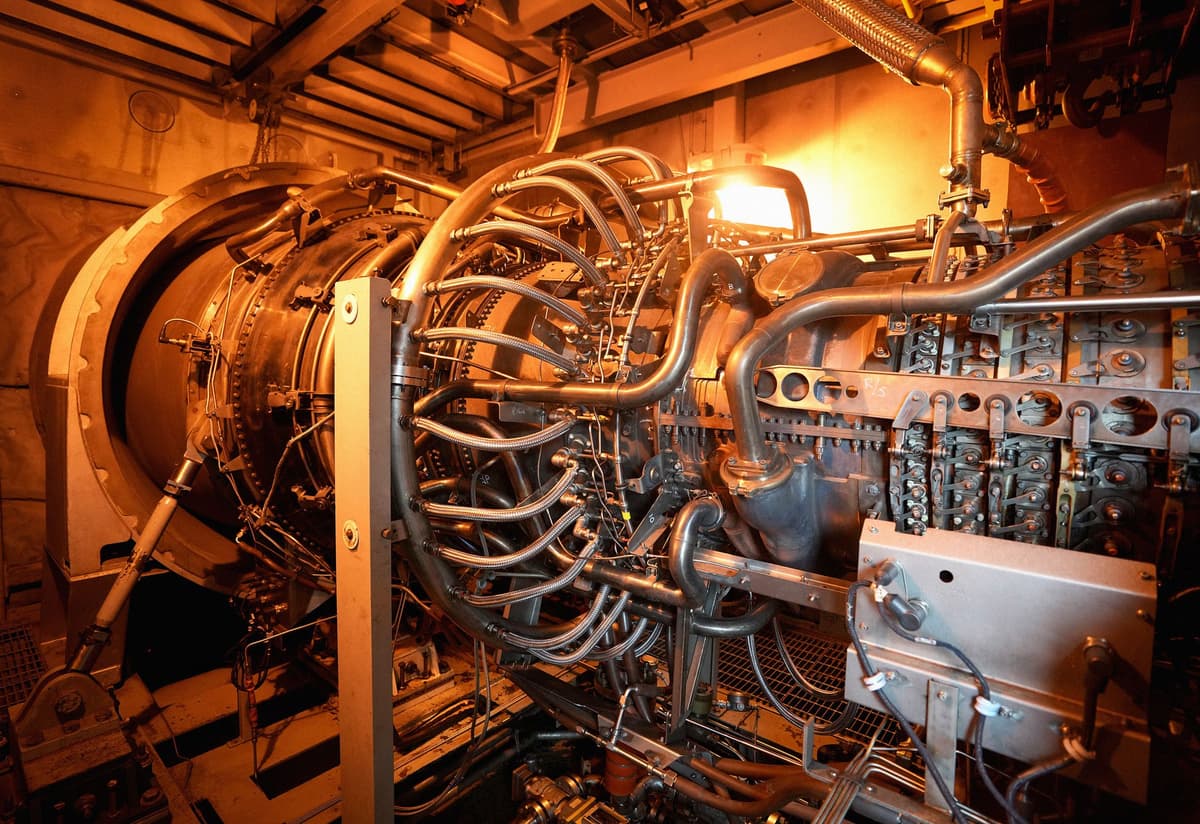
Major technology companies are constructing a new generation of data center power plants that rely on significantly less efficient turbines than traditional electricity generation, potentially creating what amounts to a parallel fossil fuel grid with outsized climate impacts.
Amazon has acquired a massive off-grid power facility under construction in Texas that's permitted to emit up to 33 million tons of greenhouse gases annually. The project relies exclusively on simple-cycle turbines rather than the combined-cycle units standard at grid-connected natural gas plants, according to details first reported by WIRED.
The efficiency gap
Simple-cycle turbines burn fuel and air in a combustion chamber to generate electricity, but they release substantial waste heat in the process. Combined-cycle plants capture that waste heat with an additional steam turbine component, converting it into more energy and dramatically reducing emissions per unit of electricity produced.
Even if Amazon's Texas facility operates at half its permitted capacity, it would generate more greenhouse gas pollution than 78 average-sized natural gas plants, based on Environmental Protection Agency data.
Amazon spokesperson Heather Callahan said the facility provides "on-site generation that won't raise electricity costs for Texas families" and noted the site will include solar and battery storage. The company maintains its commitment to net-zero emissions by 2040.
An industry-wide pattern
The Texas project isn't an isolated case. At least three power plants being developed in Ohio by Williams for Meta will use simple-cycle units. In Abilene, Texas, Crusoe is building a facility with 39 simple-cycle turbines for a Microsoft data center. Google's Goodnight data center will be powered by 20 simple-cycle turbines, and xAI's Colossus facilities in Memphis rely on dozens more. All carry permits for millions of tons of annual emissions.
Britt Burt, a senior vice president at Industrial Info Resources, said he didn't anticipate data center developers would lean so heavily on this approach. "It's not the most efficient way to use a gas turbine," he noted.
Why simple-cycle turbines?
Three factors are driving the trend. First, supply chain constraints have created yearslong backlogs for turbine orders and associated equipment, pushing developers toward whatever they can obtain quickly.
Second, simple-cycle turbines can start and stop more rapidly than combined-cycle units, matching the fluctuating power demands of AI model training. Stephen Lynch, director of Penn State's Center for Gas Turbine Research, Education, and Outreach, explained that having multiple smaller units that can individually cycle on and off suits highly variable loads better than large combined-cycle plants.
Third, simple-cycle turbines don't require water cooling. Burt estimates a 250-megawatt combined-cycle plant could consume roughly 75,000 gallons per hour—a significant concern for communities near data centers.
Why it matters
Federal and state officials are encouraging data centers to provide their own power to avoid straining the grid and raising consumer electricity costs. But the rapid construction of islanded power plants with inefficient turbines—designed to last decades—threatens to lock in substantially higher emissions than grid-connected alternatives would produce. If AI demand softens, these facilities could become stranded assets with no clear purpose, representing both wasted capital and unnecessary environmental damage.
Some companies have indicated they may eventually connect their plants to the grid. Callahan said Amazon's Texas facility is "designed to transition to grid-connected service as interconnection timelines allow." Williams told WIRED it may consider future interconnection for its Ohio plants.
These details were first reported by WIRED.
This is an original analysis by the Omega editorial team. Source reporting: WIRED.
Want systems like this working for your business?
Book a Call
