Data Centers Face Climate Threats as Severe Weather Drives Losses
Insurers report extreme heat, flooding, and storms now account for a third of claims in the booming AI infrastructure sector.
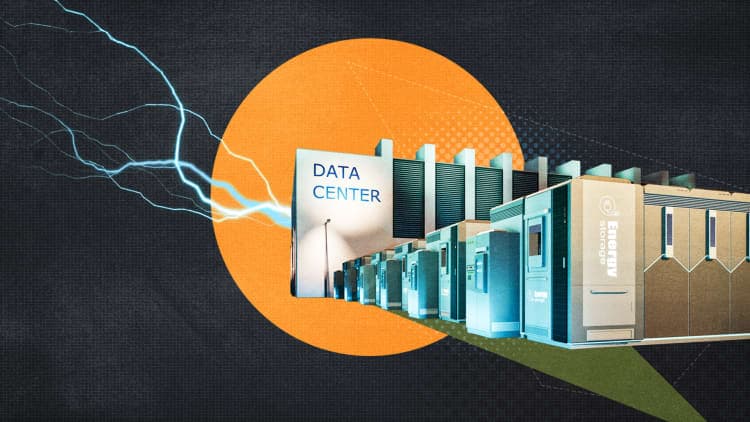
Climate hazards emerge as top risk for AI infrastructure
Severe weather has overtaken all other causes to become the leading driver of insurance losses for data centers in the United States, now accounting for one-third of claims in Zurich's builders' risk portfolio, according to Patrick McBride, the insurer's Head of International Construction.
The shift reflects a fundamental change in how the industry must approach site selection and design. A study by climate analytics firm First Street found that 79 percent of global data center capacity faces elevated risks from acute climate hazards including flooding, extreme winds, and wildfires that can disrupt operations and drive up insurance and repair costs.
Why it matters
The AI boom is pushing data center construction into new markets at unprecedented scale—often in areas with limited historical weather data. As facilities consuming as much power as 100,000 homes concentrate in these regions, the collision of climate risk and critical infrastructure creates compounding vulnerabilities that could threaten the capital flows funding the sector's expansion.
Frontier markets bring heightened exposure
This year, 64 percent of data center capacity under construction is moving outside traditional hubs like Northern Virginia into what the industry calls frontier markets—West Texas, Tennessee, Wisconsin, and Ohio. These suburban and rural locations offer cheaper land but often lack comprehensive records of extreme weather events.
"Now we have $3 billion worth of assets with over a mile worth of exposure to these events," McBride told CNBC, which first reported the details. Facilities in these areas face heightened risk from tornadoes, hail, and high winds that can damage exposed HVAC systems, cooling towers, and solar installations.
Emerging international markets present similar challenges. In Brazil and Europe's Iberian Peninsula, data centers are expanding into regions where rising temperatures compound operational stress.
Heat creates dual pressure on power grids
Extreme heat doesn't just stress data centers—it strains the electrical grid they depend on at precisely the same moment. Cooling accounts for roughly 40 percent of data center energy consumption under normal conditions, a figure that climbs during heat waves just as air conditioning demand peaks across the broader grid.
"Data centers need the most energy exactly when the grid has the least available to give," said Mishal Thadani, CEO of AI software platform Rhizome. He cited Turin, Italy, where temperatures reached 38 degrees Celsius in May, placing thermal stress on underground cables and causing repeated blackouts.
Industry adapts design and cooling technology
Microsoft told CNBC it designs data centers to operate reliably across a wide range of environmental conditions, using site selection, redundant systems, and real-time monitoring to manage risks from extreme heat and severe weather.
Nvidia announced last week that its new AI servers can run cooling liquid at 45 degrees Celsius, up from lower previous thresholds. Raising chiller temperatures by just one degree can reduce cooling energy costs by approximately 4 percent, the company said.
Aaron Lewis, chief commercial officer of global data center solutions at Johnson Controls, said he recently saw a European client add a "climate change factor" to specifications for the first time, designing facilities to withstand projected temperature increases.
"Severe weather is no longer something that can be treated as a background exposure," McBride said. "It is one of the first things we and the owners we work with look at."
These details were first reported by CNBC.
This is an original analysis by the Omega editorial team. Source reporting: AI Watch.
Want systems like this working for your business?
Book a Call