Nvidia Partners With Wall Street to Finance $500B in AI Loans
Chipmaker teams with Apollo, BlackRock, and others to turn computing hardware into a bankable asset class for startups and enterprises.
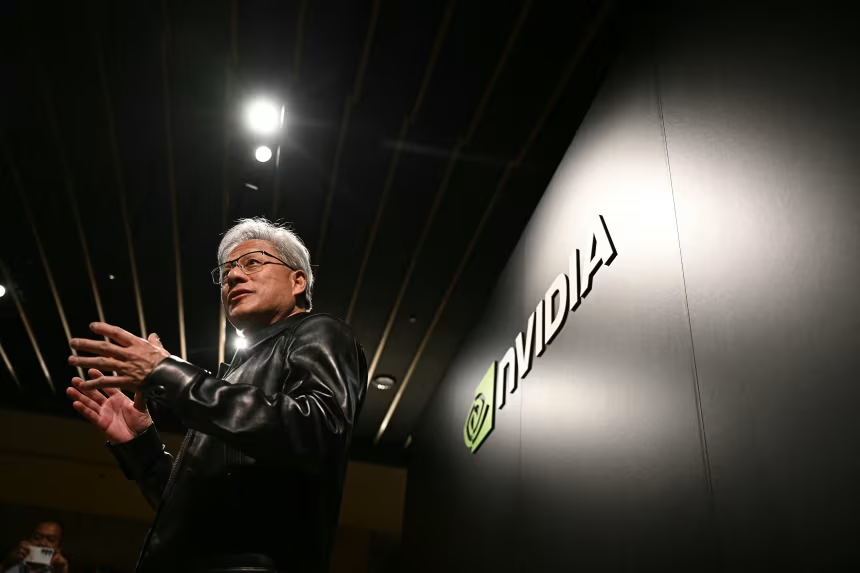
Nvidia launches massive AI infrastructure financing program
Nvidia has forged a preliminary agreement with six major Wall Street institutions to establish lending platforms that will provide more than $500 billion in financing for AI infrastructure purchases. The chipmaker announced Monday that Apollo, BlackRock, Blackstone, Brookfield, Goldman Sachs, and KKR will participate in the initiative, according to CNN.
The arrangement represents a fundamental shift in how AI computing resources are financed. Rather than companies purchasing chips and building data centers on a project-by-project basis, Nvidia CEO Jensen Huang described the new model as treating "AI factories" as productive infrastructure that can be financed through traditional lending mechanisms.
The financing platforms are designed to help smaller AI startups access the processing power needed to train and deploy their models—a resource that has become increasingly expensive and difficult to obtain as demand has surged.
Why it matters
This initiative attempts to solve a critical bottleneck in AI development: access to compute for companies without massive balance sheets. By creating structured financing vehicles backed by institutional capital, Nvidia is essentially trying to commoditize AI infrastructure the way real estate or energy assets have been commoditized. However, the approach introduces new risks. Unlike buildings or highways, semiconductor technology depreciates rapidly as newer generations emerge, raising questions about whether chips can truly function as stable collateral for long-term loans.
Wall Street embraces AI compute as an asset class
Apollo President Jim Zelter characterized modern compute as "a scarce, mission-critical asset class with compelling investment characteristics" in a statement about the deal. The framing reflects Wall Street's growing appetite for AI-related investments as the technology continues to reshape multiple industries.
Nvidia has been the primary beneficiary of the AI infrastructure boom. The company's stock has increased more than fourfold since early 2024, pushing its market valuation to $5.3 trillion, CNN reported.
Concerns about circular investment patterns
Despite the enthusiasm, some market observers have expressed caution about the structure of AI financing. Investors have noted circular investment patterns where one AI company invests in another with the implicit understanding that the recipient will purchase the investor's products. These arrangements have raised concerns that demand signals in the AI market may be distorted.
Nigel Green, CEO of financial advisory firm deVere Group, highlighted a fundamental challenge with the new financing model. "Chips have never been treated as a bankable, long-duration asset before, because chips depreciate fast and lose value the moment a newer generation arrives," Green noted. He questioned whether semiconductor hardware can maintain sufficient value over time to serve as reliable collateral, unlike physical infrastructure such as buildings or transportation systems.
The success of Nvidia's financing initiative will likely depend on whether institutional lenders can develop accurate models for the depreciation and replacement cycles of AI hardware—a significantly different challenge than traditional infrastructure lending.
These details were first reported by CNN, with reporting contributed by David Goldman.
This is an original analysis by the Omega editorial team. Source reporting: AI Watch.
Want systems like this working for your business?
Book a Call