Congress Debates Who Pays for AI Data Centers' Power Demands
Bipartisan agreement on principle meets partisan divide over enforcement as electricity costs triple in some regions.
Congress Debates Who Pays for AI Data Centers' Power Demands
Lawmakers from both parties say consumers shouldn't subsidize the massive electricity requirements of AI data centers, but they're divided on whether pending legislation will actually prevent cost-shifting to households and businesses.
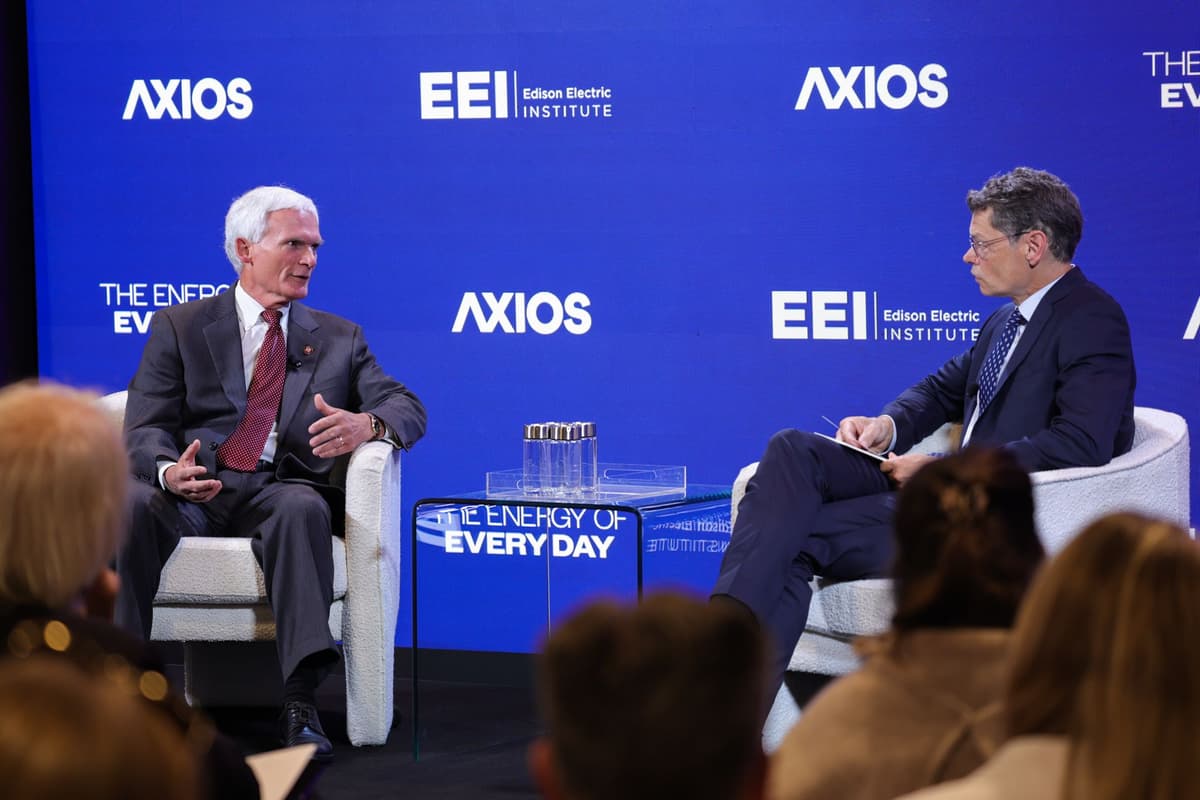
The disagreement surfaced during a Sept. 15 energy policy event in Washington where Rep. Bob Latta (R-Ohio) and Rep. Sam Liccardo (D-Calif.) outlined competing visions for managing the collision between AI's power hunger and an aging electrical grid, according to Axios.
Why it matters
Data centers have become a flashpoint in the 2026 midterm elections as communities watch electricity bills climb while tech companies race to build AI infrastructure. The debate isn't academic: consumers in Washington, D.C., have seen the supply portion of their electricity bills roughly triple over three years as regional demand outpaces new generation capacity.
The Legislative Divide
Latta expressed confidence that the House's Ratepayer Protection Act would pass with strong bipartisan support when it comes to a vote. The House debated the measure on Sept. 15 but postponed voting.
"The data centers have to pay for themselves," Latta said at the event, which was moderated by Axios reporters Hans Nichols and Ben Geman and sponsored by the Edison Electric Institute. "It shouldn't come back to the existing ratepayers."
Liccardo dismissed the bill as "a nothing burger" despite saying he'd likely vote for it. He argued the voluntary federal standard would lack teeth because states can choose whether to adopt it, calling the measure "a familiar charade we see on the floor these days."
Instead, Liccardo advocated for offering data center developers faster grid connections in exchange for investments that protect local communities and existing customers.
Regional Grid Pressures
The cost impacts extend beyond data center hubs. Ted Trabue, interim chairman of the Public Service Commission of the District of Columbia, explained that D.C. imports nearly all its electricity and competes for power across the PJM regional grid with northern Virginia, a major data center concentration.
That competition has driven the supply portion of D.C. customers' bills to roughly triple over the past three years as demand growth outstripped new generation.
Industry Response
Utilities are already structuring agreements to isolate data center costs. Harry K. Sideris, president and CEO of Duke Energy, said his company requires data centers to cover infrastructure costs needed to serve them. "They have to pay their costs. They can't be subsidized by the rest of our customers," Sideris said during the event.
The Department of Energy's Energy Dominance Financing Program has $289 billion in available loan authority for U.S. energy and manufacturing projects that add grid capacity or enhance reliability.
Tristan Abbey, administrator of the U.S. Energy Information Administration, announced the agency is preparing to launch a weekly electricity report to track real-time changes in U.S. electricity as AI adds new strain to the grid. The EIA currently publishes hourly and monthly electricity data.
Both lawmakers supported federal AI regulation, with Latta saying the technology likely can't be stopped but needs guardrails. Liccardo pointed to audits, testing disclosures, and kill switches while acknowledging "we really don't know how to regulate AI."
The details were first reported by Axios.
This is an original analysis by the Omega editorial team. Source reporting: AI Watch.
Want systems like this working for your business?
Book a Call