Chinese AI Startup Tops Nvidia on Global Robotics Benchmark
Spirit AI's foundation model for embodied intelligence claims first place on RoboArena leaderboard, signaling intensified competition in physical AI systems.
Chinese Model Claims Lead in Robotics AI Race
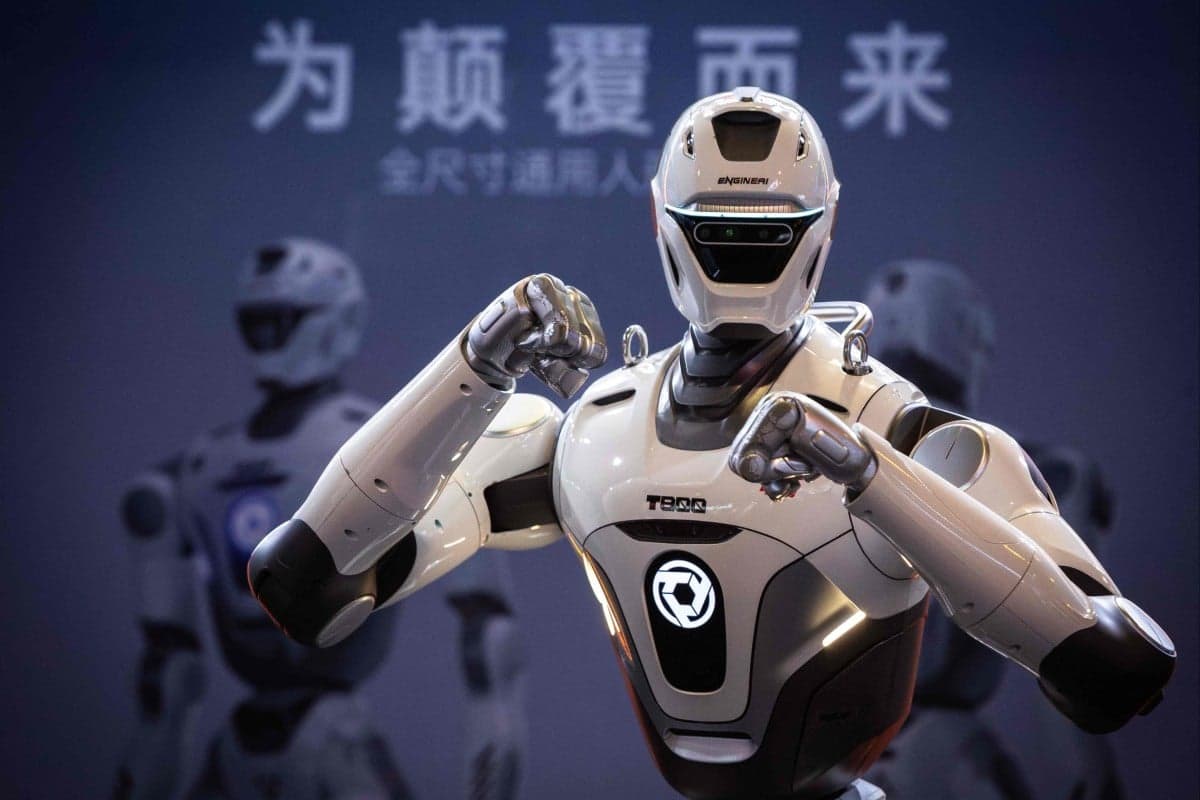
A Hangzhou-based startup has achieved the top ranking on a prominent global benchmark for robotic intelligence, marking a significant milestone in the competition between Chinese and American companies to develop AI systems that can control physical machines.
Spirit AI announced Wednesday that its Spirit v1.6 foundation model scored 1,924 on the RoboArena leaderboard, narrowly surpassing Nvidia's Cosmos3-Nano-Policy model, which scored 1,881. The achievement represents the first time a Chinese model has claimed the leading position on this benchmark.
Nvidia's DreamZero project, unveiled in February, placed third with a score of 1,763. The timing is notable: Spirit AI's announcement came just two days after Nvidia launched its Cosmos 3 model, which the chip giant designed to enable physical AI systems to evaluate scenarios before taking action.
Why It Matters
The competition reflects a fundamental shift in AI development from purely digital applications toward embodied intelligence—systems that must interact with and manipulate the physical world. As companies race to commercialize humanoid robots and autonomous systems, the models that power decision-making in real-world environments become critical infrastructure. Success in this domain could determine which nations lead in manufacturing automation, logistics, and service robotics over the next decade.
Understanding the Benchmark
RoboArena evaluates what researchers call "generalist robot policies"—the ability of AI models to translate instructions into effective physical actions across diverse real-world scenarios. The benchmark was developed through a collaboration between Nvidia and leading academic institutions including Stanford University and the University of California, Berkeley.
The scoring system measures how reliably models can guide robots through complex tasks that require spatial reasoning, object manipulation, and adaptive responses to changing conditions.
Broader Industry Dynamics
The leaderboard results arrive amid expanding partnerships in the robotics sector. On Monday, Nvidia announced collaborations with China's Unitree Robotics and Singapore-based Sharpa, a developer of robotic hand technology. These partnerships underscore how embodied AI is becoming a central focus for the industry, bridging the gap between computational intelligence and mechanical systems.
The convergence of advanced AI models with increasingly capable robotic hardware is creating new possibilities for automation in manufacturing, warehousing, healthcare, and consumer applications. Companies that can demonstrate superior performance on benchmarks like RoboArena may gain advantages in attracting partners and customers in these emerging markets.
These details were first reported by the South China Morning Post.
This is an original analysis by the Omega editorial team. Source reporting: AI Watch.
Want systems like this working for your business?
Book a Call