Chinese AI Models Force OpenAI, Anthropic to Slash Prices
DeepSeek and other cost-efficient Chinese competitors are reshaping the economics of artificial intelligence as U.S. labs cut fees to retain market share.
Price War Erupts as Chinese AI Gains Ground
U.S. artificial intelligence leaders are cutting prices dramatically as Chinese competitors deliver comparable performance at lower costs. OpenAI reduced fees by 80 percent for its lightweight "Luna" model, while Anthropic launched a new system that matches much of its flagship model's capability at half the price.
The moves signal a fundamental shift in AI economics. Chinese companies including DeepSeek have released cost-efficient, high-performance models that are gaining adoption among developers and businesses worldwide. DeepSeek's V4 Flash now tops the usage leaderboard on OpenRouter, a technical platform that tracks model deployment.
Why it matters
The pricing pressure from Chinese AI labs threatens the business models of U.S. companies that have invested billions in developing frontier systems. As leaner alternatives prove sufficient for many real-world applications, Silicon Valley's strategy of charging premium prices for cutting-edge capabilities faces a direct challenge. The competition could accelerate AI adoption by making the technology more accessible, but it also raises questions about how American labs will achieve profitability.
Chinese Labs Raise Prices as Demand Grows
While U.S. companies slash fees, some Chinese AI firms are moving in the opposite direction. DeepSeek announced plans for a "significant increase" in prices for programmers last week, reflecting growing demand for its open-source offerings.
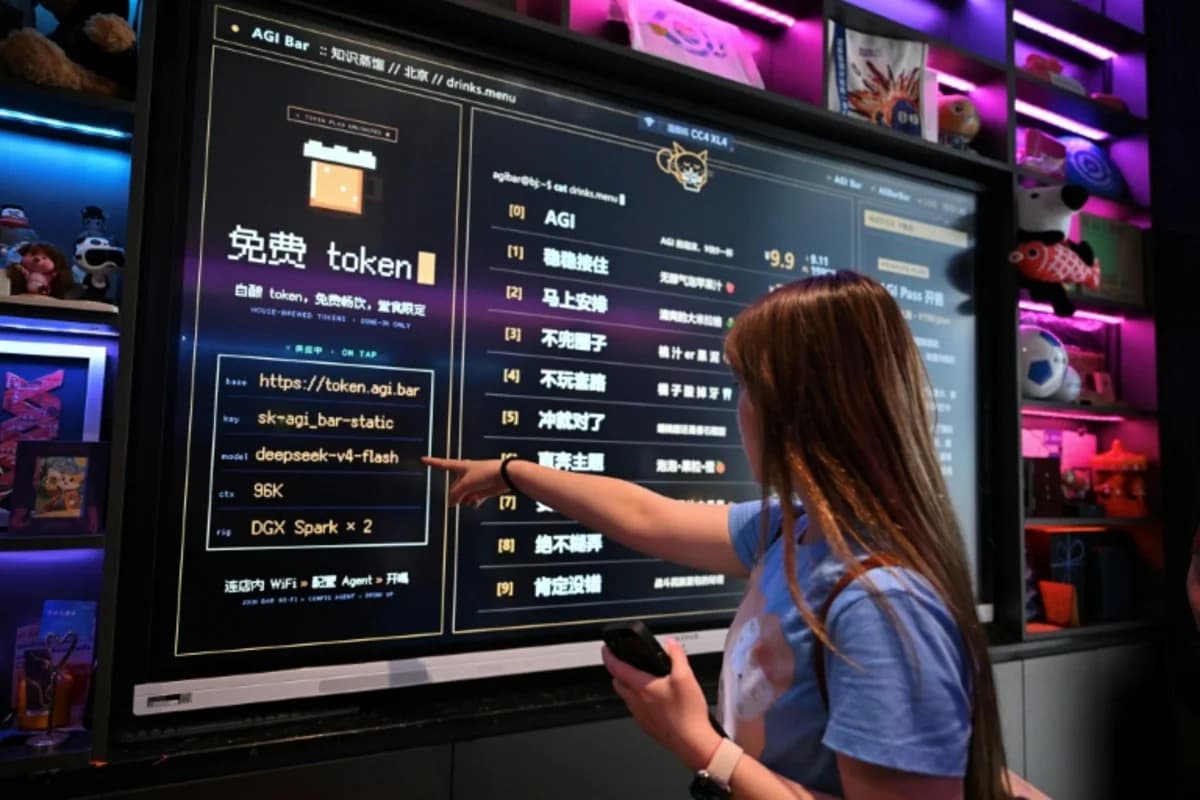
The company's success is visible in Beijing's Zhongguancun district, often called China's Silicon Valley. AGI Bar, which opened last summer as a gathering spot for developers and investors, offers customers free access to DeepSeek V4 Flash through two Nvidia workstations that self-host the model.
Bar owner Song De, an independent AI developer, said he provides "free tokens" — units of AI usage — just as other establishments offer free Wi-Fi. The venue's decor celebrates China's AI boom, with logos from major domestic labs on the walls and a menu filled with technology jokes. Its signature drink, named AGI for "Artificial General Intelligence," consists almost entirely of beer foam, a reference to industry hype.
Leaner Models Gain Traction
Developers like Song are increasingly choosing cost-efficient alternatives over premium models such as Anthropic's Fable 5. The shift reflects a practical reality: many applications don't require the most advanced capabilities.
"There's a lot of stuff that can be done with older models, or lesser models, or small language models," said Jack Gold, founder of technology analysis firm J.Gold Associates. "Especially as we move into the agentic world, a lot of the models will be running locally."
AI agents — systems that can carry out real-world tasks autonomously — represent a growing use case where lighter models often suffice. The economics favor these alternatives, particularly when developers can self-host open-source options without paying per-use fees.
These details were first reported by AI Watch.
This is an original analysis by the Omega editorial team. Source reporting: AI Watch.
Want systems like this working for your business?
Book a Call