Why AI Weather Models Struggle to Predict Hurricane Intensity
Despite revolutionizing global forecasts, artificial intelligence faces fundamental data and chaos problems when predicting how strong storms will become.
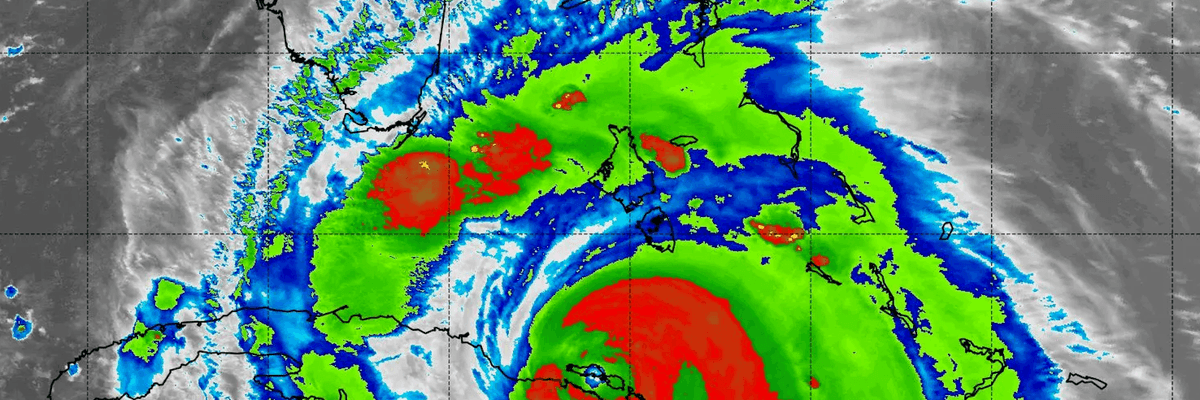
Artificial intelligence has transformed global weather forecasting in recent years, with AI models now matching the accuracy of traditional physics-based systems. Yet these same models face significant challenges when predicting one of the most critical aspects of hurricane forecasting: how intense a storm will become.
The difference matters enormously for coastal communities. Hurricane Polo demonstrated this in September 2026, exploding from a tropical storm to a Category 5 hurricane with 180 mph winds in just 24 hours off Mexico's Pacific coast. When Hurricane Michael similarly surprised forecasters in 2018, rapidly intensifying before striking Florida's Tyndall Air Force Base and Mexico Beach, communities had insufficient time to evacuate.
The regional data problem
While global AI weather models benefit from decades of comprehensive atmospheric data covering the entire Earth, hurricane intensity forecasting operates at a regional scale where data becomes far more limited.
Scientists training AI models for hurricane prediction rely on two data sources, both imperfect. Direct observations from weather stations, radars, buoys and satellites provide detailed measurements but concentrate near coastal areas. The open ocean, where crucial hurricane development occurs, remains sparsely monitored. Even advanced satellites cannot simultaneously capture the complete three-dimensional structure of every hurricane globally.
Weather model simulations offer the second data source, providing high-resolution atmospheric snapshots. However, these simulations contain approximations and uncertainties from incomplete atmospheric knowledge, missing fine-scale processes that influence storm behavior.
The result: no comprehensive three-dimensional dataset currently exists to properly train AI models for hurricane intensity prediction.
Chaos compounds the challenge
Even perfect observational data wouldn't guarantee accurate intensity forecasts. Recent research suggests hurricanes contain inherent chaotic behavior where tiny differences in initial conditions rapidly amplify over time.
Hurricanes intensify toward a maximum strength determined by environmental factors—warm ocean water fuels development while wind shear inhibits it. Small disturbances cause intensity fluctuations that increase with warmer ocean temperatures. These fluctuations may occur within what researchers call a "chaotic attractor," a set of possible storm states where evolution becomes fundamentally unpredictable.
This creates a training paradox. Scientists want AI models to minimize forecast errors, but capturing a hurricane's intrinsic chaos means errors cannot be reduced indefinitely. Models trained solely to minimize error may learn the most likely storm evolution while smoothing out unpredictable fluctuations—missing the chaos that defines real hurricane behavior.
Why it matters
Rapid intensification events are becoming more common as ocean temperatures rise, yet current AI systems cannot reliably predict them. This limitation affects evacuation timing and emergency preparedness for millions of coastal residents. Understanding these fundamental constraints helps set realistic expectations for AI weather forecasting and points toward probabilistic approaches that communicate ranges of possible intensities rather than single predictions.
The path forward
Improving hurricane intensity forecasts requires more than faster computers or larger neural networks. Scientists must better understand how chaos emerges in hurricane behavior and what aspects remain fundamentally unpredictable. This knowledge will shape next-generation forecasting systems focused on probability ranges rather than single-point predictions.
These insights were detailed in analysis published by The Conversation, examining the intersection of AI capabilities and atmospheric science limitations in hurricane forecasting.
This is an original analysis by the Omega editorial team. Source reporting: AI Watch.
Want systems like this working for your business?
Book a Call