China's AI Job Paradox: Protection vs. Global Competitiveness
Beijing uses legal rulings and state pressure to shield workers from AI displacement while racing to lead the technology—a tension that may prove unsustainable.
China blocks AI layoffs as economic pressures mount
China is taking an unusual approach to the global wave of AI-driven workforce reductions: it's making them illegal. Recent court rulings have established that companies cannot terminate employees simply because artificial intelligence can now perform their jobs—a stark contrast to the mass layoffs sweeping through U.S. tech firms.
In a widely publicized case last month, a Hangzhou court ordered a fintech company to pay 260,000 yuan ($38,000) in additional compensation to a 35-year-old worker who had been dismissed after AI began handling his role vetting language model outputs. State media framed the ruling as a warning: businesses benefiting from AI must protect workers' livelihoods.
Another Beijing arbitration decision went further, requiring a mapping company to retrain a 15-year employee whose data collection work was being automated. The message from authorities is clear—AI adoption creates an obligation to preserve jobs, not eliminate them.
The economic reality behind the statistics
Official unemployment figures paint a stable picture, hovering around 5 percent. China added nearly three million urban jobs in the first quarter and projects 12 million new positions by year-end. But workers describe a grimmer reality.
Youth unemployment reached 16.3 percent in April, near record highs. The 12 million university graduates entering the market each year face what one recent graduate called "a structural mismatch"—education systems lagging behind China's rapid shift from traditional sectors to high-tech industries that employ fewer people.
Middle-aged professionals face their own challenges. Workers speak of the "curse of 35," an age when dismissals become common and new opportunities scarce. On social media platform Xiaohongshu, frustrated job seekers document their experiences in "unemployment diaries."
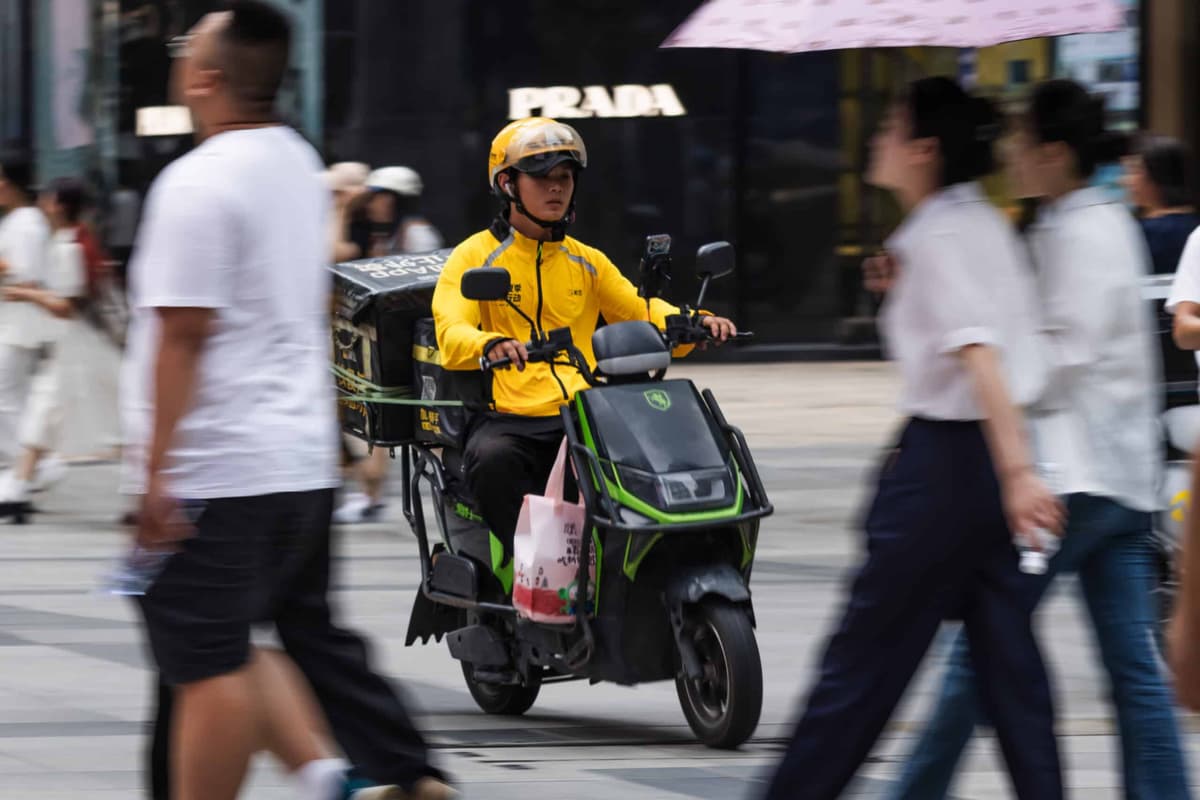
One Beijing accountant, laid off after refusing a 30 percent pay cut, now delivers food between interviews. After 27 unsuccessful applications, he memorizes AI-generated answers to interview questions—a small irony in a labor market being reshaped by the technology.
Why it matters
China faces a fundamental policy contradiction. The Communist Party's legitimacy depends on protecting economic well-being and maintaining employment. Yet Beijing also aims to lead global AI development, which requires allowing companies to deploy efficiency-maximizing technologies. As one Shanghai labor lawyer put it: "You have two goals. One is to protect the employees; the other is for China to become a leader in AI and make its companies very, very competitive. How do you balance those two?"
For now, China has structural advantages that delay the reckoning. Less than a quarter of its 725 million workers hold white-collar jobs vulnerable to AI displacement. Average office salaries of $13,700 annually give employers less incentive to automate than their American counterparts. Manufacturing remains the economic backbone, relatively insulated from language model disruption.
But economists warn this protection is temporary. State-owned enterprises absorb surplus labor, local governments subsidize graduate hiring, and tech companies reportedly received instructions to avoid layoffs. These measures address symptoms while the underlying tension grows.
The automation paradox
Chinese companies are actively deploying AI—ByteDance and Alibaba use it for programming, banks are building automated lending platforms—but displacement isn't yet visible in aggregate statistics. Political pressure and strict termination laws create friction that slows workforce reductions.
Yet the same industrial policy driving AI adoption is eliminating traditional opportunities. Government crackdowns on private education, finance, and property development have destroyed millions of jobs. Growth sectors like automobiles and semiconductors are capital-intensive and increasingly automated. BYD, one of China's largest employers, cut 100,000 positions in 2025 despite being an electric vehicle success story.
Nearly 40 percent of urban workers now depend on gig economy jobs—ride-hailing, delivery, and other precarious work without benefits. As one consultant who launched her own AI-powered firm observed, "It is quite a cruel time, because you have to make all sorts of adjustments. But it also depends on whether you can seize the opportunity."
The question is whether legal protections and state intervention can hold back technological and economic forces indefinitely, or whether China's AI ambitions will ultimately require accepting the workforce disruption it's currently trying to prevent.
These details were first reported by The Wire China.
This is an original analysis by the Omega editorial team. Source reporting: AI Watch.
Want systems like this working for your business?
Book a Call
